Table of Contents
Introduction: A City of Empty Homes and Full Streets
In February 2025, authorities cleared a long-standing squat at a canal-side mansion on Keizersgracht 318, ending an occupation that had begun in 2020.
As police surrounded the building and banners hung from its windows, the city watched not in shock, but with déjà vu.
Across Amsterdam, squatting is back in the headlines, not as a 1970s counter-culture rebellion, but as an act of economic survival.
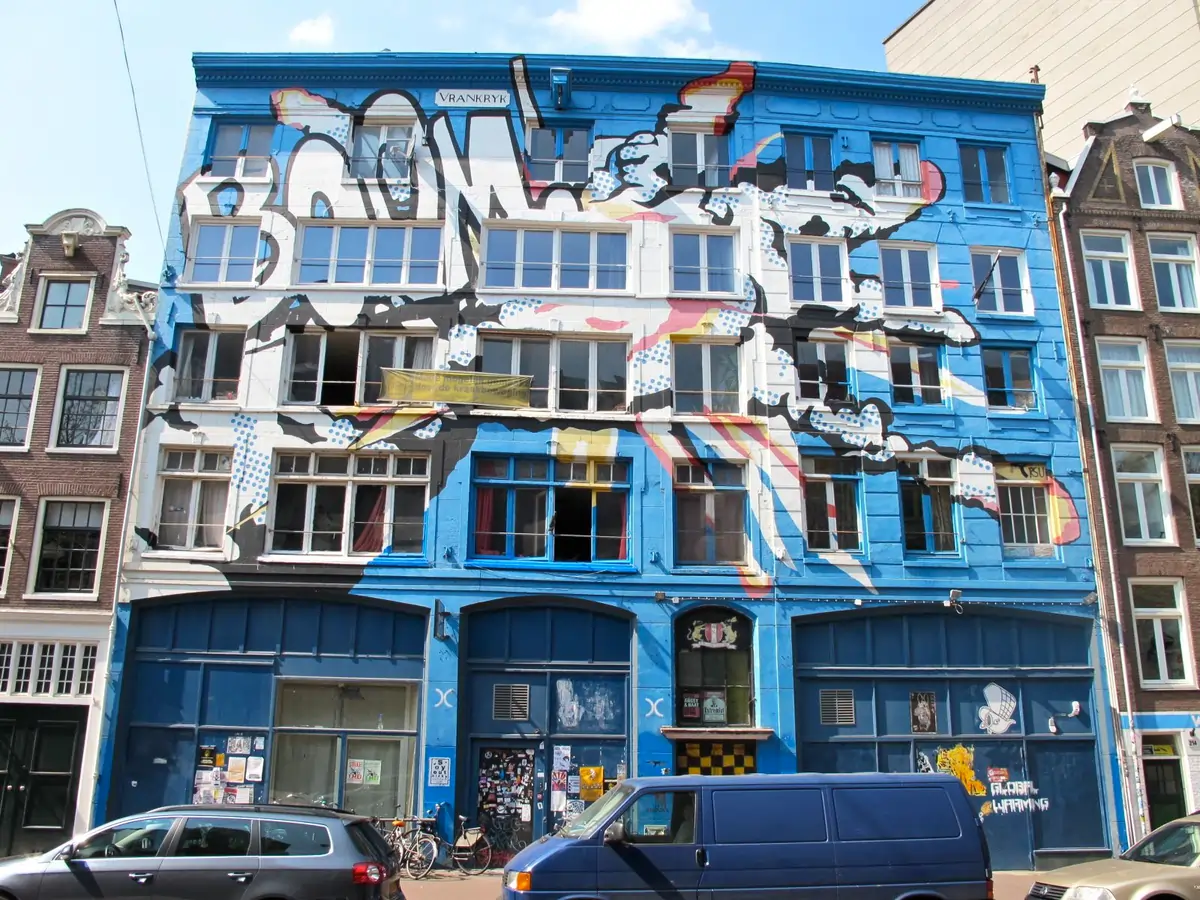
While investors park millions in empty properties, many residents struggle to find an affordable place to live.
The return of squatting, once criminalised, now quietly resurgent, has become a mirror for the city’s housing contradictions: a world-class capital that can no longer house its own people.
The Numbers Behind Amsterdam’s Housing Crisis
Amsterdam is short of homes, hundreds of thousands of them.
The Netherlands faces a national housing shortage exceeding 400,000 dwellings, with Amsterdam bearing the heaviest load.
Average rents in the private sector now hover around €2 000 per month for a one-bedroom apartment in central Amsterdam, while property prices have almost doubled over the past decade.
For middle-income earners, only a small fraction of homes remain affordable, a steep decline from less than ten years ago. Investors snap up many newly built units or leave them empty as second homes.
Urban sociologists describe this as “housing inequality by design”: a system where capital, not citizenship, determines who belongs.
Squatting: From Rebellion to Necessity
The Netherlands once treated squatting or kraken as a legitimate social protest. For decades, the law allowed the occupation of buildings left unused for more than a year.
The movement peaked in the 1970s and 1980s, when students and artists transformed derelict properties into homes, art hubs, and political communes.
That era ended on 1 October 2010, when the government passed the Kraken en Leegstandwet (Squatting and Vacancy Act), criminalising the practice and threatening offenders with up to one year in prison.
Fifteen years later, the law remains, but the context has changed.
The new squatters of 2025 are typically working residents and students, unable to afford legal rents, and activists, shut out of the housing market.
The Legal Grey Zone
Despite the ban, squatting in Amsterdam persists because enforcement is complex.
Eviction still requires a court order, and under European human-rights law, residents cannot be removed without judicial review.
Once squatters establish residence, even illegally, they gain limited occupant protections.
This procedural gap often delays evictions for months, during which residents may connect utilities, set up community kitchens, or turn the space into temporary cultural centres.
Local authorities walk a fine line: too lenient, and property owners revolt; too aggressive, and they risk public backlash and legal appeals in The Hague or Brussels.
A Tale of Two Cities: The New Squatters and the Absent Owners
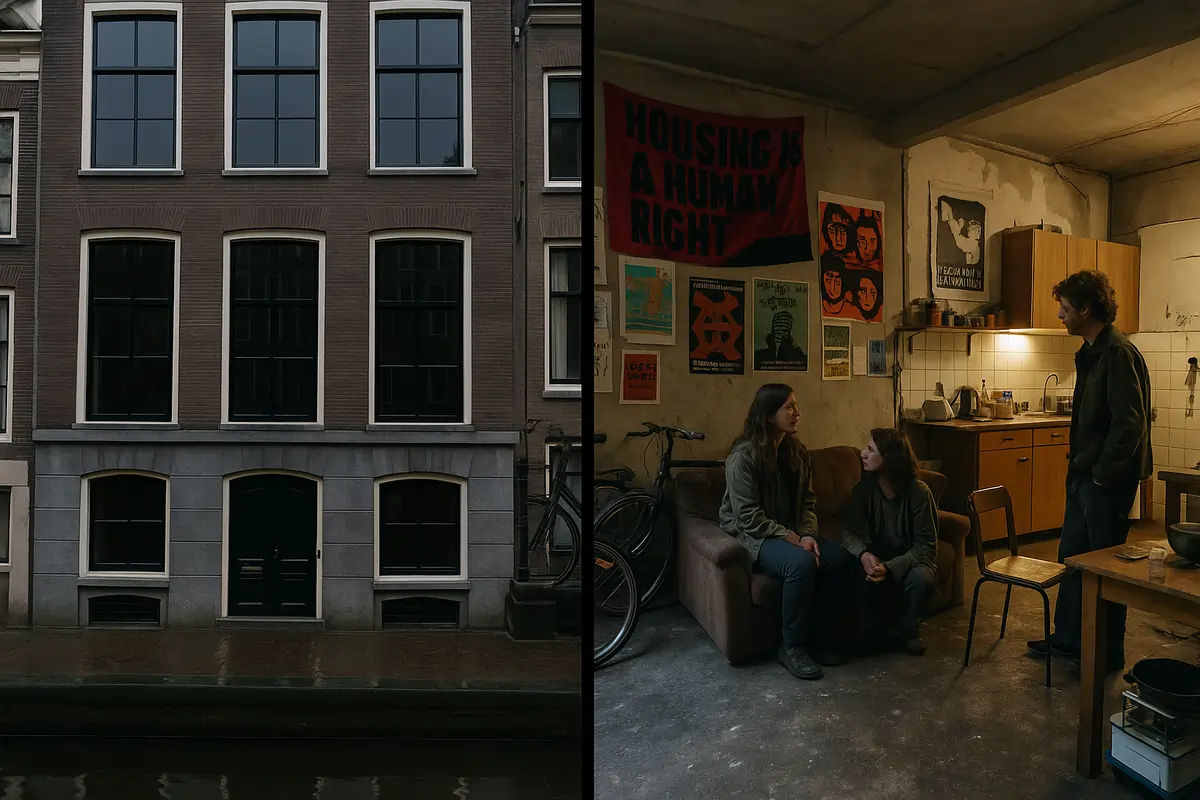
Walk through Amsterdam-West or the Plantage District, and you’ll see the divide.
Behind pristine façades, entire homes stand dark, owned by foreign investors, corporations, or Dutch pension funds waiting for capital gains.
Meanwhile, the new squatters occupy what the system leaves behind.
“We’re not criminals,” one squatter told the Dutch daily NRC in 2025. “We’re Amsterdam residents priced out of Amsterdam.”
Homeowners counter that their property rights are sacred, arguing that the city’s leniency undermines trust and safety.
Yet even many middle-class locals sympathise with the squatters’ cause.
“If someone can live in a place that’s been empty for five years, that’s not theft. That’s common sense,”
said a long-time resident of De Pijp.
Policy Shifts and Political Tension
Housing dominates Dutch politics again. After years of austerity and market-driven policy, the government now aims to build roughly 900,000 new homes by 2030, prioritising affordable rentals.
However, plans face bureaucratic bottlenecks, labour shortages, and rising construction costs.
The Netherlands is currently adding fewer than 70,000 new homes per year, far below the pace needed to close the gap.
In early 2025, Amsterdam’s council reintroduced measures to penalise long-term vacancy and limit speculative ownership, echoing 1970s sentiments in modern form.
Conservatives argue such policies hurt investment; progressives say they’re long overdue. The result?
A policy stalemate in which empty homes still outnumber new social housing units built each year.
Amsterdam’s Cultural Legacy of Squatting
Squatting isn’t just a social movement; it’s part of Amsterdam’s cultural DNA.
Historic spaces like Vrankrijk on Spuistraat began as squats before evolving into self-managed cultural hubs hosting artists, concerts, and political debates.
Even today, informal collectives run pop-up art venues and community gardens in reclaimed spaces, echoing the city’s 1980s creative explosion.
These living laboratories continue to shape urban culture, reminding policymakers that squatting once helped revive neglected neighbourhoods and spark new social ideas.
Europe’s Broader Housing Paradox
Amsterdam is not alone. From Lisbon to Berlin, European capitals face similar patterns: property used as investment rather than shelter.
Berlin banned rent hikes, only to reverse them under court pressure. Lisbon now taxes empty homes. Paris is converting offices into micro-apartments.
Amsterdam’s challenge fits this continental pattern: how to reconcile private property with the right to housing in an era of speculative capital.
Experts warn that unless structural reforms take hold, European cities risk “social hollowing”, where cities are preserved architecturally but emptied of residents.

The Future: From Protest to Policy
Amsterdam’s squatting story has always reflected its politics from the 1960s rebels in Kattenburg to the tech-era squatters of 2025.
The next phase, experts say, must bridge the divide between protest and policy.
Cooperative housing, community land trusts, and modular construction could provide alternatives that honour the city’s history of civic innovation.
For now, the squatters remain both symptom and signal. Their presence tells us that beneath the postcard perfection of the canals lies a question every modern city must answer:
Who gets to live here and who gets left outside the door?
FAQ
Why has squatting returned in Amsterdam in 2025?
Because of a severe housing shortage, more than 400,000 homes nationally, and skyrocketing rents, many people priced out of Amsterdam have turned to squatting in empty buildings as a last resort.
Is squatting still illegal in the Netherlands?
Yes. Since 2010, squatting has been a criminal offence under the Kraken en Leegstandwet, punishable by up to one year in prison. However, evictions still require a court order, giving squatters limited temporary protection.
Who are the new squatters in Amsterdam?
Unlike the activists of the 1970s, most modern squatters are working residents and students who can’t afford current market rents but need to stay close to jobs and universities.
What is the Dutch government doing about the housing crisis?
The government plans to build roughly 900,000 new homes by 2030 and introduce penalties for long-term vacancy, but critics argue construction delays and investor influence have slowed progress.
Summary: Key Takeaways
| Theme | Insight |
|---|---|
| Crisis Scale | Over 400 000 homes short nationwide; rents ≈ €2 000 per month |
| Legal Status | Squatting has been banned since 2010, but eviction still requires a court order |
| Current Trend | New wave driven by affordability, not ideology |
| Policy Moves | ≈ 900,000 homes target by 2030; anti-vacancy measures (2025) |
| Cultural Impact | Former squats like Vrankrijk shaped Amsterdam’s creative identity |
Living in Amsterdam Is Cool
Amsterdam remains one of Europe’s most desirable cities to live in, with its design, diversity, and lifestyle drawing people from around the world. Yet beneath that cool, cosmopolitan surface lies a struggle for space. (Read more in our feature “Living in Amsterdam Is Cool”, which explores what makes city life so magnetic.)