Table of Contents
Introduction: Why the Amsterdam houses of correction matter
At the end of the sixteenth century, Amsterdam created institutions that were unusual for their time.
These facilities, the Rasphuis for boys and men and the Spinhuis for girls and women, introduced a different approach to discipline.
Instead of relying entirely on physical injury or public humiliation, the city experimented with labour, supervised routines and structured correction.
These institutions influenced later developments in the Dutch Republic and helped form early ideas about how offenders might be guided rather than permanently harmed.
Their legacy continues to inform discussions about criminal justice today.
What forms of punishment existed in Amsterdam before the houses of correction?
Before the rise of these institutions, punishments for theft, vagrancy and similar offences were severe.
They often included whipping, branding, the removal of limbs or placement in the pillory.
Crowds observed these events as part of public life. Judges were allowed to combine penalties, and confessions were frequently obtained through coercion.
Poverty placed many citizens in desperate situations. People sometimes stole food simply to survive, which created a constant cycle of punishment and hardship.
By the final decades of the sixteenth century, city leaders recognised that the traditional system produced long-term problems.
Many citizens carried visible marks that restricted employment and increased the likelihood of further offences.
What sparked the creation of the first house of correction?
A case involving a sixteen-year-old named Evert Jansz became a point of debate.
He had stolen goods, but magistrates believed that subjecting him to adult penalties would destroy his future.
Thinkers like Dirck Coornhert also argued that correction through labour could lead to better outcomes.
On June 19, 1589, the city council approved the idea of creating a structured institution for young offenders.
A former convent on the Heiligeweg was selected. Most historical accounts place the formal opening in 1596, although a few references mention 1595.
Because of this variation, scholars often describe the founding as occurring within this short period, with 1596 considered the most reliable date.
How did daily life inside the Rasphuis function?
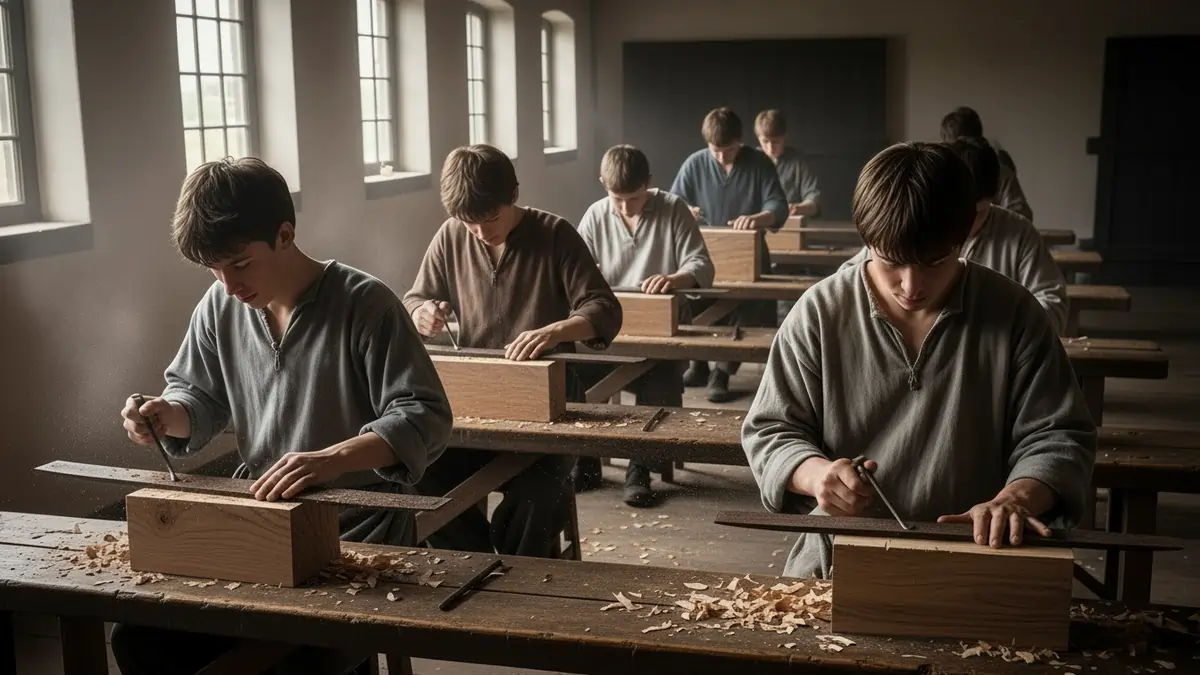
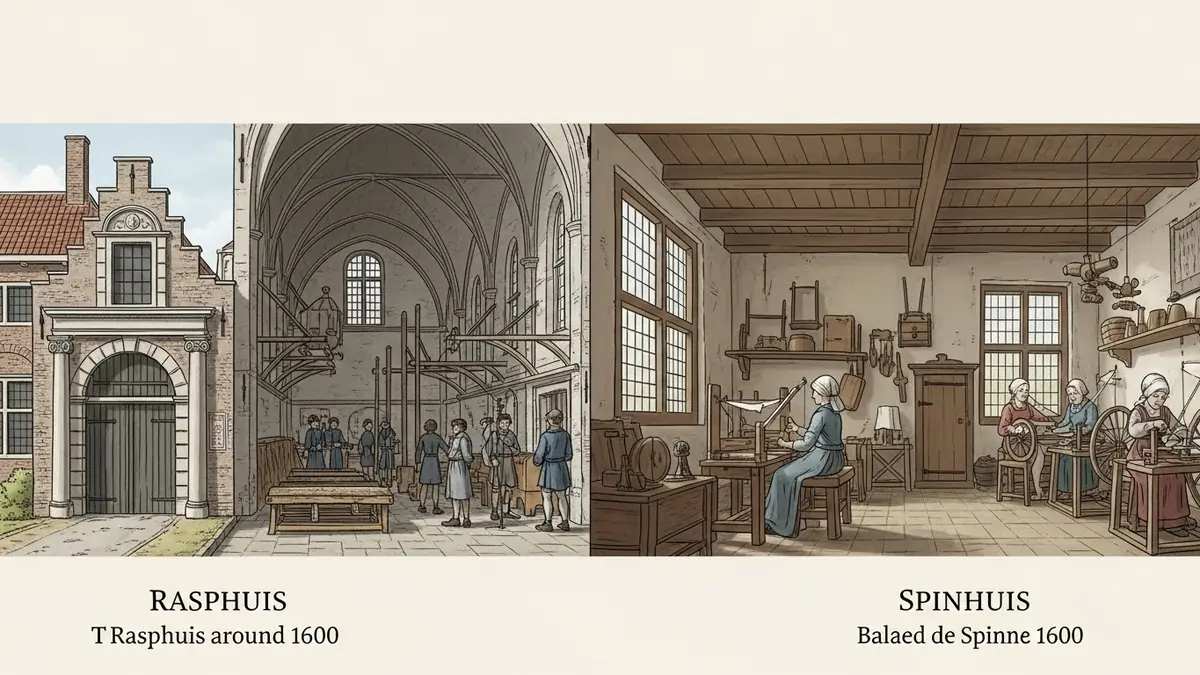
Inside the Rasphuis, inmates performed physical work intended to build discipline.
The most common task involved rasping imported tropical hardwood into fine powder.
This powder produced pigments that were valuable in paint and textile production.
The work demanded constant effort, and the environment was dusty and loud.
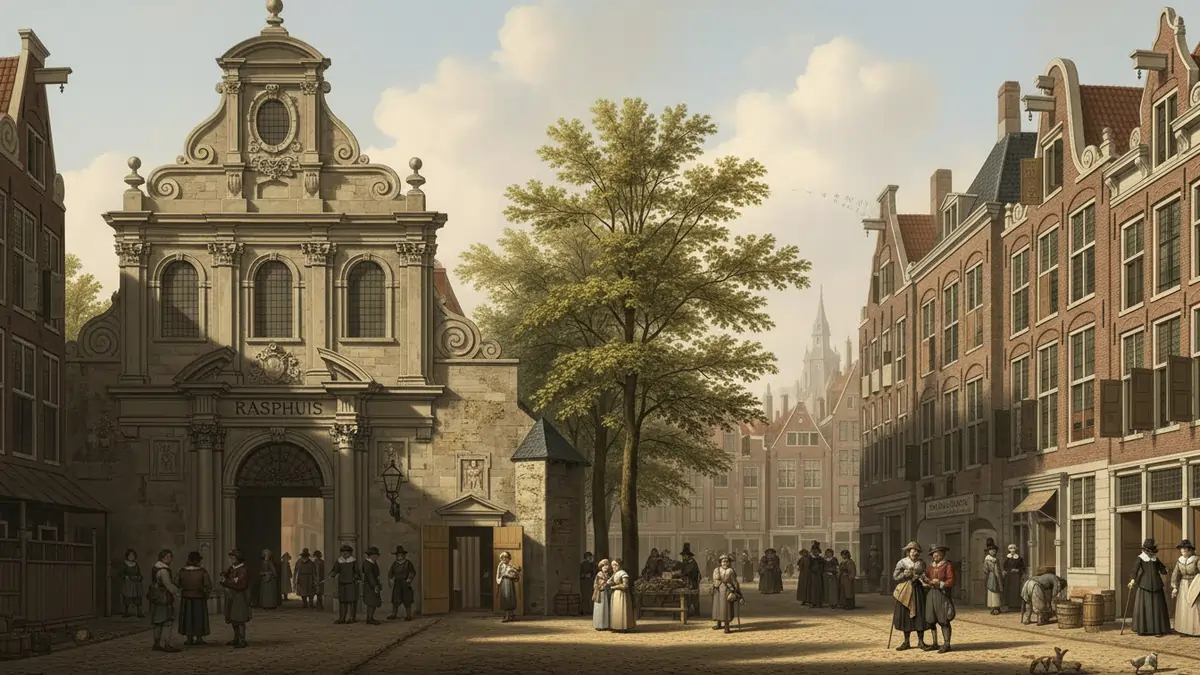
The Rasphuis gained a symbolic presence in the city. Its architectural portal became widely recognised as a statement of civic authority.
Inmates followed strict schedules with fixed working hours and regulated behaviour.
Although the institution had been imagined as a place for troubled youth, adults and repeat offenders were later admitted. Families could also pay to have difficult relatives confined.
The institution supported economic activity in Amsterdam.
The materials produced there served local industries, which created tension between moral ideals and the practical benefits of maintaining a steady supply of labour.
What was the Spinhuis, and why was it created?
Within a year of the Rasphuis opening, the city established the Spinhuis, located in a former convent.
It served as a corrective facility for girls and women. Many were arrested for minor offences, involvement in prostitution or behaviour judged inappropriate for the time.
Others arrived because families requested confinement.
Work in the Spinhuis focused on spinning and textile-related tasks.
These activities matched social expectations placed on women.
The Spinhuis also became a place where visitors could observe inmates for a small fee.
This practice positioned the institution as both a corrective facility and a public lesson in discipline.
The building no longer survives in full, but its gate remains in a narrow alley and stands as a reminder of its history.
How did these institutions reflect wider European trends?
Across early modern Europe, many cities experimented with confinement combined with labour.
These facilities punished offenders, regulated the poor and supported local industries.
They often blurred the lines between social assistance and discipline.
The Rasphuis and Spinhuis are seen as early models of the modern prison.
They introduced consistent supervision, fixed schedules and expectations of productivity.
These features later appeared in dedicated prisons built in Europe and North America.
Did the ideals of reform always match the reality?
The stated aim of shaping lawful citizens did not always align with conditions inside the institutions.
Labour demands increased, and economic interests often overshadowed the intentions of moral improvement.
Many inmates were not dangerous criminals. They were poor, homeless or simply considered troublesome.
The architectural presence of the Rasphuis and Spinhuis projected authority.
Visitors could see the strict routines, which reinforced social boundaries and ideas about respectable behaviour.
These institutions reveal how cities used confinement not only for crime control but also to manage poverty and social order.
What led to the decline and closure of the houses of correction?
The Rasphuis continued functioning until the early nineteenth century.
Changes in legal thinking and the development of newer prison models made the old structure less suitable.
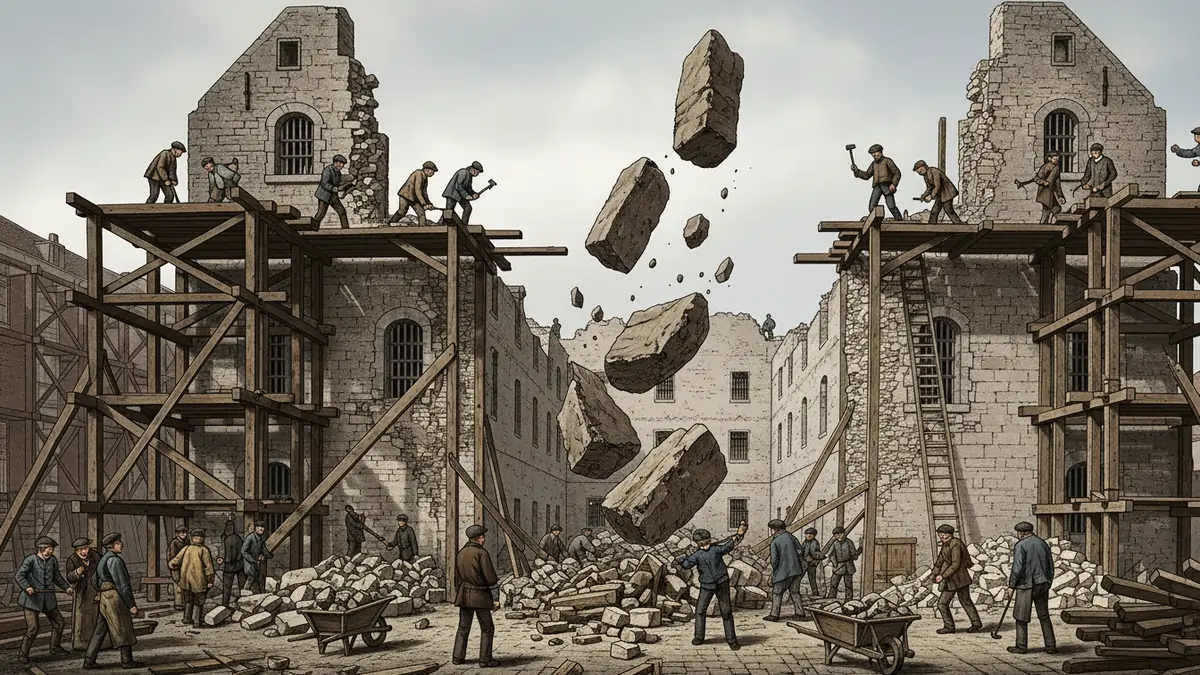
The institution closed in 1815. The building stood for several more decades.
In 1892, it was demolished, placing the demolition clearly within the final decade of the nineteenth century.
Only the historical portal remains and has been integrated into the modern streetscape.
The Spinhuis had already ceased operations even earlier, leaving behind only architectural fragments.
Why do the Rasphuis and Spinhuis still matter today?
These institutions represent a moment when Amsterdam began exploring correction that involved routine, labour and supervision rather than constant physical punishment.
They offer insight into the social concerns of the time and highlight the connection between poverty, morality and discipline.
Their legacy continues to appear in discussions about rehabilitation, structured correction and the purpose of confinement.
They show how early attempts at change contained both humane intentions and practical pressures, a pattern that remains relevant to modern justice systems.
Frequently Asked Questions
Q. What type of work did inmates perform in the Rasphuis?
Inmates rasped tropical hardwood into powder. This powder produced colouring agents for paint and textiles. The work was repetitive and required continuous manual effort.
Q. Why was the Spinhuis separate from the Rasphuis?
City leaders believed that women required different forms of instruction and labour. Spinning matched the social roles assigned to women, which shaped the activities inside the Spinhuis.
Q. Were inmates mostly criminals?
Not always. Many were poor, homeless or considered unruly. Families could also request confinement for daughters or relatives who did not follow household expectations.
Q. Did these institutions reduce crime?
Results varied. Some inmates returned to society better prepared for work. Others experienced the institutions mainly as punishment. The facilities did help regulate behaviour and support local industries.
Q. What remains of these buildings today?
The Rasphuis was demolished in 1892, but its portal survives. The Spinhuis no longer exists in full, although its gate remains visible in a small side street.
Q. Why are these institutions important for modern studies of punishment?
They introduced structured labour, continuous oversight and daily schedules. These elements influenced later prison systems and shaped early discussions about the purpose of confinement.
Conclusion
The Rasphuis and Spinhuis emerged during a period when Amsterdam was reconsidering how to respond to poverty, disorder and crime.
By introducing labour-based correction, the city created institutions that blended guidance with discipline.
They shaped the development of later prison models and revealed how society attempted to balance justice, economic interests and moral expectations.
Their history remains a valuable lens for understanding how systems of confinement evolved and why they continue to spark debate.
How can readers explore a more recent chapter of Amsterdam’s history?
Visitors who want to understand how social conditions changed in later centuries can look at the story of Anne Frank.
Her life reflects a very different moment in the city’s past, yet it remains one of the most recognised accounts connected to Amsterdam.
You can learn more through our detailed guide to the Anne Frank House and the events that shaped her story.