Table of Contents
Introduction
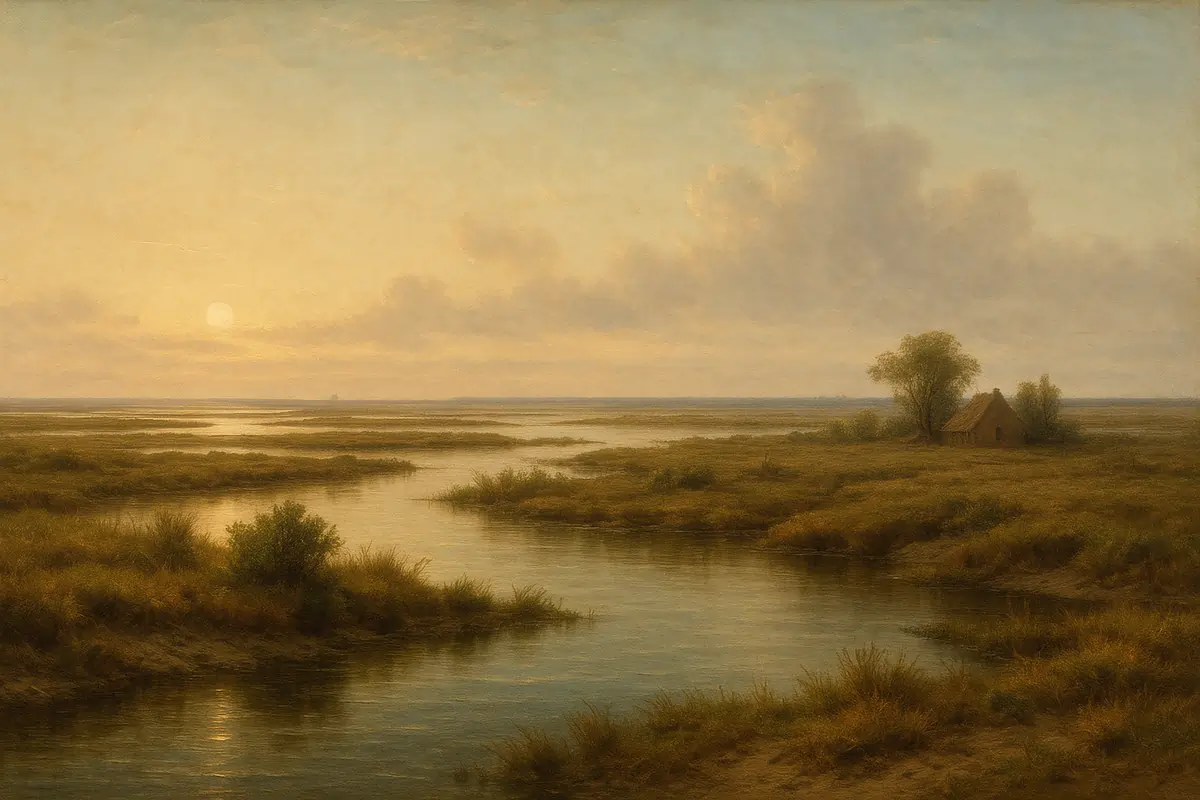
Nestled where the Amstel River meets the IJsselmeer, Amsterdam began as a fragile settlement carved from wetlands and salt marshes.
Today, it stands among Europe’s most admired capitals, a city of canals, art, and cultural openness.
Yet the full story of its rise from a small fishing post in the medieval Low Countries to a world leader in trade, tolerance, and technology reveals how profoundly water, ingenuity, and resilience shaped its destiny.
Amsterdam’s history is not a straight line but a rhythm: reclamation, reinvention, and renewal. Each age has left a layer, visible in its canals, houses, and even in the Dutch spirit itself.
1. Earliest Roots: Wetlands, Farmers & Fishermen
Long before the first maps recorded its name, the region that would become Amsterdam was an expanse of peatland and tidal inlets on the Zuiderzee, a shallow arm of the North Sea.
Around 1000 AD, small communities of farmers and fishermen settled along the Amstel River, digging drainage ditches and raising primitive embankments to keep their homes above water.
Archaeologists have unearthed Roman coins and tools, but there is no evidence of permanent Roman habitation.
These artefacts likely drifted here by trade or shipwreck, testament to early maritime routes along the North Sea coast.
The name Amstel-dam captures the essence of its beginning: a dam built on the Amstel. It was both a lifeline and a statement of defiance, proof that the sea would not rule the Dutch.
2. Foundations of a Town: Dam, Trade Rights & Growth
By the mid-13th century, settlers built a permanent dam across the Amstel River, on the site now known as Dam Square. This became a natural gathering place for traders, fishmongers, and boat builders.
In 1275, Count Floris V of Holland granted the residents exemption from tolls on the region’s waterways. This privilege turned a riverside hamlet into a thriving trading town within the Bishopric of Utrecht.
The city seal, depicting a ship and Saint Nicholas (patron of sailors), dates from this era.
Over the next two centuries, Amsterdam’s people mastered the art of water management. They built dikes, polders, and mounds (terpen) to protect against floods and reclaim new land.
Their success forged a culture of cooperation precursor to the Dutch “polder model” of consensus that still defines the Netherlands today.
By 1350, Amsterdam was a bustling port exporting grain, fish, and beer to the Baltic and beyond, firmly embedded in the Hanseatic League’s trade network.
3. The Golden Age: Amsterdam’s Global Rise
The 17th century, often called Amsterdam’s Golden Age, transformed the city into the world’s financial and maritime capital.
As the leading port of the Dutch Republic, Amsterdam became home to the Dutch East India Company (VOC), the world’s first multinational corporation, and the Dutch West India Company (WIC).
Its merchants established trading posts from Batavia (Jakarta) to New Amsterdam (New York), importing spices, silks, and precious metals.
To manage this explosion of wealth, Amsterdam founded the Amsterdam Stock Exchange in 1602, the first modern securities market.
The Bank of Amsterdam, established in 1609, pioneered stable international banking and accounting standards.
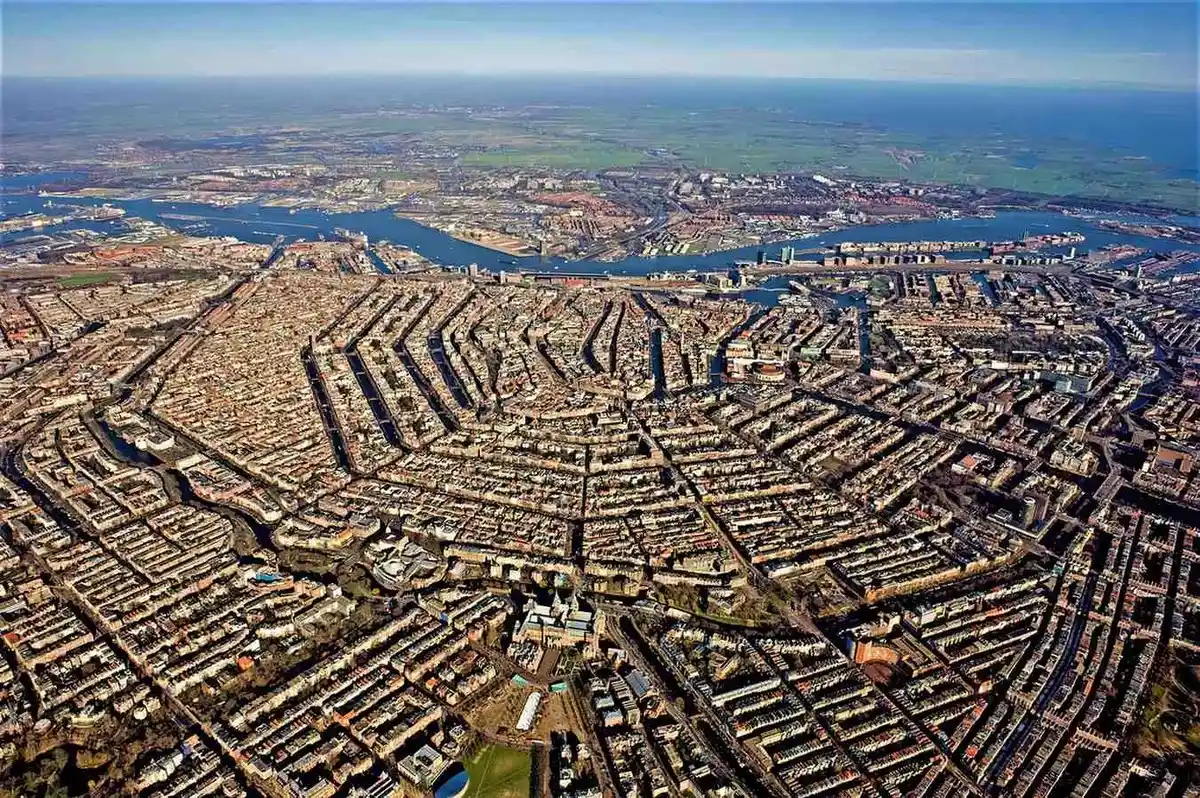
Meanwhile, architects and engineers built the Grachtengordel (Canal Ring), a masterpiece of urban planning and hydraulic engineering.
Today, this area is a UNESCO World Heritage Site, celebrated for its semi-circular canal system, elegant gabled houses, and bridges that embody Dutch precision and artistry.
This period also birthed a cultural renaissance: Rembrandt van Rijn, Vermeer, Spinoza, and Huygens all thrived here, making Amsterdam a beacon of art, science, and free thought.
4. Decline, Recovery & Modernisation
After its Golden Age, Amsterdam’s fortunes ebbed. Rival ports such as London and Hamburg rose, colonial wars drained resources, and shifting global trade patterns left the city struggling.
Yet decline bred reinvention. During the 19th century, the construction of the North Sea Canal (1876) reconnected Amsterdam directly to the ocean, reviving its maritime power.
The Industrial Revolution brought factories, railways, and new suburbs.
The Zuiderzee Works, a monumental engineering feat completed in the 20th century, sealed off the inland sea and created the IJsselmeer, protecting the Netherlands from floods and expanding arable land.
The Second World War brought tragedy: the Jewish community, integral to Amsterdam’s identity, was decimated.
The Anne Frank House remains a solemn reminder of that loss. But post-war, Amsterdam rebuilt, becoming a centre for art, liberal politics, youth movements, and the birth of modern urban planning.
By the late 20th century, districts like Jordaan, once working-class quarters, transformed into vibrant neighbourhoods filled with galleries, cafés, and cultural life.
5. Amsterdam Today: Living History in Motion
Modern Amsterdam is a living museum of innovation and identity. Walk along Dam Square, cruise the canals, or cycle through the Museumplein, and you traverse centuries of adaptation.
Beneath every street lies the memory of floods conquered and fortunes built.
The city’s water-management expertise continues to guide international climate policy, from Venice to Jakarta.
Institutions such as Deltares and the Amsterdam Institute for Advanced Metropolitan Solutions (AMS) export Dutch know-how on flood prevention and sustainable urban design.
Amsterdam’s multicultural fabric, shaped by centuries of immigration, remains one of its defining strengths.
From the Surinamese and Indonesian diasporas to today’s international creative class, diversity fuels its innovation.
The city balances heritage and sustainability: electric canal boats glide past 17th-century warehouses, and historic buildings now house tech start-ups and green enterprises.

6. Why This History Still Matters
- See the origins: Visit Dam Square to stand where the city’s name and its future were built.
- Understand the craft: The narrow canal houses, resting on 11 million wooden piles, reveal a millennium of engineering mastery.
- Trace the legacy: From VOC trade routes to global finance and tourism, Amsterdam’s entrepreneurial DNA endures.
- Reflect forward: The Dutch mastery of water management offers blueprints for cities adapting to climate change and rising seas.
Amsterdam teaches that innovation and inclusivity are not opposites; they are twin currents that keep the city afloat.
Conclusion
Amsterdam is not merely a city of canals; it is a city of survival and imagination. Born from water, sustained by commerce, and renewed by creativity.
Its story mirrors humanity’s: our struggle to live with nature, to connect across cultures, and to keep reinventing what we build.
To walk its bridges is to cross time: from a fisherman’s village on a boggy shore to a global capital of art, freedom, and innovation.
Amsterdam’s history reminds us that progress is not about escaping our origins but mastering them.
Amsterdam Canal Belt
The story of Amsterdam’s rise would not be complete without its crown jewel, the Amsterdam Canal Belt, or Grachtengordel.
Built during the 17th century’s Golden Age, this intricate network of semicircular canals transformed the city from a trading powerhouse into an architectural masterpiece.
Each bridge, gabled house, and quiet waterway reflects the Dutch mastery of engineering and urban design that defined an era.
Today, the Canal Belt stands as a UNESCO World Heritage Site, preserving the spirit of the merchants, builders, and dreamers who shaped modern Amsterdam.