Table of Contents
What Is Muiderslot Castle, and Where Is It Located?
Muiderslot Castle is one of the most recognisable medieval castles in the Netherlands.
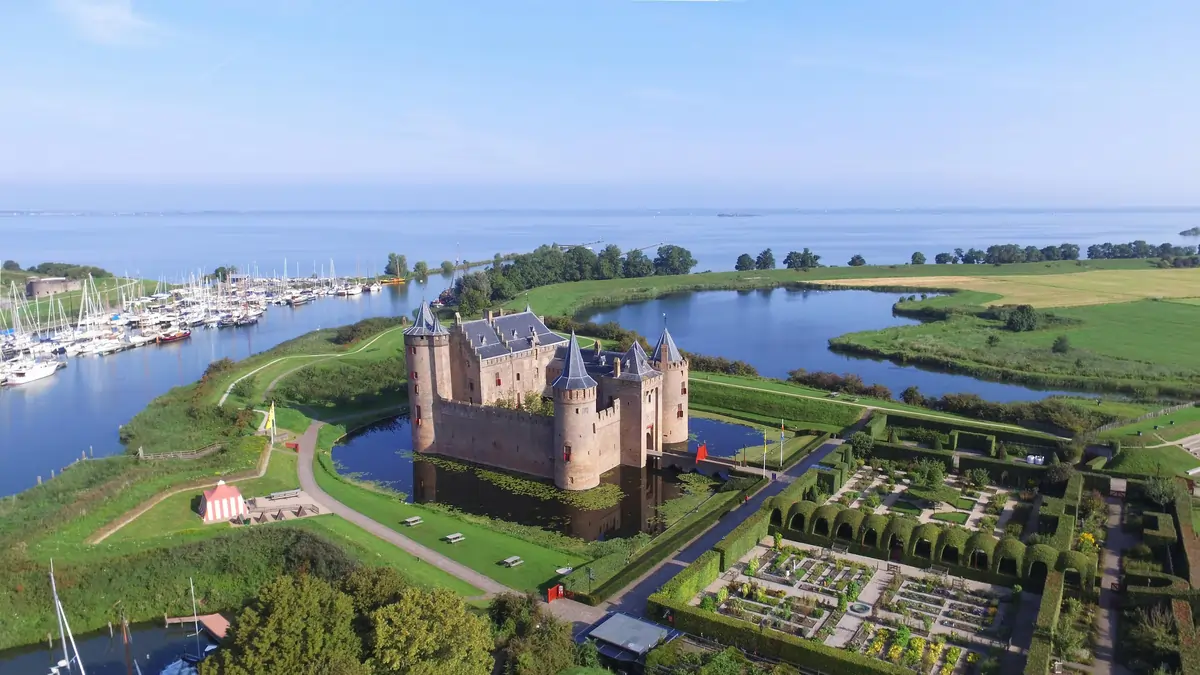
Located in the town of Muiden, about fifteen kilometres from Amsterdam, it stands at the mouth of the river Vecht, where the river meets the IJsselmeer.
The name literally means “Muiden Castle,” with slot being a Dutch word for castle. Its position gave it control over river traffic and commerce flowing between the region of Holland and the powerful city of Utrecht.
The structure is known for its striking square layout, four corner towers, a surrounding moat, a drawbridge and well-preserved defensive features that reflect authentic medieval architecture.

When Was Muiderslot Castle Built and What Purpose Did It Serve?
The first stone fortress on this site was built between 1280 and 1285.
It was commissioned by Count Floris V of Holland as a stronghold to secure the river route and collect tolls from passing ships.
At that time, controlling trade through waterways was crucial, and the castle’s location allowed Floris to enforce payments by stretching a heavy chain across the river, blocking vessels until they paid a fee.
The initial structure was compact, with thick brick walls, limited living space and a strong focus on defence rather than luxury.
What Major Events Shaped the Castle’s Early History?
In 1296, Floris V was captured by a group of rebellious nobles. He was held inside the castle but was killed during an attempt to flee.
Shortly after his death, the castle was taken over and destroyed around 1300.
A century later, around 1370, the castle was rebuilt by Albrecht I, who ruled Holland at the time.
This reconstruction created the version of Muiderslot familiar today, including its towers, the square layout, the courtyard and the moat.
Over the years, additional wings and roof structures were added, and the castle gradually became more suitable for residence as well as defence.
How Did Muiderslot Evolve from Fortress to Cultural Landmark?
In 1609, Pieter Corneliszoon Hooft became the bailiff of Muiden and took up seasonal residence in the castle.
Hooft was a respected writer, poet and historian who brought significant cultural attention to Muiderslot during the seventeenth century.
Hooft hosted friends who visited him for conversation, music and literary discussion.
These visits were informal and took place individually or in small groups.
Later writers in the nineteenth century created the idea of the “Muiderkring”, presenting it as a structured gathering of prominent artists and intellectuals.
Modern scholarship considers this a romanticised legend rather than a historical organisation.
During his time at the castle, Hooft redesigned the gardens, improved the living spaces and contributed to the cultural reputation that Muiderslot still holds today.
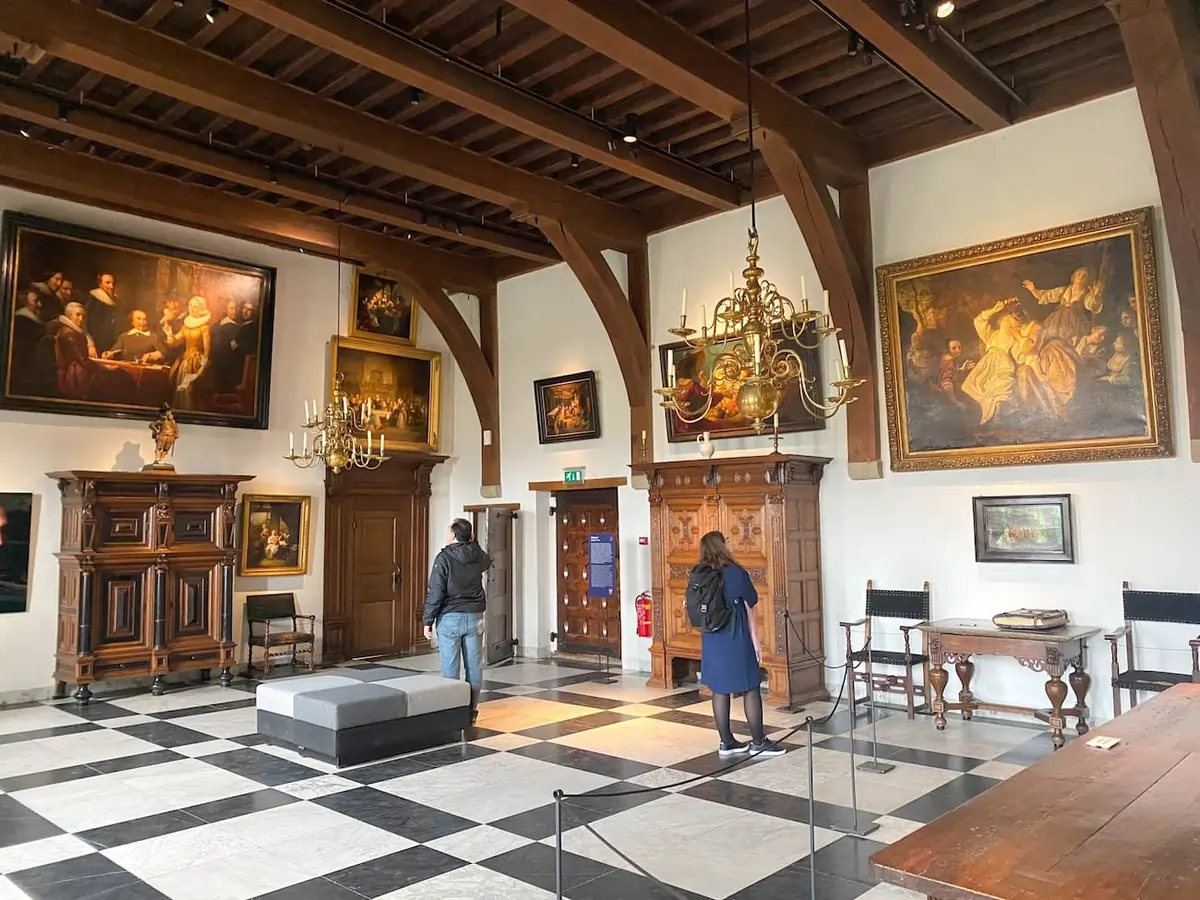
Many of the furnishings, utensils and artworks displayed inside the castle reflect the period in which he lived.
What Happened to Muiderslot After the Golden Age?
Following centuries of use in various roles, including a period as a prison, the castle began to fall into decline.
By the nineteenth century, it was abandoned and in such poor condition that it was nearly demolished.
Intervention by the monarchy prevented its destruction, and a national restoration plan was launched.
The architect Pierre Cuypers, known for his work on the Rijksmuseum and Amsterdam Central Station, led extensive restoration.
This project returned the castle to its medieval form while preserving areas that demonstrated seventeenth-century life.
Today, Muiderslot is one of the oldest national museums in the country.
What Can Visitors Explore Inside Muiderslot Castle?
Visitors can explore several areas that recreate scenes from both the Middle Ages and the seventeenth century. These include:
- The Knight’s Hall, where gatherings and celebrations were held
- The armoury and weapon displays
- The historic kitchen with period tools
- The furnished rooms are inspired by the time of P.C. Hooft
- The central courtyard with views of the towers and battlements
- The Water Shield pavilion, an immersive exhibit explaining historical Dutch water defence
- The herb and vegetable gardens, laid out similarly to those of Hooft’s era
Together, these features provide a picture of castle life across multiple centuries.
Why Is Water Defence So Important to the Story of Muiderslot?
The castle’s location at the mouth of the river Vecht made it a key point in controlling shipping routes.
More importantly, this area has always been vulnerable to flooding and invasion through waterways.
Throughout Dutch history, water has been used as both a resource and a defensive tool.
Muiderslot played a role in this system, especially as part of later defensive lines that relied on controlled flooding.
Exhibits in the Water Shield pavilion explain how engineers and rulers combined military strategy with water management to protect the region.
This aspect gives Muiderslot a unique place in Dutch heritage, linking architecture, geography and defence.
How Has Muiderslot Survived Centuries of Conflict, Decay and Reconstruction?
Muiderslot’s survival is remarkable, considering it has been captured, destroyed, rebuilt, neglected and nearly demolished. Key turning points in its preservation include:
- It’s a fourteenth-century reconstruction after the first castle was destroyed
- Its seventeenth-century cultural revival under P.C. Hooft
- A nineteenth-century royal intervention that saved it from demolition
- Extensive restorations by Pierre Cuypers
- Continuous preservation efforts by heritage organisations
These efforts have ensured that the castle represents both medieval and Golden Age Dutch history.
What Makes Muiderslot Castle Stand Out Compared to Other Dutch Castles?
Several features give Muiderslot a distinct position:
- It offers a blend of medieval architecture, seventeenth-century culture and modern museum curation.
- It is one of the best-preserved moated castles in the Netherlands.
- It played a significant role in river tolls, political power struggles and water defence strategy.
- Its association with P.C. Hooft and the Muiderkring adds literary and cultural significance.
- Its location near Amsterdam makes it highly accessible.
- Its gardens, interior reconstructions and interactive exhibits appeal to families, history enthusiasts and casual visitors.
This combination of military, cultural and educational value makes Muiderslot one of the country’s most complete historical experiences.
How Can Visitors Reach Muiderslot Castle From Amsterdam?
The castle is straightforward to reach:
- By car: Take the A1 motorway and exit at Muiden.
- By train: Travel on a route toward Amersfoort, then connect via local transport to Muiden.
- By bus: Multiple regional services operate between Amsterdam and Muiden.
The short distance makes it suitable for quick trips, half-day excursions or longer visits.
What Visitor Facilities and Experiences Are Available at Muiderslot?
Visitors can expect:
- Audio guides in multiple languages
- Guided tours
- Special exhibitions throughout the year
- Family activities and interactive rooms
- Rest areas and a museum shop
- The option to rent the castle for events, including weddings
The combination of historical spaces, gardens, exhibitions and activities ensures that the castle offers something for all ages.
Why Does Muiderslot Continue to Capture Public Interest?
The castle’s appeal lies in its ability to present different layers of Dutch history within one site. It serves simultaneously as:
- A medieval fortress
- A symbol of water-centred defence
- A cultural centre from the Dutch Golden Age
- A preserved national monument
- A living museum with ongoing events and activities
Few sites in the Netherlands demonstrate this level of continuity across seven centuries.
How Can You Continue Your Cultural Visit After Muiderslot?
If you are interested in exploring more cultural sites after visiting Muiderslot, you may want to look at other museums across Amsterdam.
The city offers a wide range of art, history and speciality collections that provide deeper insight into Dutch heritage. You can find a full overview here: Museums in Amsterdam.