The Paleis voor Volksvlijt, often translated imperfectly as the Palace of People’s Diligence, was one of the most extraordinary buildings Amsterdam ever constructed.
Inspired by London’s Crystal Palace, engineered through Dutch–British collaboration, and championed by urban visionary Samuel Sarphati.
It once dominated Frederiksplein with a glittering cast-iron dome lit by more than 6,000 gas lamps.
Though destroyed by fire in 1929, the Palace remains a defining chapter in Amsterdam’s transformation from a declining 18th-century trading town to a modern industrial city.
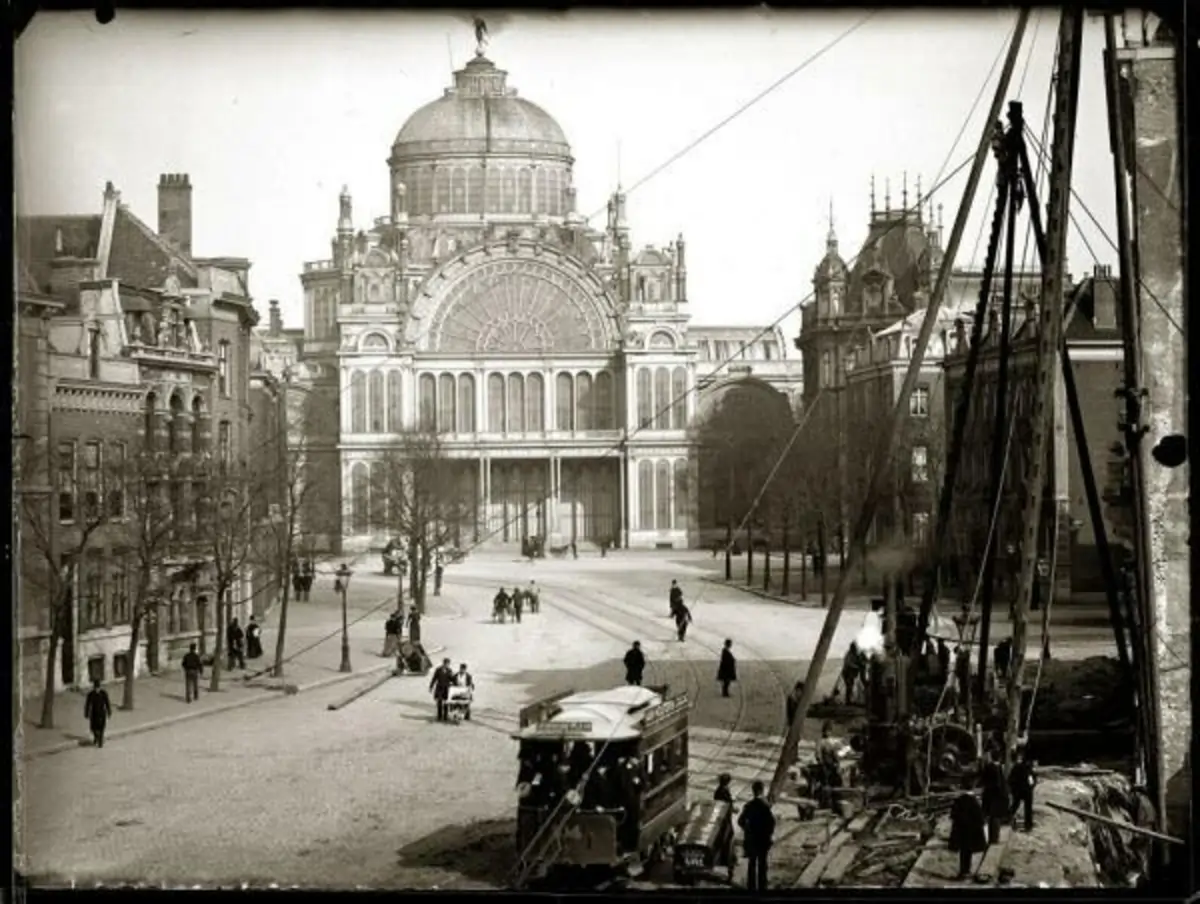
Table of Contents
Understanding “Volksvlijt”: A Meaning Without a Perfect English Equivalent
The word volksvlijt fuses:
- volks – “of the people/belonging to the citizens”
- vlijt – diligence, industry, assiduous effort
In its 19th-century context, it became a rallying ideal: Collective civic effort toward progress.
The Palace was conceived as a physical embodiment of this ideal, a monumental structure celebrating education, culture, industry, and national ambition.
Samuel Sarphati: The Driving Force Behind the Palace
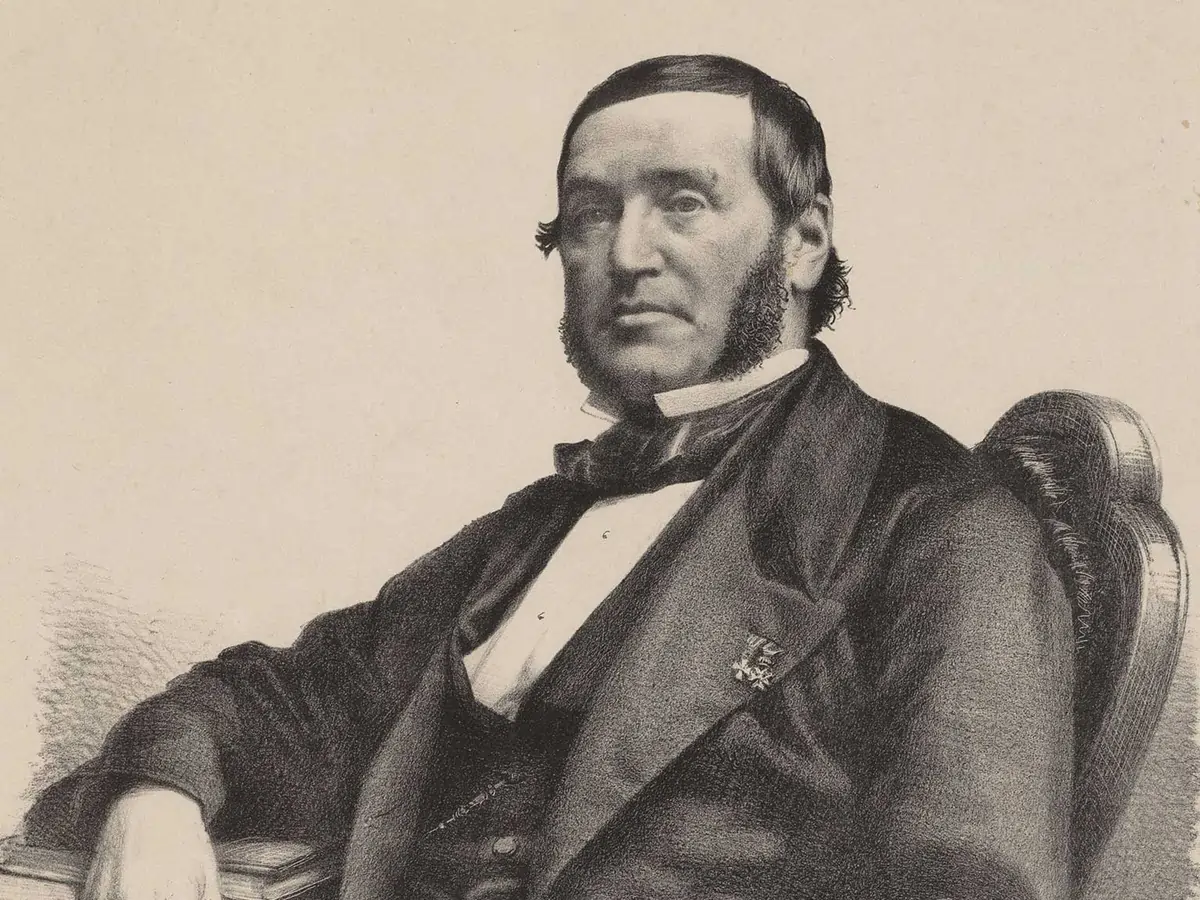
The Palace cannot be understood without Dr Samuel Sarphati (1813–1866), one of Amsterdam’s most forward-thinking citizens.
Sarphati’s reforms shaped an entire era:
Public Health
- Introduced modern waste-collection systems
- Employed the urban poor
- Installed public toilets and urinals to combat citywide stench
Food Supply
- Built a modern steam-powered bread factory
- Lowered bread prices dramatically
- Improved nutrition for working families
Urban Expansion
- Proposed Amsterdam’s first major expansion since the 17th century
- Envisioned new districts beyond the medieval gates
- Saw industry, not trade, as the future economic engine
Architecture & Hospitality
- Initiated the project that became the Amstel Hotel
Sarphati wanted Amsterdam to step confidently into the modern industrial age. The Palace was the visible centrepiece of that transformation.
Architectural Inspiration: From the Crystal Palace to Frederiksplein
After visiting London’s Great Exhibition of 1851, Sarphati returned determined to bring an equivalent monument to Amsterdam.
Architect: Cornelis Outshoorn
- Among Amsterdam’s leading 19th-century architects
- Also known for the Amstel Hotel and Grand Canal mansions
International Engineering Collaboration
New scholarship (e.g., Van Tussenbroek, 2020) reveals that the Palace’s engineering was far more international than earlier histories suggest:
- Rowland Mason Ordish (London) – structural engineering
- William Henry Le Feuvre (London) – iron load calculations
- Iron components cast in Yorkshire and Birmingham
- Prefabricated in Britain, assembled in Amsterdam
The Palace was one of the earliest multinational engineering projects in the Netherlands.
Construction History (1858–1864)
Most online sources simplify construction dates, creating confusion.
1858 – Preparatory Works Begin
- Frederiksplein is designated as the official building site
- Existing structures cleared
- Ground levelling and geological surveys
- Infrastructure preparation (canals, material transport routes)
These were pre-construction activities.
1859 – Real Construction Begins
The first pile was driven on 7 September 1859, documented in:
- contemporary newspapers
- KNSM archives
- OpenResearch Amsterdam engineering papers
This marks the official structural start.
1864 – Opening of the Palace
Six years of construction (delayed by custom ironwork and shipping logistics) culminated in the grand opening on 16 August 1864.
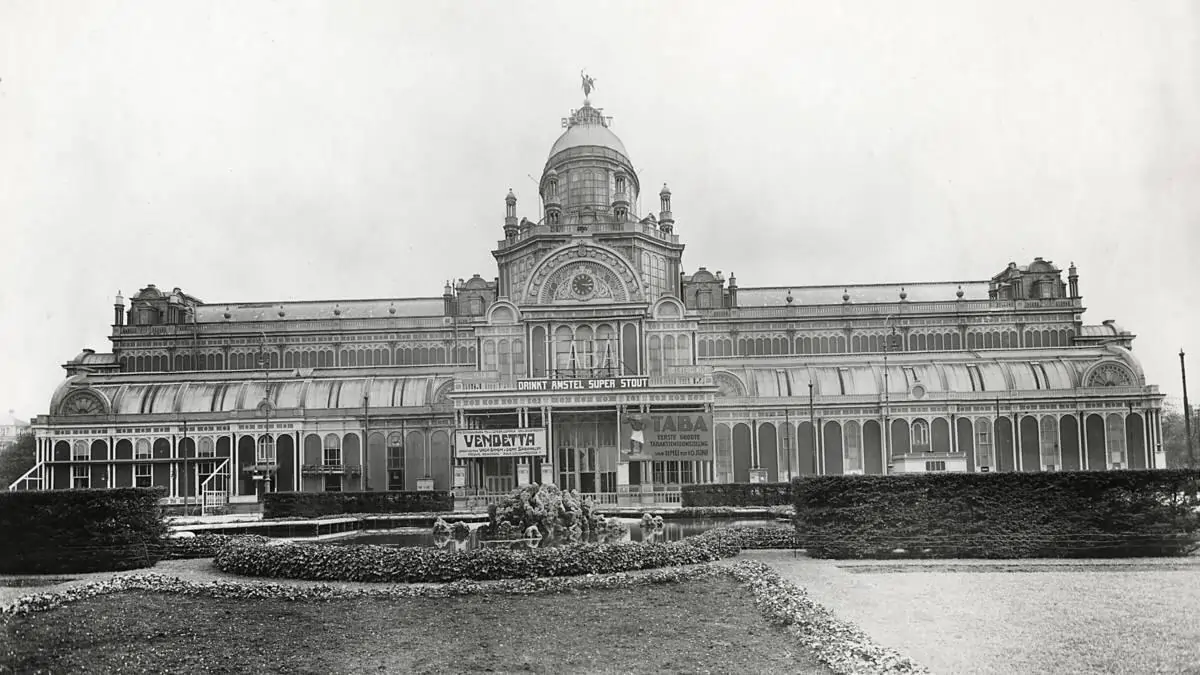
Architectural & Technical Features
The building was a marvel of:
Scale
- Approximate footprint: 20,000 m² (roughly Dam Square)
- A central dome of 64 metres
Materials
- Cast-iron skeleton
- Extensive glass roofing and walls
- Mosaic flooring
- Ornamental galleries and balustrades
Lighting
- More than 6,000 gas lamps were a futuristic spectacle in 1864
Structure
- Built on thousands of piles
- Prefabricated parts required an exact fitting
- Non-standardised components caused delays
It was one of the most advanced structures of its age in Northern Europe.
Purpose: Industry, Education, Culture & Civic Pride
Originally Intended For
- Industrial expositions
- Trade fairs
- National showcases of technological innovation
What It Became
- Weekly concerts (from 1865 onward)
- Exhibitions of art, science, and crafts
- Fashion displays
- Lectures
- Community celebrations
The Organ
In 1875, a monumental Cavaillé-Coll concert organ was installed, attracting Europe’s finest organists.
Nicknames
- Volksvlijt, it’s official, an idealistic name
- Volkspret (“People’s Fun”) was coined when popular entertainment filled the calendar
Decline: Costs, Competition & Changing Tastes
The Palace struggled for decades:
- Extremely expensive to heat, light, repair, and secure
- No sustainable industrial exhibition funding
- Growing competition from modern theatres, halls, and cinemas
- Difficulties adapting a Crystal Palace–style structure to evolving needs
By the 1920s, it was a beloved but financially fragile institution.
The Great Fire of 1929
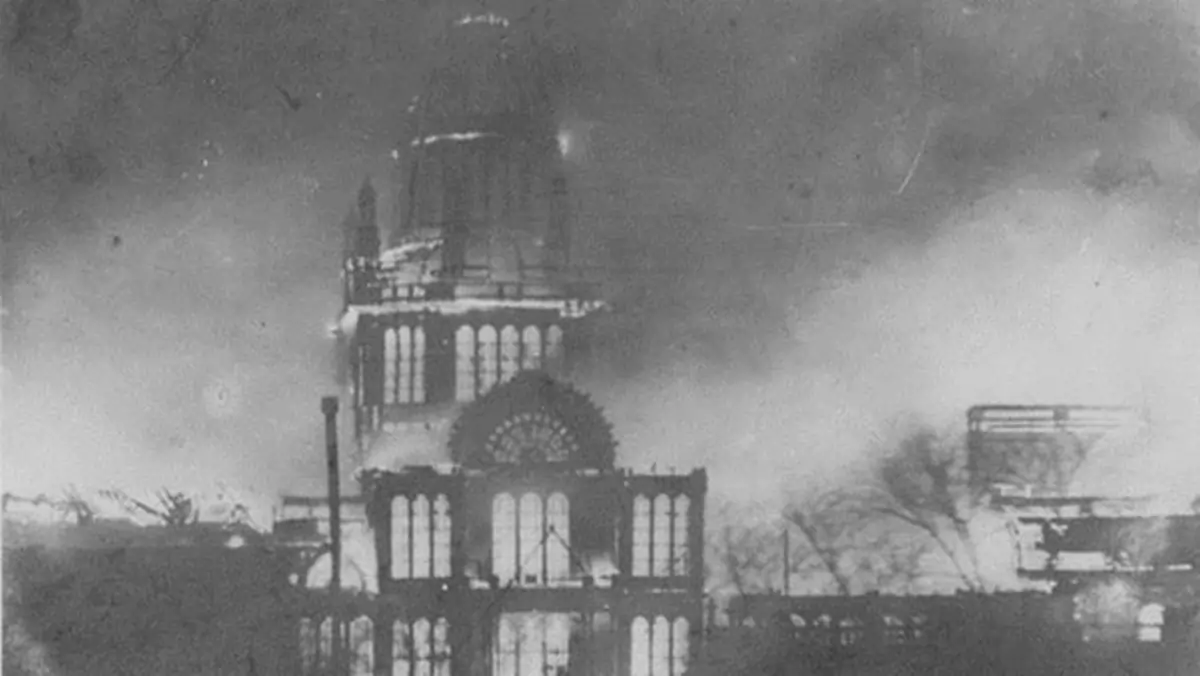
During the night of 17–18 April 1929, a fire broke out and burned the palace to the ground.
Likely contributing factors:
- Aging electrical wiring
- Gas-lighting risks
- Highly flammable internal materials
- Lack of modern fire-suppression systems
The blaze destroyed everything except the brick arcades, which stood for several more decades.
Demolition & Replacement (1960–1961)
The remaining galleries were removed in 1960–1961 to clear space for:
De Nederlandsche Bank Headquarters (DNB)
- Architect: Marius Duintjer
- Built in heavy, modernist forms
- High-security complex
- Widely criticised for replacing a civic icon with a fortress-like structure
On Frederiksplein, many still feel the Palace deserved a better successor.
Legacy, Memory & Modern Revivals
Artistic Revival: “Palace Ruin”
Artist James Beckett created a sculptural installation referencing the Palace’s façade fragments and creating a dialogue between:
- financial systems
- architectural memory
- industrial optimism
- destruction and reconstruction
Reconstruction Movements
At various times, groups led by cultural figures (like Wim T. Schippers) proposed rebuilding or recreating the Palace. None gained political momentum, but the idea resurfaces every decade.
Where the Palace Lives On
- Frederiksplein – the original footprint
- Schiphol Airport – a reconstructed section serving as a bar/restaurant
- Amsterdam City Archives – original drawings, photos, and documentation
- Sarphatipark & Wertheimpark – parks named for key figures connected to this era
The Palace may be gone, but its spirit still shapes Amsterdam’s cultural memory.
Visiting the Site Today: What to Look For
At Frederiksplein, visitors can:
- Observe the geometry of the plaza, which still hints at the Palace’s footprint
- Contrast the airy Victorian ideal with DNB’s defensive architecture
- View historic images on-site or through AR apps
- Reconstruct sightlines from the 19th century using photos
For the historically inclined, this stop is essential for understanding Amsterdam’s transition into modernity.
Why the Palace Matters to Amsterdam’s Story
The Palace of Volksvlijt stands at the crossroads of:
- industrialization
- international engineering
- urban expansion
- Jewish civic history
- architectural innovation
- public culture and education
It was Amsterdam’s bold announcement to the world that it was ready to join the age of iron, steam, glass, and global ambition.
Even in its absence, the Palace remains a monument not of stone and metal, but of vision.
Continue Your Journey: From Frederiksplein to Rembrandtplein
If the story of the Palace of Volksvlijt inspires you to explore more of Amsterdam’s evolving public spaces, then Rembrandtplein is a natural next step.
Like Frederiksplein, it transformed dramatically during the 19th and early 20th centuries from a butter market and winter ice rink into one of the city’s most vibrant entertainment squares.
Today, it blends nightlife, cafés, theatres, and monumental sculpture with traces of its older urban past.