Table of Contents
A Small Bar With an Outsized Impact
Along the historic Zeedijk, one of Amsterdam’s oldest streets, stands Café ’t Mandje, a pub whose cultural footprint far exceeds its modest size.
Founded in 1927 by the unforgettable Bet van Beeren, it remains one of the city’s strongest symbols of inclusivity, LGBTQ+ history, working-class culture, and grassroots community spirit.
Many articles focus only on its queer heritage, but the real story of ’t Mandje is far broader: it’s the story of a neighbourhood, a family, and a century of social change in Amsterdam.
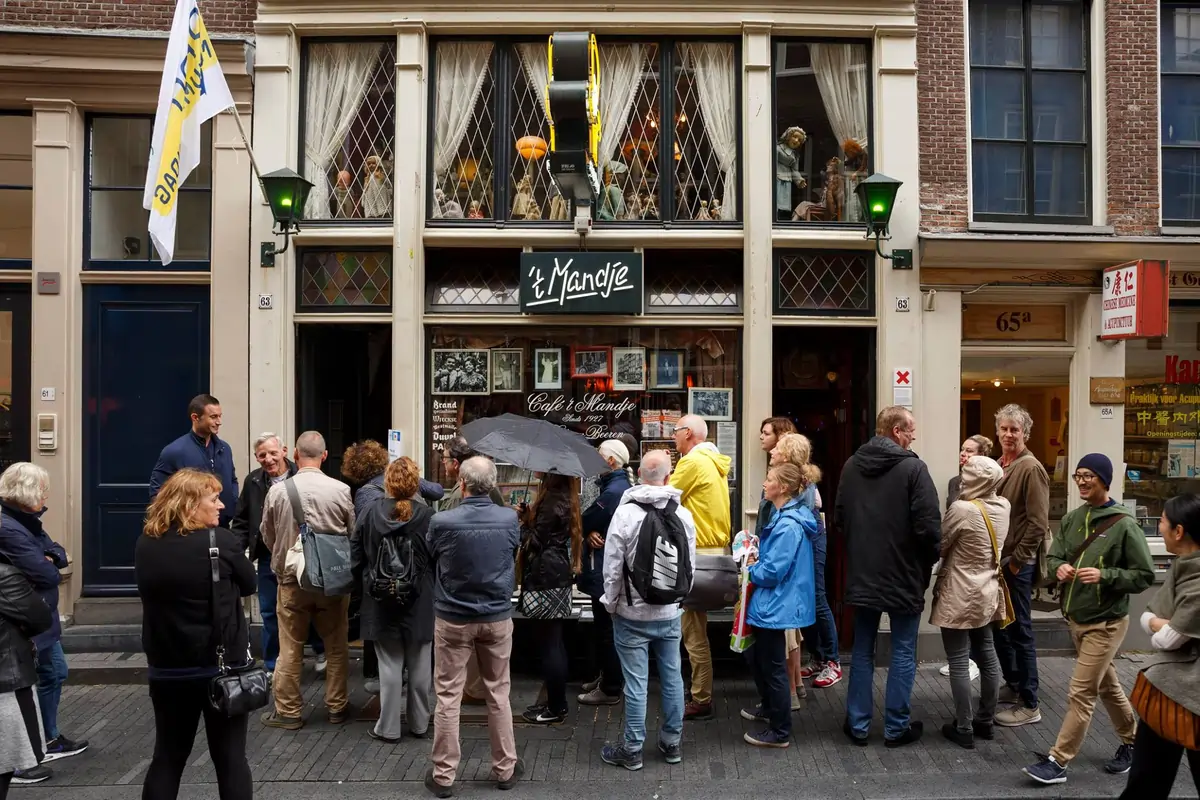
The Zeedijk: The Working-Class Heart of Old Amsterdam
Long before modern nightlife transformed the Red Light District, the Zeedijk was a rough-edged, multicultural artery of the city.
Sailors, merchants, Chinese immigrants, labourers, musicians, and sex workers shaped the street into a vibrant, sometimes unruly, but deeply human part of Amsterdam.
Café ’t Mandje emerged from this world as a tiny bar infused with the energy, humour, and resilience of the neighbourhood around it.
Bet van Beeren: The Fearless Landlady Who Welcomed Everyone
Bet van Beeren grew up on the Zeedijk in a hardworking family.
Her father worked in street construction and paving, while her mother ran a small boarding house and supplemented the family income by delivering fish and vegetables.
This upbringing gave Bet her famously straightforward personality, keen sense of justice, and empathy for people from all walks of life.
When she opened Café ’t Mandje in 1927, she made it a place where:
- Queer people felt safe decades before acceptance was mainstream
- Sailors and dockworkers rubbed elbows with locals, musicians, and artists
- Discrimination was not tolerated, regardless of who you were
- Humour, warmth, and authenticity were the house rules
Bet didn’t merely run the bar; she embodied it. Famous for cruising the city on her motorcycle in leather pants, she quickly became one of Amsterdam’s most recognisable and beloved personalities.
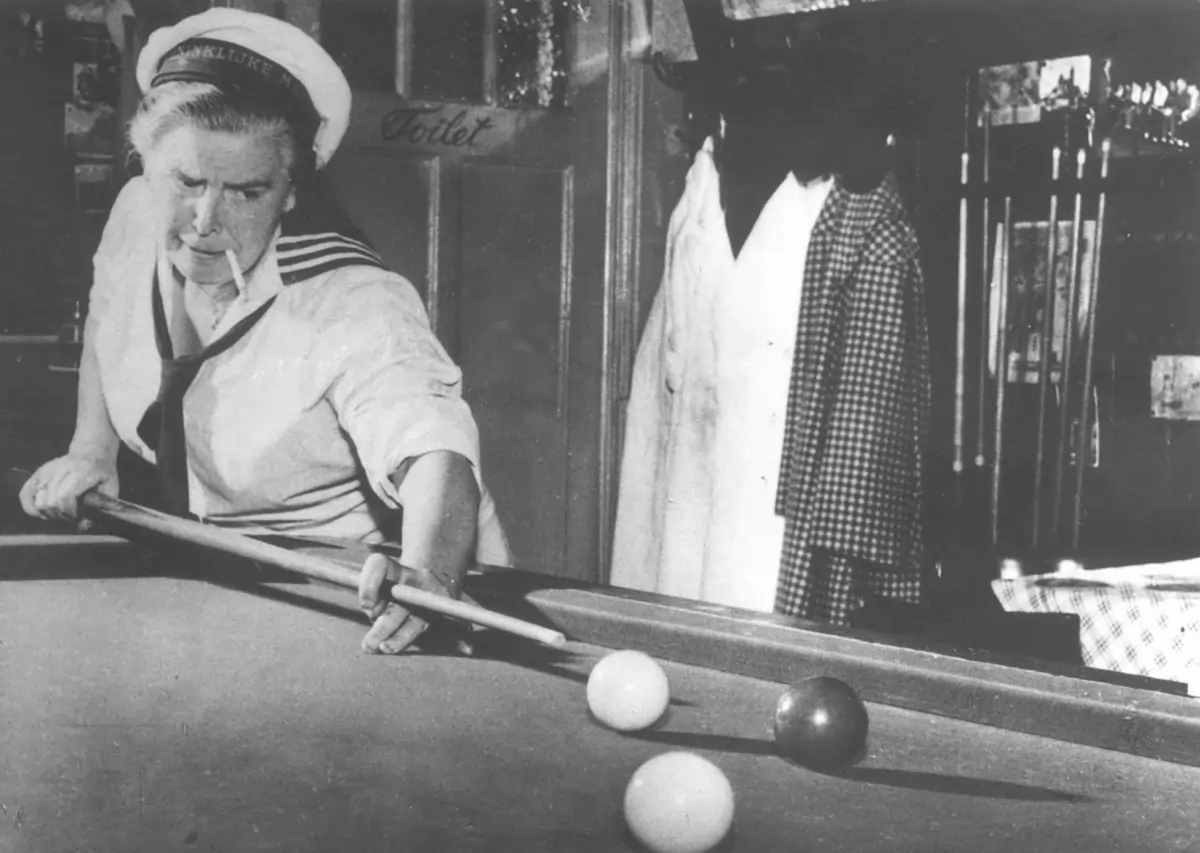
The War Years: Quiet Acts of Courage on the Zeedijk
During the German occupation (1940–1945), the Zeedijk faced hardship, scarcity, and danger.
Café ’t Mandje remained open as long as possible, providing what little comfort people could find.
While not documented as a formal resistance hub, several neighbourhood accounts suggest that Bet:
- offered shelter to people trying to avoid authorities
- helped with discreet message-passing
- shared food during shortages
In a time of fear, the pub became a haven where ordinary people could connect, laugh, and support each other.
After Bet: Social Change, Tough Regulations & Closure (1967–1982)
Bet passed away in 1967, exactly 40 years after opening her café. Her sister Greet van Beeren took over and kept the spirit of inclusivity alive.
However, by the early 1980s, new building regulations around hygiene, fire safety, and structural integrity made it impossible to continue operating without major renovations.
Most authoritative sources confirm the closure year as 1982.
Although the bar closed, Greet preserved everything: every photo, lamp, postcard, and keepsake just as Bet had left it.
The 1998 Gay Games: A Historic One-Week Resurrection
When Amsterdam hosted the Gay Games in 1998, Greet reopened the bar for a single week. Visitors were stunned: it was a perfectly preserved time capsule, untouched since the 1960s.
The bar became one of the most talked-about spots of the Games.
Greet passed away in 2007, precisely 40 years after Bet, an archival fact often noted for its striking symmetry.
Restoration & Rebirth: A Meticulous Preservation Project
When plans finally emerged to reopen ’t Mandje permanently, both heritage conservationists and the Beeren family agreed that the original interior must remain intact.
To achieve that:
- Every inch of the pub was photographed in detail.
- All objects, including original floorboards, were carefully dismantled and labelled.
- Modern sanitation, wiring, safety systems, and soundproofing were installed.
- Every item was returned to its exact original position.
The result is a bar that looks like 1930s Amsterdam but functions like a modern venue.
The Beeren family still owns and operates Café ’t Mandje today.
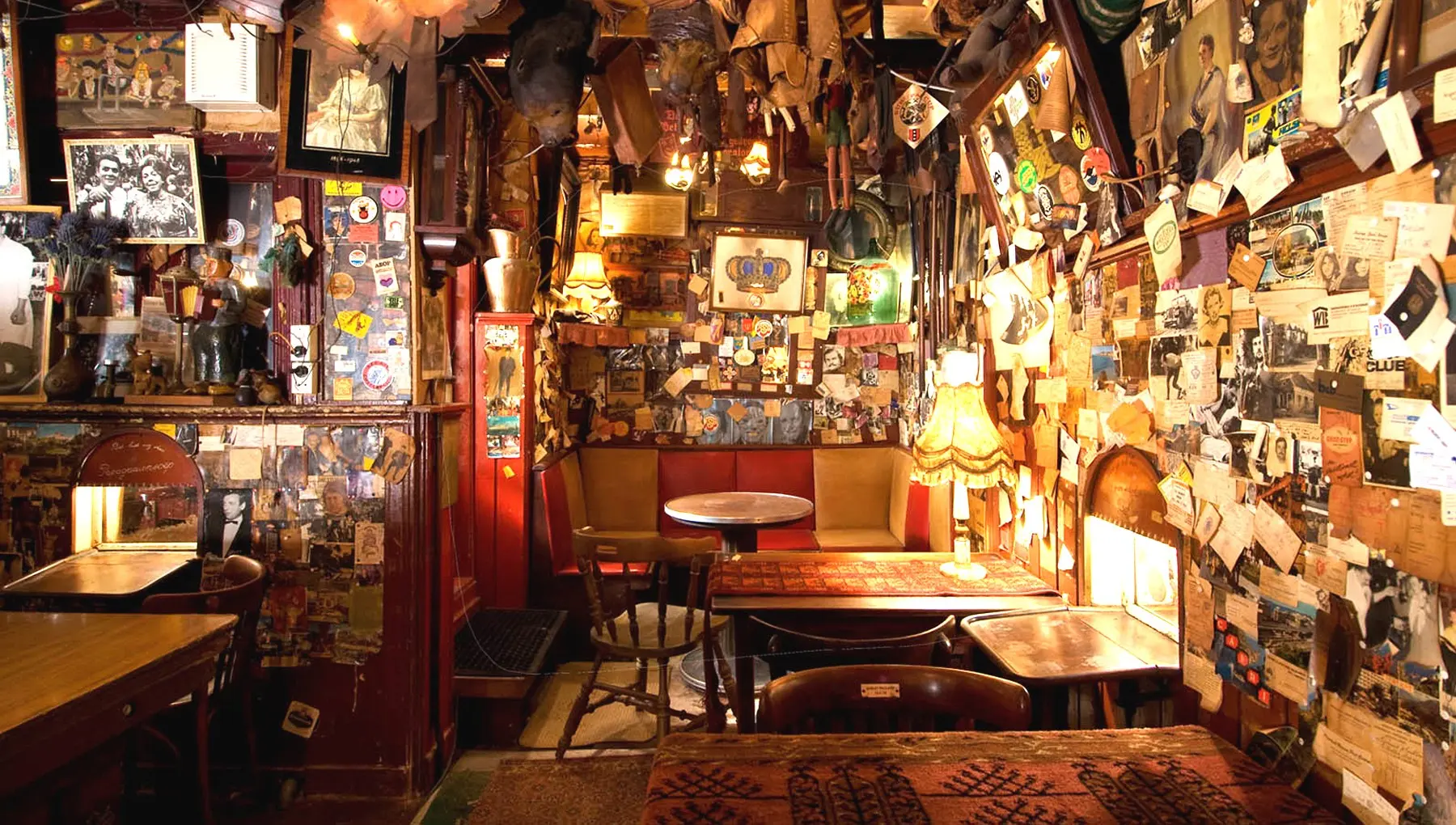
Visiting Café ’t Mandje Today: What to Expect
Stepping inside feels like stepping back in time, but not in a nostalgic or curated way. Everything here feels lived-in, authentic, meaningful.
Highlights to Notice
- Walls covered in decades of memories: photographs, newspaper clippings, postcards, and personal gifts.
- Generations have polished the original wooden bar.
- Diverse, welcoming clientele, queer people, locals, tourists, artists, and newcomers.
- Genuine neighbourhood atmosphere that hasn’t been replaced by trendiness.
Practical Info
📍 Zeedijk 63, Amsterdam
⏱️ Typical hours: afternoons to late night (check current schedule on their official channels)
Nearby Attractions
- Nieuwmarkt Square
- Chinatown
- Oude Kerk
- Red Light District
- Historic canals and an old harbour
Why Café ’t Mandje Still Matters
Few bars in the world combine:
- LGBTQ+ heritage
- Working-class history
- Amsterdam’s cultural identity
- Authentic 20th-century preservation
- A continuous family legacy spanning nearly 100 years
Café ’t Mandje remains a reminder that history isn’t only found in museums, it lives in small rooms where people gather, celebrate, struggle, and connect.
FAQ
Q. Is Café ’t Mandje the oldest gay-friendly bar in Amsterdam?
It is one of the earliest and most openly welcoming LGBTQ+ bars in the city, long before such spaces were recognised publicly.
Q. Can anyone visit?
Yes. Bet’s “everyone welcome” philosophy still defines the bar today. Straight, queer, local, tourist, it doesn’t matter.
Q. Is the interior original?
Almost entirely. What you see today is a painstaking reconstruction of the bar exactly as Bet ran it.
Q. Is it a tourist trap?
Not at all. It draws visitors, but the atmosphere remains genuine and community-driven.
Q. Are photos allowed?
Generally, yes, but always respect patrons’ privacy.
Another Historic Zeedijk Legend – In ’t Aepjen
If Café ’t Mandje gives you a glimpse into the social and cultural life of Amsterdam’s 20th-century working class, then In ’t Aepjen takes you even further back in time.
Just a short walk along the Zeedijk, this centuries-old tavern is one of the oldest surviving pubs in the city, famous for its wooden interior, merchant history, and legendary stories about sailors and travelling tinkerers.