Table of Contents
Quick Facts About the Westertoren
• Height: 85 meters
• Location: Westermarkt, Prinsengracht, Amsterdam
• Completion Year: 1638
• Architects: Hendrick de Keyser and Pieter de Keyser
• Crown Detail: Blue Imperial Crown restored in 2006
• Bell Makers: Hemony brothers
• Access: Seasonal guided tower climbs
• Nearby Sites: Westerkerk and Anne Frank House
What Is the Westertoren in Amsterdam?
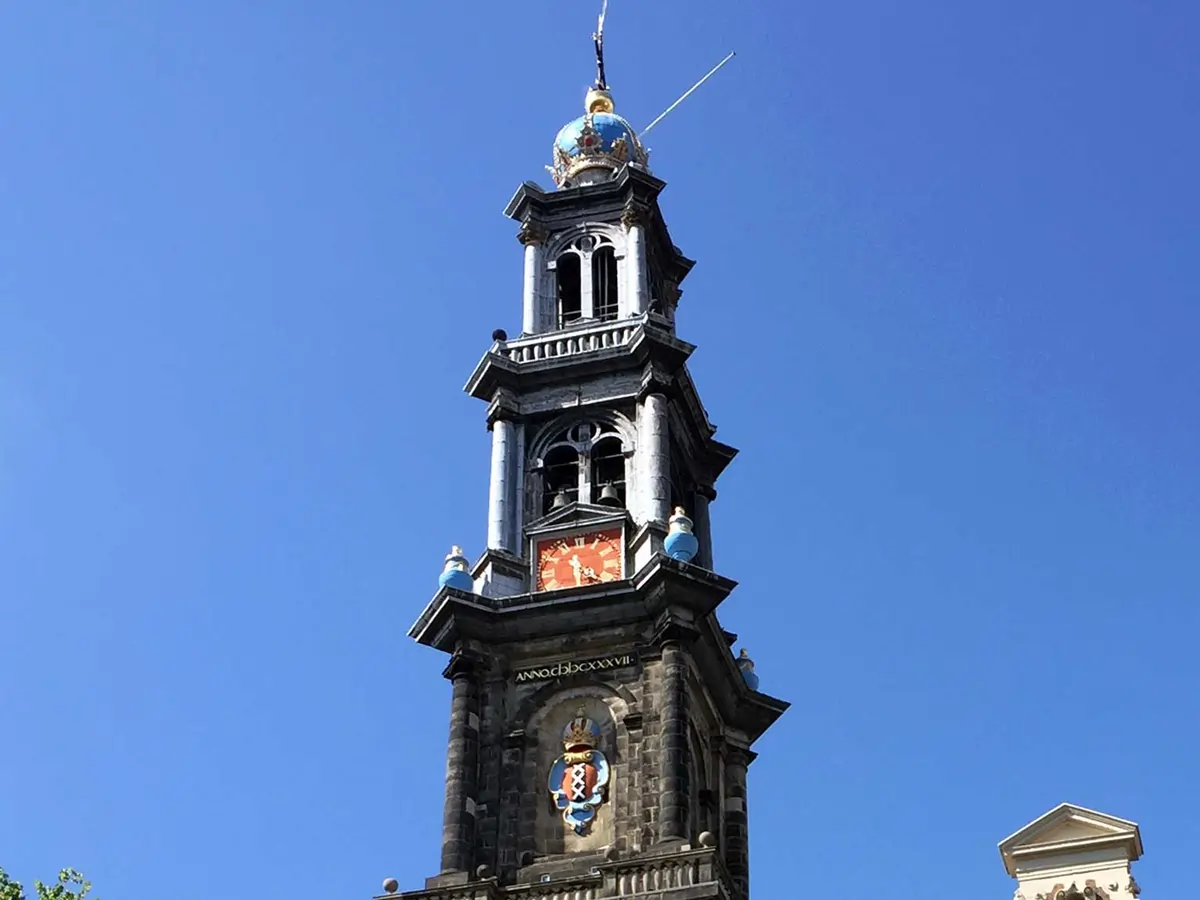
The Westertoren is the 85-meter tower attached to the Westerkerk at Westermarkt in central Amsterdam.
It is the tallest church tower in the city and one of the most recognisable landmarks along the Prinsengracht, a key canal within the UNESCO-listed canal belt.
Its height and blue crown make it visible from bridges, quays and several historic neighbourhoods.

Who designed and completed the Westertoren?
Hendrick de Keyser, a central figure in Dutch Renaissance architecture, designed the tower.
After his death, construction continued under his son Pieter de Keyser.
The tower reached completion in 1638, the same year the Imperial Crown was placed on the spire.
Their combined work produced the tower’s distinctive structure, refined detailing and recognisable silhouette.
What Is the Story of the Imperial Crown on Top of the Westertoren?
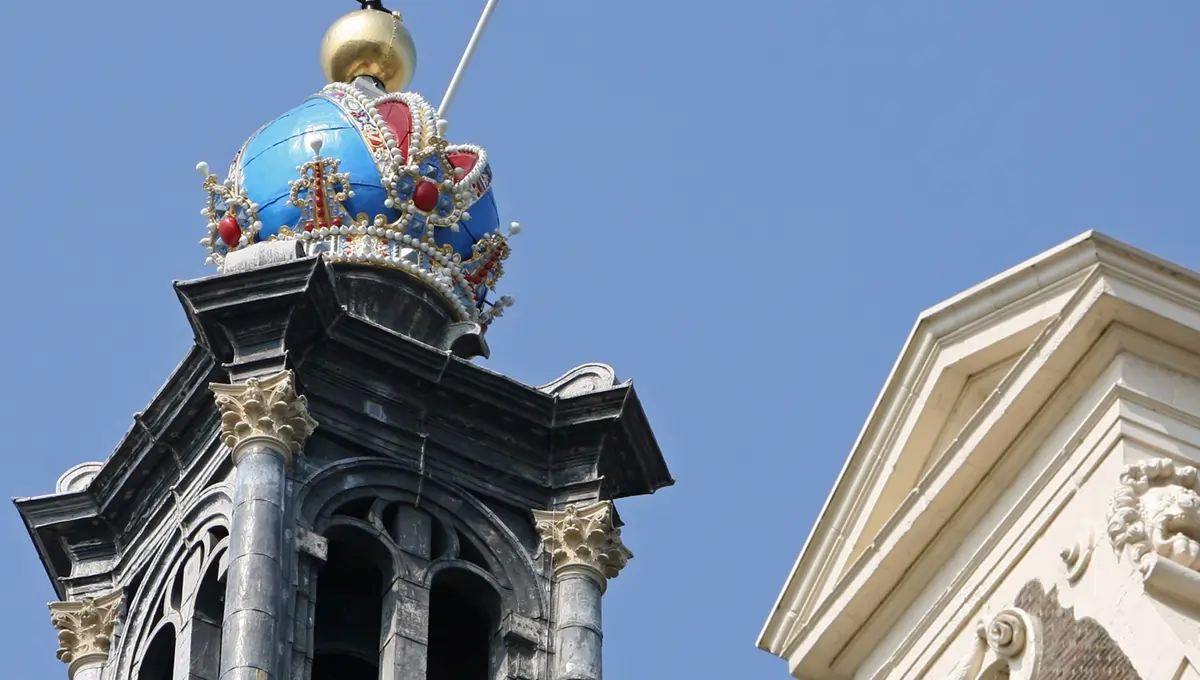
The top of the tower carries a large replica of the Imperial Crown linked to Maximilian I.
Amsterdam received the right to use this crown in its coat of arms in the late fifteenth century.
The crown on the tower has its own colour history:
- Originally blue
- Repainted golden yellow in 1906
- Blue was restored during the 2006 renovation
The blue crown now seen on the tower reflects its earliest and most historically accurate appearance.
What Architectural and Technical Features Define the Westertoren?
Several elements shape the tower’s identity:
- Height of 85 meters, the tallest church tower in Amsterdam
- Stone lower structure combined with brick upper stages and a wooden spire
- A tiered design that narrows gracefully toward the top
- Large clock faces that historically helped regulate civic timekeeping
- A seventeenth-century carillon and bell set crafted by renowned founders, including the Hemony brothers
The Hemony bells are considered among the finest musical bells produced in Europe during the Dutch Golden Age. Their tone continues to play a role in the soundscape of the canal district.
How Is the Westertoren Connected to Anne Frank and Rembrandt?
The Westertoren appears frequently in personal accounts and cultural history.
- Anne Frank wrote about hearing the bells from the Secret Annex, which was only a short distance from the tower.
- Rembrandt van Rijn, associated closely with the Westerkerk, was buried in the church, making the tower part of the same historic site connected to his final years.
These associations link the tower to both artistic heritage and one of the most widely read personal wartime diaries in the world.
Can Visitors Climb the Westertoren and What Can They Expect?
During the warmer months, guided climbs of the tower are available.
The interior contains steep stairs and narrow sections, which is why access is only possible through supervision.
Visitors who join a tour reach an outdoor platform with wide views across:
- The canal belt
- The Jordaan district
- The city centre
- Key landmarks such as the Anne Frank House and the Royal Palace
Because space inside the tower is limited, advance booking helps secure a preferred time slot.
What Civic and Historic Functions Has the Tower Performed?
Throughout the seventeenth century and beyond, the tower served public needs:
- Its height assisted in monitoring fires and movement on the waterways
- The clock faces provided consistent time signals
- The bells helped regulate work hours and public announcements
The tower remains under municipal ownership, a reminder of its long civic role in Amsterdam’s urban life.
How Does the Westertoren Fit Into the Surrounding Urban Landscape?
The tower stands beside the Westerkerk on the Prinsengracht, placing it within a historic area that includes:
- The Anne Frank House
- The Jordaan neighbourhood
- The canal belt is part of the UNESCO World Heritage listing
Its location near cultural institutions, cafés and historic streets makes the tower an anchor point for visitors exploring central Amsterdam on foot.
What Restoration Work Has Taken Place on the Westertoren?
The most significant modern restoration was completed in 2006.
Key updates included:
- Returning the crown to its original blue finish
- Renewing weathered exterior surfaces
- Stabilising the spire
- Restoring the clock faces and bell mechanism
These efforts protected the structure while maintaining its authenticity.
Why Is the Crown Colour Correction Important for Accuracy?
Precise historical details strengthen trust in heritage research and improve the article’s search performance.
The corrected colour timeline also supports users seeking reliable information about the tower, especially those comparing older photographs with modern restorations.
Accurate historical data increases the likelihood of earning featured snippets and expert-level authority signals.
What Should First-Time Visitors Know Before Planning a Visit?
Visitors benefit from noting:
- Tower climbs are seasonal
- Access is limited to small groups
- The immediate area can be busy due to the popularity of the Anne Frank House
- Photography from the viewing platform offers some of the clearest canal-belt panoramas
Many travellers combine a climb of the Westertoren with a visit to the Westerkerk interior.
How Is the Westertoren Connected to the Westerkerk?
For readers interested in learning about the church connected to the tower.
You can explore the full history and visitor information of the Westerkerk on this page: The Wester Church.
It covers the building’s origins, interior features and its place within the surrounding canal district.