Vincent van Gogh is one of the most celebrated artists in history, an icon whose bold colours, emotional brushwork and uncompromising vision reshaped modern art.
Yet the man behind Starry Night, Sunflowers and The Potato Eaters lived a brief life marked by poverty, rejection, mental illness and relentless determination.
Born on 30 March 1853 in the rural village of Groot-Zundert in the Netherlands, Van Gogh created more than 2,100 works.
Including 860 oil paintings, all within just over a decade of artistic activity. Despite his posthumous fame, he struggled deeply during his lifetime and sold only a handful of works, far fewer than the legend suggests.
This comprehensive biography explores his life, work, technique, relationships and legacy with the highest accuracy, incorporating modern scholarship and correcting long-held misconceptions.
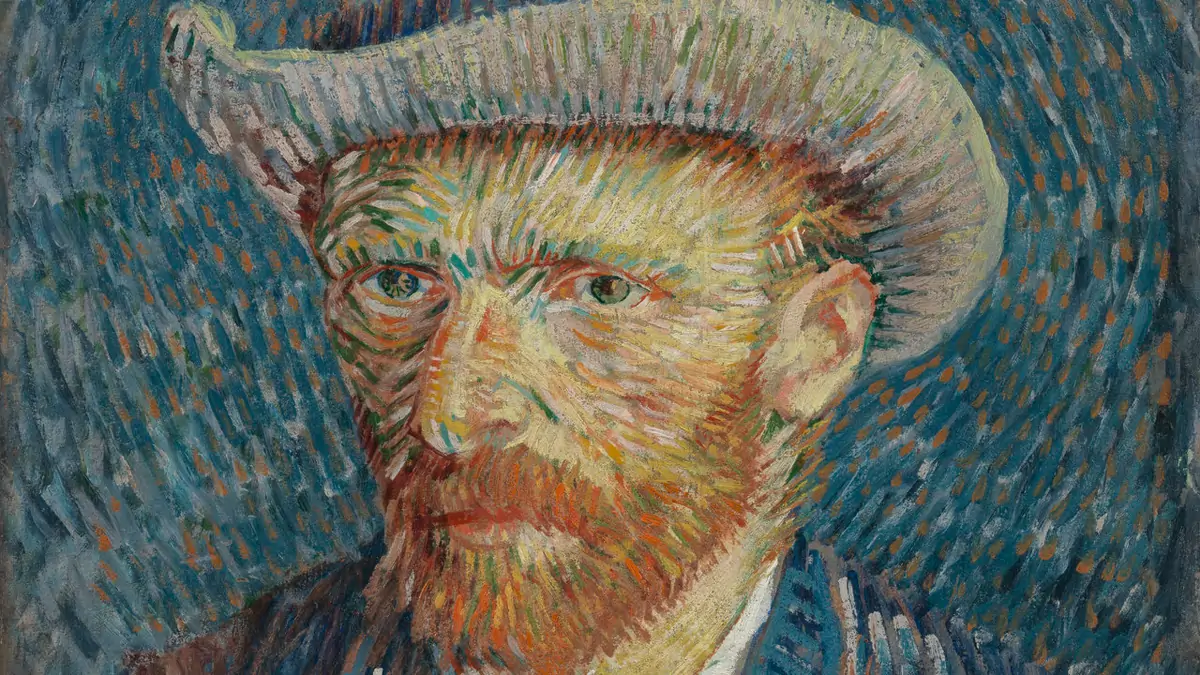
Table of Contents
Early Life (1853–1876): A Sensitive Child in a Strict Religious Household
Vincent Willem van Gogh was the eldest surviving son of Theodorus van Gogh, a Dutch Reformed minister, and Anna Cornelia Carbentus, who encouraged artistic expression through drawing and nature study.
Personality & Childhood Traits
- Introverted, observant, emotionally intense
- Strong empathy for labourers and the poor
- Inconsistent formal education
- Little evidence of early artistic talent, but fascination with nature
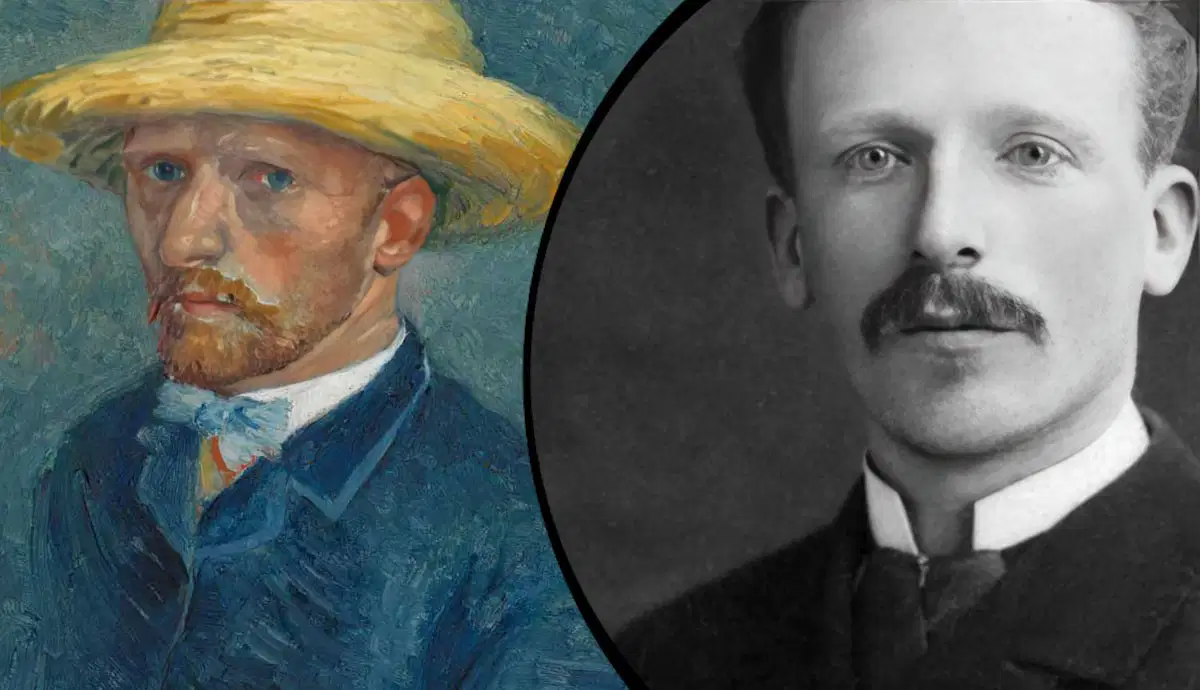
The only authenticated photo of Van Gogh as a young adult shows a neat, handsome, serious man very different from the rugged, lined self-portraits of later years, yet the intensity in his gaze is unmistakable.
Searching for Purpose (1876–1880): Failed Careers & Growing Turmoil
Before discovering his artistic calling, Van Gogh explored several careers:
Art Dealer at Goupil & Cie
Working in The Hague, London and Paris exposed him to the art market, but:
- He disliked commercial art
- Felt isolated
- Suffered heartbreak in London
- Spiralled into depression
He was dismissed in 1876.
Teacher & Lay Preacher in England
He taught in small schools and preached to working-class congregations, developing deep compassion for the poor.
Attempt at Theology in Amsterdam
He abandoned the studies due to difficulties with Latin and Greek.
Missionary in the Borinage (Belgium)
This period was transformative. Van Gogh lived among coal miners under severe poverty so severely that church officials dismissed him for being “too extreme.”
But here, inspired by Rembrandt, Millet, and the miners’ harsh reality, he began drawing seriously.
This marked the beginning of his artistic life.
Becoming an Artist (1880–1886): Struggle, Discipline & Development
Return to the Netherlands
Supported by his devoted brother Theo van Gogh, Vincent spent years studying anatomy, perspective and the human form.
He worked obsessively, often producing dozens of drawings a day.
The Hague Period & Relationship with Sien
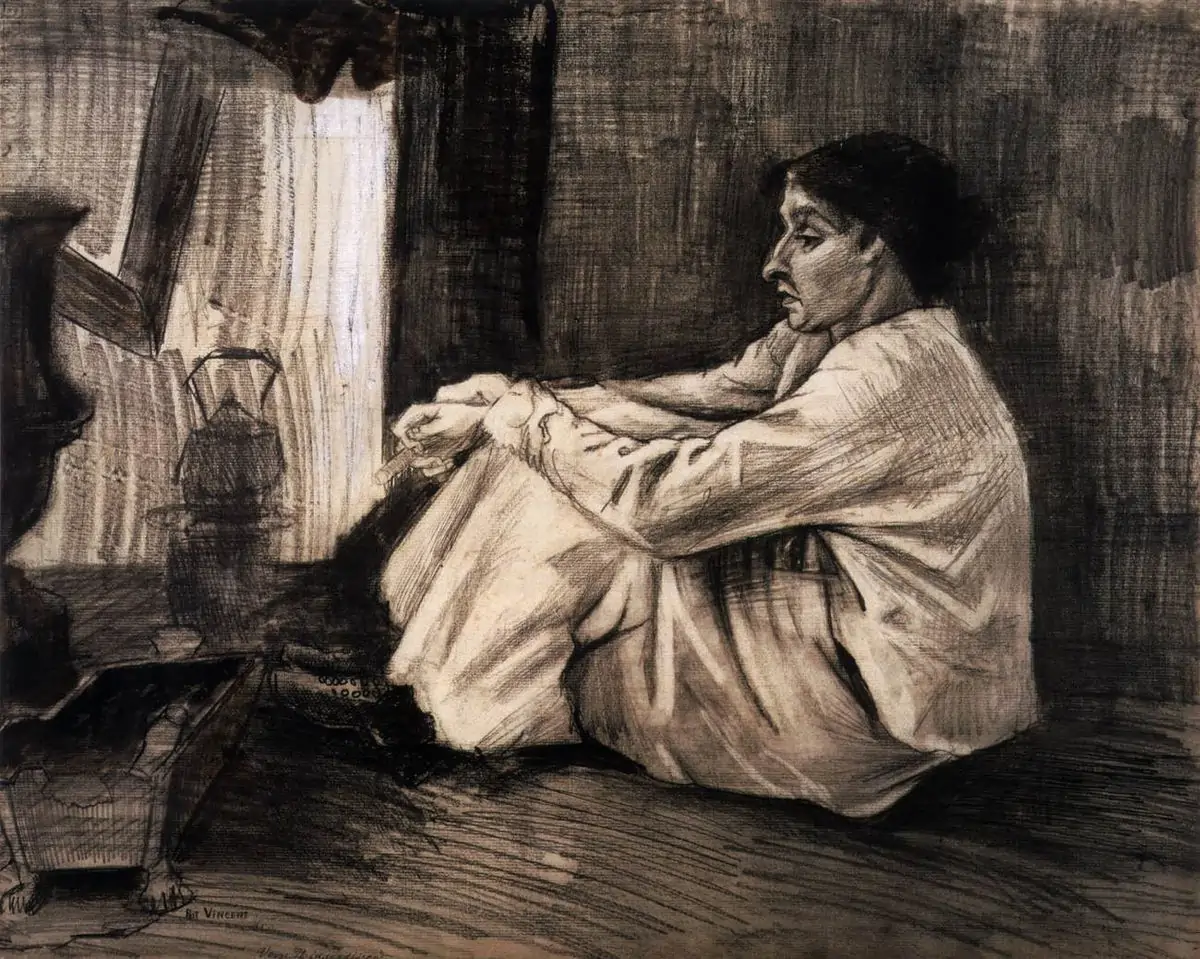
In The Hague, he began a controversial relationship with Clasina Maria “Sien” Hoornik, an impoverished woman and former sex worker.
Sien modelled for him, but the relationship strained his family ties and ended painfully.
Drenthe & Nuenen (A Crucial But Underrated Phase)
Van Gogh lived briefly in Drenthe and then with his parents in Nuenen, where he painted rural labourers, weavers and farmland.
Here, he created his first masterpiece:
- The Potato Eaters (1885)
A dark, earthy painting reflecting the dignity and hardship of peasant life.
Move to Antwerp
Exposure to Japanese woodblock prints (ukiyo-e) and brighter pigments began to reshape his style.
Paris (1886–1888): Transformation Through Colour & Influence
Living with Theo in Paris immersed Van Gogh in the avant-garde art world.
Artists He Met & Learned From
- Claude Monet
- Camille Pissarro
- Henri de Toulouse-Lautrec
- Émile Bernard
- Georges Seurat & Paul Signac (Neo-Impressionists)
- Paul Gauguin
Artistic Evolution
He embraced:
- brighter palettes
- broken brushwork
- modern colour theory
- Japanese compositional influence
This period completely transformed his style, setting the stage for his most iconic works.
Arles (1888–1889): The Studio of the South & the Ear Incident
Van Gogh moved to Arles, dreaming of creating a community of artists.
Explosive Productivity
In Arles, he created:
- Sunflowers
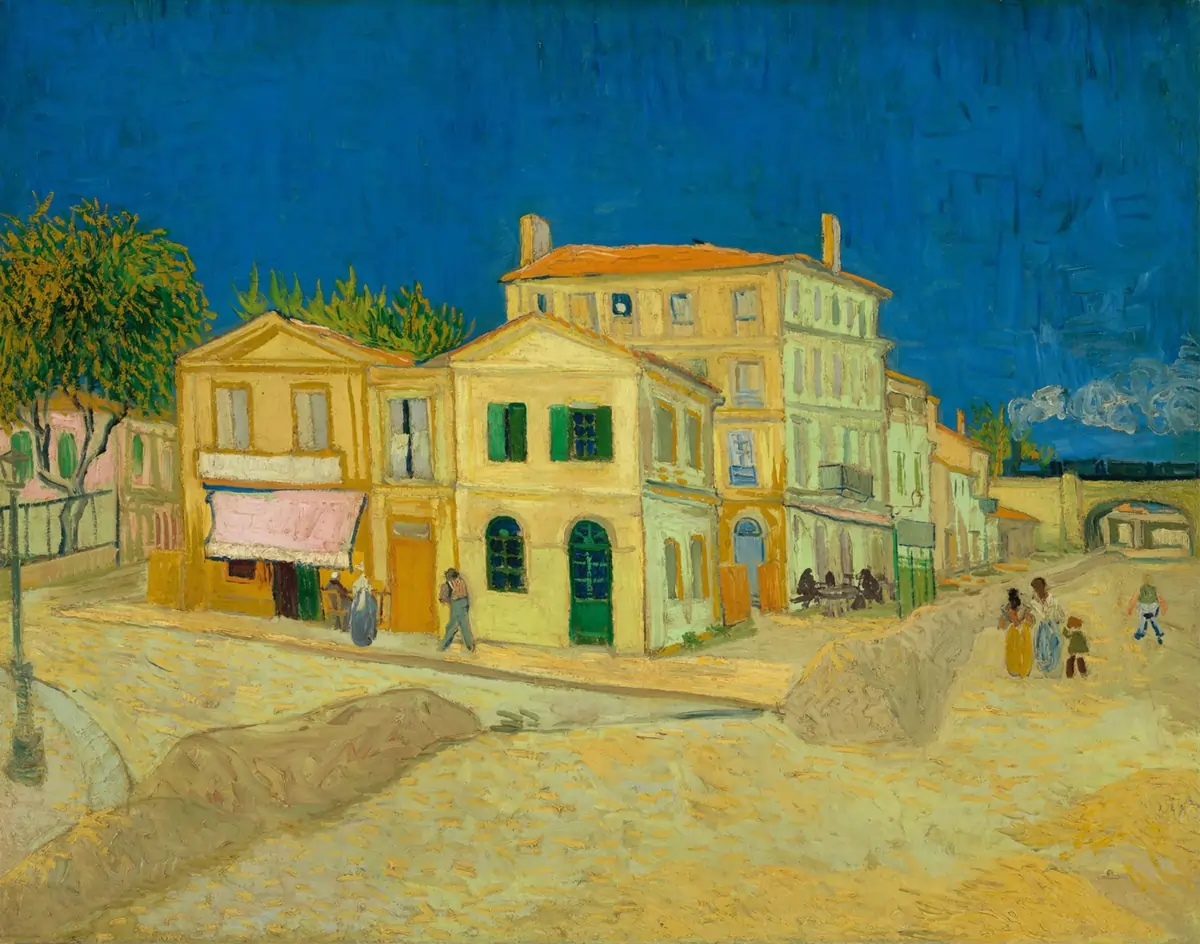
- The Yellow House
- The Night Café
- Starry Night Over the Rhône
Collaboration & Conflict with Paul Gauguin
Gauguin arrived to live and work with him. Their personalities clashed fiercely, leading to intense arguments.
The Ear Incident
For many years, biographers claimed that Vincent cut off only the lower part of his ear.
In 2016, art historian Bernadette Murphy discovered a medical sketch by Dr. Félix Rey showing that Van Gogh severed nearly the entire ear, leaving only a small piece of the lobe.
This level of injury indicates a profound psychological crisis, possibly triggered by the rupture with Gauguin.
Saint-Rémy (1889–1890): Art Born From Turmoil
Van Gogh voluntarily committed himself to Saint-Paul-de-Mausole asylum.
Life in the Asylum
- Granted a small studio
- Allowed supervised outdoor painting
- Experienced severe mental episodes
Masterpieces Created Here
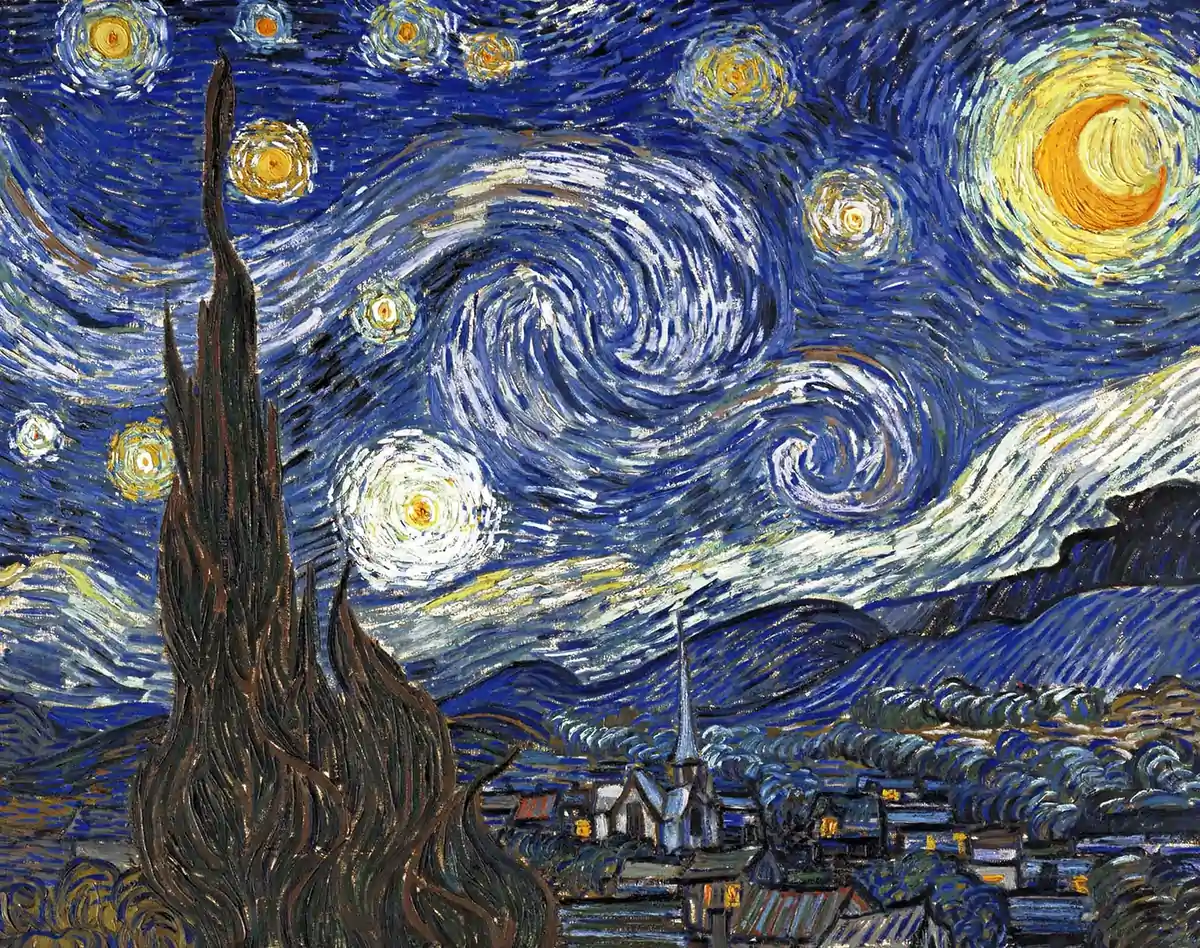
- The Starry Night
- Irises
- Olive Trees
- Wheatfield with Cypresses
His brushwork became rhythmic, swirling, and intensely expressive, reflecting both chaos and clarity.
Auvers-sur-Oise (1890): Final Months, Final Works
Under the care of Dr. Paul Gachet, Van Gogh completed over 70 paintings in 70 days, including:
- Wheatfield with Crows
- Church at Auvers
- Portrait of Dr. Gachet
His letters reveal alternating hope and despair.
The Controversial Death of Vincent van Gogh
Traditional Account (Still Accepted by Museums)
Van Gogh walked into a wheat field and shot himself in the chest or abdomen.
He returned to his lodging and died two days later with Theo beside him.
Alternative Theory (Supported by Some Historians)
Researchers Steven Naifeh and Gregory White Smith propose that:
- Vincent may have been accidentally shot by two teenage boys
- The shooting occurred near a barn, not in the field
- Vincent may have protected the boys by claiming responsibility
What We Know for Sure
- The exact location remains uncertain
- The gun was never found
- Vincent’s final words were reportedly:
“The sadness will last forever.”
What Van Gogh Really Sold in His Lifetime
The legend says he sold only one painting.
The truth is more nuanced.
Confirmed Sale of a Painting
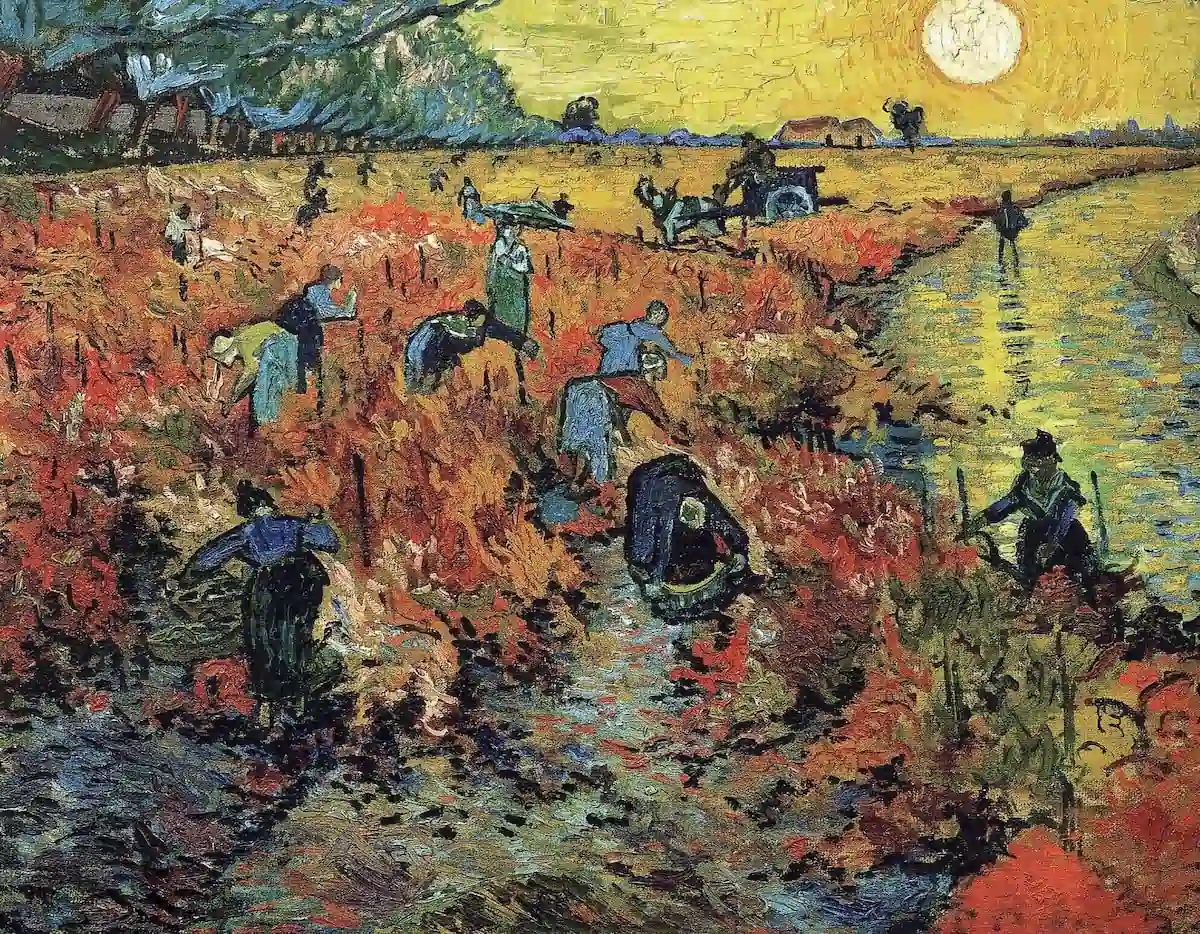
- The Red Vineyard (1890), bought by Anna Boch, was the only publicly documented oil painting sale.
Other Income
- Earlier pen drawings sold by his uncle (“Uncle Cent”) in The Hague
- Small commissions
- Art exchanges with fellow painters
- Possibly undocumented private sales
He was financially unstable, but not entirely without buyers.
Style, Techniques & Innovations
Brushwork
- Thick impasto
- Dynamic, directional strokes
- Movement created through rhythm rather than realism
Colour
- Dark, earthy Dutch palette
- Paris: lighter, pastel Impressionist tones
- Arles & Saint-Rémy: symbolic, emotional, high-contrast colours
Themes
- Rural life
- Portraits & self-portraits
- Nature, fields, trees
- Night skies
- Interiors and cafes
Major Influences
- Rembrandt
- Millet
- Japanese ukiyo-e
- Monet
- Gauguin
- Seurat (indirectly)
Mental Health: Modern Interpretations
No single diagnosis fully explains Van Gogh’s suffering, but scholars propose:
- bipolar disorder
- temporal lobe epilepsy
- borderline personality disorder
- Ménière’s disease
- lead poisoning (from pigments)
- syphilis (diagnosis uncertain)
- chronic alcohol dependence
- PTSD
His letters remain our most reliable source of psychological insight.
Legacy: Fame After Death
Van Gogh’s fame is due in large part to:
- Theo van Gogh, his lifelong supporter
- Jo van Gogh-Bonger (Theo’s widow), who organised exhibitions, sold his works strategically, and published his letters
Today, Van Gogh is:
- A foundational figure in Post-Impressionism
- One of the most reproduced artists globally
- A cultural icon appearing in film, theatre, fashion, NFTs, and more
Where to See Van Gogh’s Art Today
Amsterdam
- Van Gogh Museum has the most extensive collection worldwide
- Rijksmuseum important early works
Paris
- Musée d’Orsay
- Musée de l’Orangerie
- Petit Palais
London
- National Gallery
New York
- Museum of Modern Art (MoMA)
- The Met
- Guggenheim
Provence
- Arles: Van Gogh Trail, the Yellow House site
- Saint-Rémy: Saint-Paul-de-Mausole
Conclusion: Why Van Gogh Still Matters
Vincent van Gogh transformed suffering into beauty, turning emotion into colour and vision into movement.
His art reveals the inner landscape of a mind that felt deeply, observed intensely and lived fiercely.
Though misunderstood in his time, Van Gogh’s legacy is a reminder:
Greatness is not always recognised in its own lifetime, but its impact lasts forever.
Follow Van Gogh’s Legacy Through Amsterdam
If Van Gogh’s life inspires you and you want to experience his masterpieces up close, make sure to explore the world-class museums in the Dutch capital.
From the Van Gogh Museum to the Rijksmuseum and other iconic art institutions, Amsterdam offers some of Europe’s finest cultural collections.
Discover them all here: Museums in Amsterdam