Amsterdam’s charming canal belt hides a story that few visitors ever uncover: the rise and disappearance of medieval walls that once encircled the city, controlled its trade, defined its law, and safeguarded its early growth.
Though nearly all physical remains have vanished, their influence endures in the very layout of the old city.
This guide reveals the true history, surviving traces, and a walking route that accurately, engagingly, and optimally brings the past back to life.
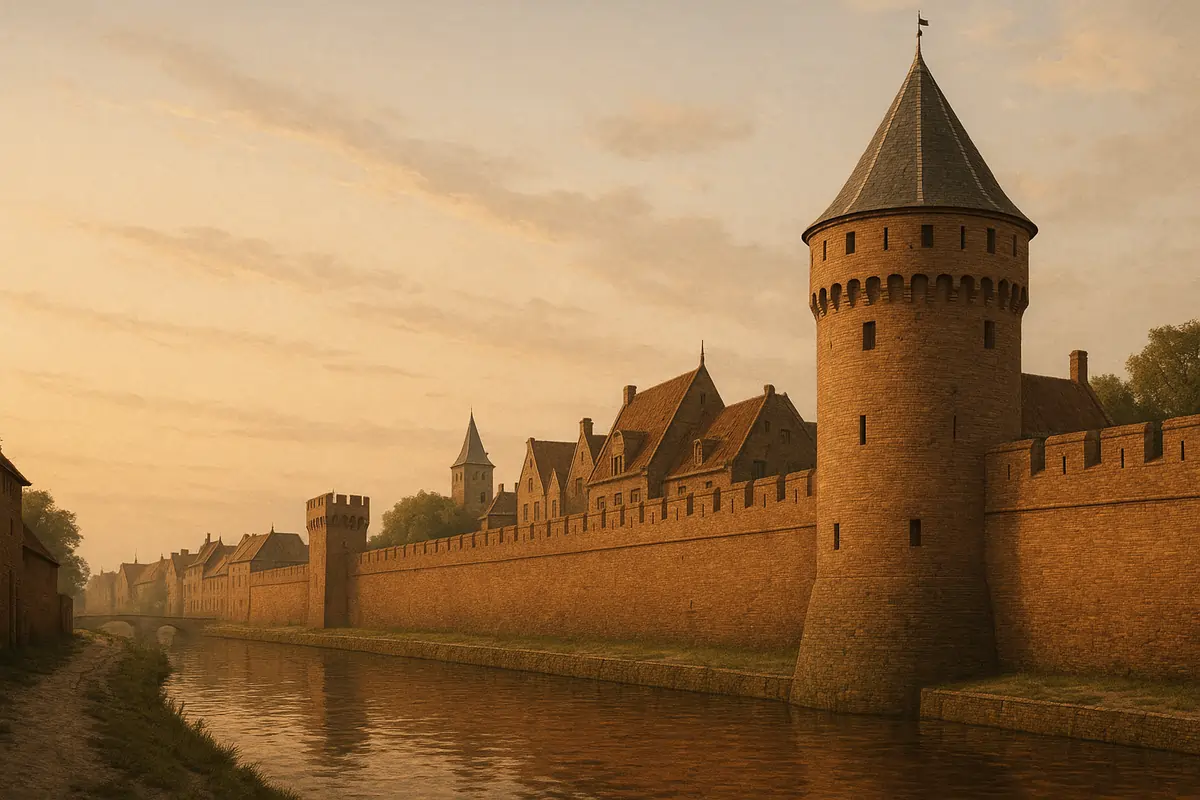
Table of Contents
Why Amsterdam Became a Walled City
In late medieval Europe, a wall was more than a military defence. It controlled commerce, regulated urban jurisdiction, and marked where city authority ended.
Amsterdam resisted fortifying itself for years, believing its commercial neutrality would keep it safe.
But by the late 15th century, rising political pressure and increasing threat from the Zuiderzee forced the city to build a proper defensive and administrative boundary.
The wall served three key purposes:
- Defence from land-based armies and coastal raiders
- Trade regulations for goods entering through specific gates could be taxed and inspected
- Legal jurisdiction: Amsterdam’s laws applied within the wall’s boundaries and ended immediately outside it
This combination made the walls central to Amsterdam’s transformation from a modest trading town to a global hub.
How the First Walls Were Built
Construction began in the late 15th century, with significant work occurring between the 1480s and early 1500s.
Materials
- Primarily brick, the standard building material of the Low Countries
- Reinforced by stone arches, stone base supports, and stone elements in the gate towers
Dimensions (based on consensus in historical records)
- Height: ~5–6 metres
- Thickness: Unspecified for the full wall
- Gate towers, however, had walls nearing 2 metres thick
Rather than a single continuous height, the wall consisted of:
- Curtain walls (brick)
- Defensive towers
- Four primary gate complexes
The Four Major Gates of Medieval Amsterdam
1. Haarlemmerpoort: Main western entrance.
2. Regulierspoort: Southern gate; later replaced by structures such as the Munttoren complex.
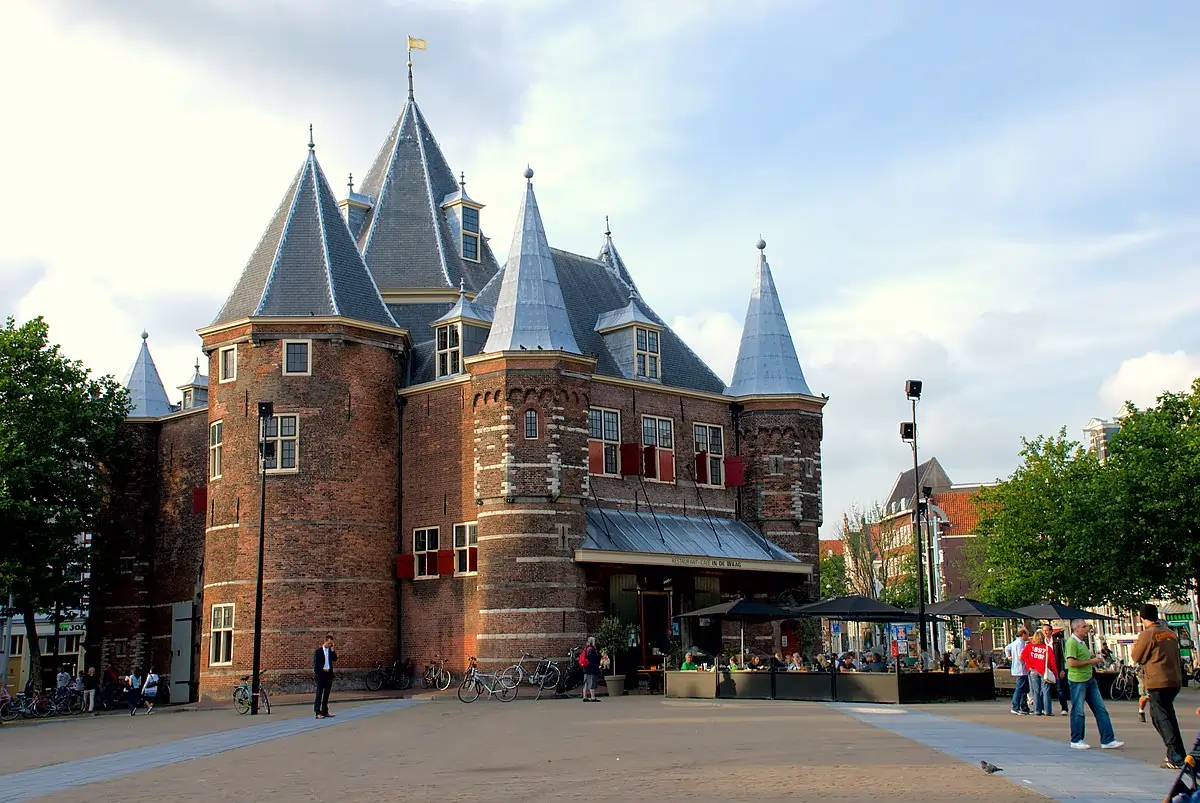
3. Sint Antoniespoort: The most famous surviving structure, now known as De Waag.
4. Heiligewegspoort: A key foot and goods gate connecting markets outside the walls.
No authoritative historical source recognises a “Korsjes Gate.”
Sint Antoniespoort (De Waag): The Real Story
Modern-day De Waag on Nieuwmarkt is one of the best-preserved medieval gate structures in Europe, but its dating is often misunderstood.
What we know:
- The original gate structure likely dates to around 1425
- The 1488 date corresponds to:
- A gable stone
- A renovation or addition
- Not the beginning of the structure
- In the early 17th century, it was converted into the weighing house, where goods entering the city were inspected and weighed
- It symbolised Amsterdam’s strict trade fairness protocols
Its thick, turreted, and imposing walls offer a rare glimpse into what medieval Amsterdam once looked like.
What Remains of the Old Wall Today (Walking Route)
Although the medieval wall itself was demolished during expansion, several components survive:
A. Schreierstoren
A late-15th-century harbour defence tower, part of the wider fortification system. One of the few original towers is still intact.
B. Line of the Wall Along Geldersekade & Kloveniersburgwal
These canals follow the exact alignment of the first brick walls.
C. De Waag (Sint Antoniespoort)
The most substantial surviving structure from Amsterdam’s earliest fortifications.
D. Munttoren Base
Part of the 17th-century successor fortifications, containing foundation elements associated with older defensive structures.
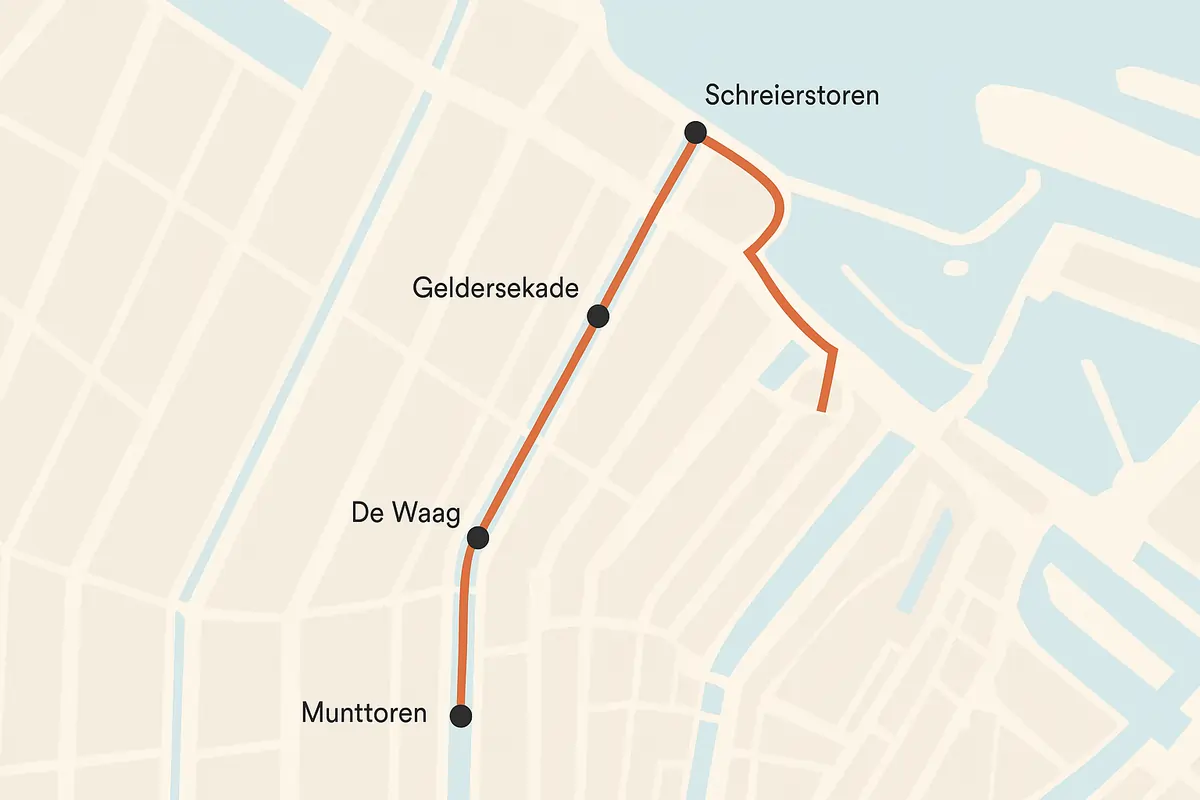
Walking Route (1.5–2 hours)
- Start at Schreierstoren
- Walk along Geldersekade
- Continue along Kloveniersburgwal
- Stop at De Waag on Nieuwmarkt
- Walk southwest toward Munttoren
- End near the site of the former Regulierspoort
This route outlines the perimeter of the medieval city.
Why the Walls Disappeared
As cannons and modern artillery became powerful, medieval walls lost their military function. At the same time:
- Amsterdam’s population exploded
- The city expanded beyond its medieval boundaries
- New canal belts were built
- Walls obstructed transport and trade
By the 17th century, the walls were dismantled, filled in, or absorbed into new buildings.
Their removal allowed Amsterdam to become the city we know today.
Why This Story Still Matters
The walls are shaped:
- The ring-pattern urban layout
- Amsterdam’s trade systems
- It’s the Golden Age of political autonomy
- The layout of canals and neighbourhoods
Knowing this history allows visitors to recognise layers of the city usually hidden beneath everyday streets.
Conclusion
Amsterdam’s medieval walls may no longer exist in their original form, but their legacy remains in the canals, towers, and boundaries that still shape the city.
By following the surviving traces, you can walk through Amsterdam as it once stood, a fortified trading town with gates, towers, taxes, and a growing ambition that would soon change the world.
From Fortified City to Expanding Neighbourhoods: Hidden Gems in Jordaan
The removal of Amsterdam’s medieval walls allowed the city to expand westward, giving rise to new districts like the Jordaan.
Once a working-class neighbourhood outside the old fortifications, it is now a labyrinth of hidden courtyards, canal-side cafés, quirky shops, and peaceful residential lanes.
To continue exploring Amsterdam’s lesser-known stories and neighbourhood secrets, check out: Hidden Gems in the Jordaan