Table of Contents
Introduction: A Shared Past, A Complex Present
Amsterdam’s story isn’t just written in its canals and trade houses; it’s also told in the journeys of those who crossed oceans to call it home.
Among them, the Surinamese community stands out: a group whose history is tightly interwoven with Dutch colonialism, migration, and modern identity.
This article traces the full arc from colonial entanglement and mass migration to modern citizenship debates and cultural influence.
It reveals how the Surinamese shaped the Netherlands and how their presence continues to redefine what it means to be Dutch.
1. Colonial Roots: Suriname and the Dutch Empire
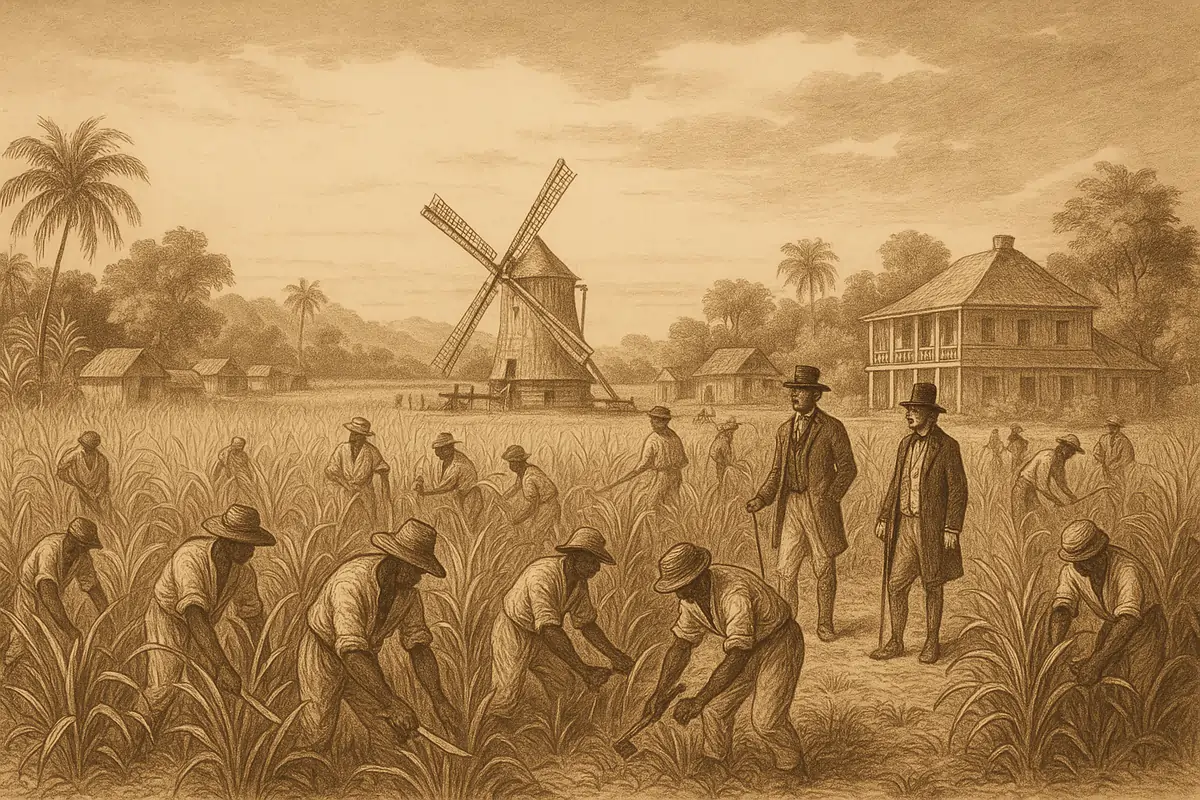
For more than three centuries, Suriname was a Dutch colony and a cornerstone of the Atlantic slave economy.
Its sugar, coffee, and cocoa plantations relied on enslaved Africans trafficked under the control of Amsterdam merchants and the Society of Suriname (1683), a partnership between the Dutch West India Company (WIC), the City of Amsterdam, and the Van Aerssen van Sommelsdijck family.
The wealth generated from these plantations flowed directly into Amsterdam’s economy. Even after slavery was abolished in 1863, the connection persisted.
Dutch remained the official language, and colonial education mirrored that of the Netherlands, forging cultural and administrative bonds that would later facilitate migration.
2. Paths to Migration: From Colony to Kingdom
Under the Charter for the Kingdom of the Netherlands (1954), Suriname became an equal part of the Kingdom, granting its residents Dutch citizenship and the right to live and work freely in the Netherlands.
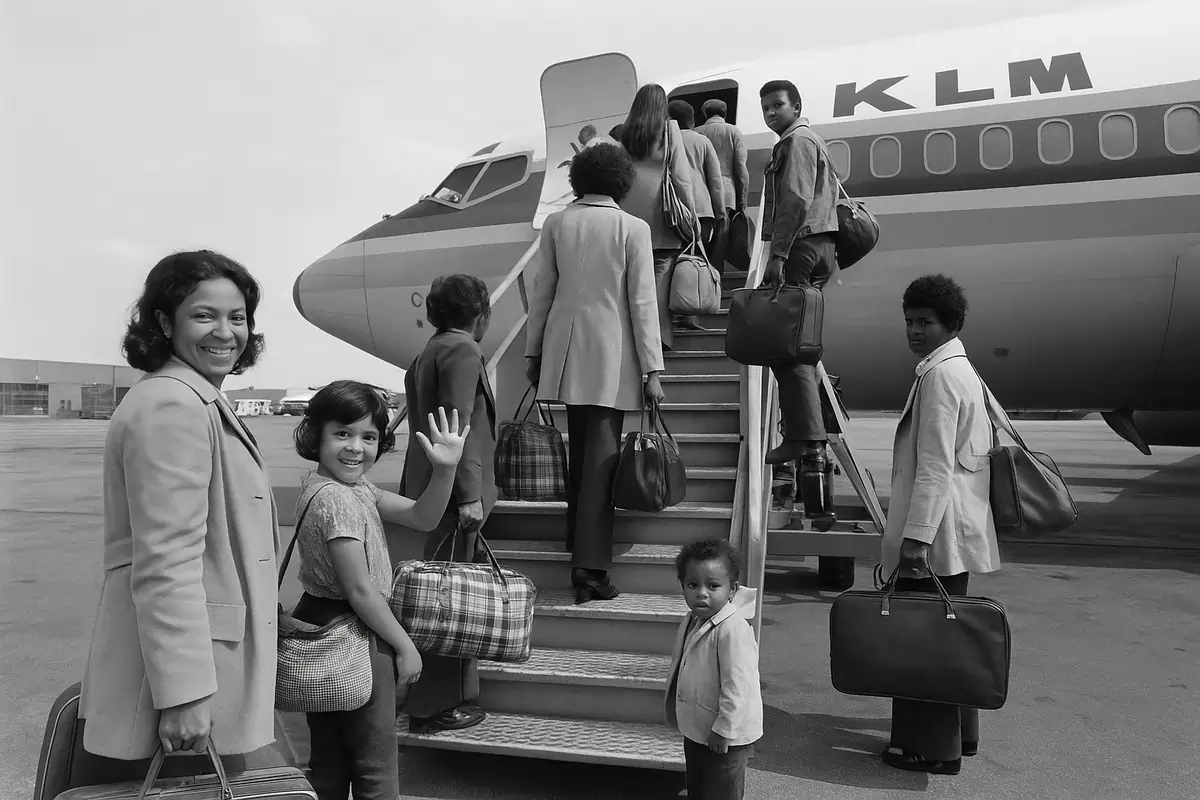
Throughout the 1950s–1970s, tens of thousands of Surinamese migrated to the Netherlands, particularly to Amsterdam, Rotterdam, and The Hague, seeking education, employment, and opportunity.
As Suriname approached independence, this movement intensified. Between 1974 and 1980, approximately 150,000–160,000 people, roughly 35–40% of Suriname’s population of around 350,000, relocated to the Netherlands.
The Toescheidingsovereenkomst (1975) allowed citizens until 1980 to retain Dutch nationality if they moved or formally opted for it.
This migration wave permanently reshaped Dutch society. Amsterdam, in particular, became a centre of Surinamese life, culture, and identity, a vibrant new chapter in the city’s multicultural history.
3. Amsterdam 1970–1990: On to a New Life
The 1970s marked a period of transformation in Amsterdam. Entire neighbourhoods, especially Bijlmermeer (Amsterdam-Zuidoost), became home to newly arrived Surinamese families.
According to the Stadsarchief Amsterdam, many migrants arrived full of hope yet faced significant obstacles: housing shortages, discrimination, and limited access to steady employment.
Still, they built thriving communities. Churches, sports clubs, and cultural hubs, along with iconic eateries like Warung Spang Makandra, helped create a sense of belonging.
By the 1980s, Surinamese influence was unmistakable. From the rhythms of kaseko music to social movements demanding racial equality, Amsterdam’s identity became deeply shaped by Caribbean energy and resilience.
4. Identity and Belonging: Dutch, Surinamese, or Both?
Today, over 350,000 people of Surinamese descent live in the Netherlands, forming one of the country’s largest post-colonial communities.
Research shows that the Surinamese are among the most integrated minority groups, yet racial and cultural barriers still linger.
For decades, Dutch policy divided populations into autochtoon (native) and allochtoon (foreign), labels that often made Surinamese-Dutch feel like outsiders in their own country.
The younger generations born and raised in the Netherlands are redefining identity on their own terms.
They embrace a dual heritage: proudly Dutch and proudly Surinamese, often blending languages, traditions, and aesthetics in music, art, and daily life.
5. Legal and Political Dimensions: Citizenship, Choice, and Consequence
The Toescheidingsovereenkomst (Nationality Apportionment Agreement) of 1975 determined the nationality of Surinamese citizens at independence.
Those who moved to the Netherlands or formally opted before 1980 retained Dutch citizenship; others became citizens of the new Republic of Suriname.
While the arrangement prevented mass statelessness, it still created complications.
A small number, roughly 1,000–2,000 individuals, mostly in mixed-nationality families, fell through administrative cracks and were left stateless (Amnesty International, Dutch Council for Refugees).
Since the 1990s, limited exceptions for dual nationality have been granted to Surinamese nationals.
Today, the issue continues to evolve: parliamentary bills (2023–2025) are under debate to simplify dual citizenship retention.
Beyond legality, the Netherlands has made symbolic progress in acknowledging its colonial past, including the 2020 state apology for slavery, followed by increased funding for education and commemoration initiatives.
6. Contributions to Dutch Society
Despite early challenges, the Surinamese-Dutch community has profoundly shaped modern Netherlands across culture, politics, and sport.
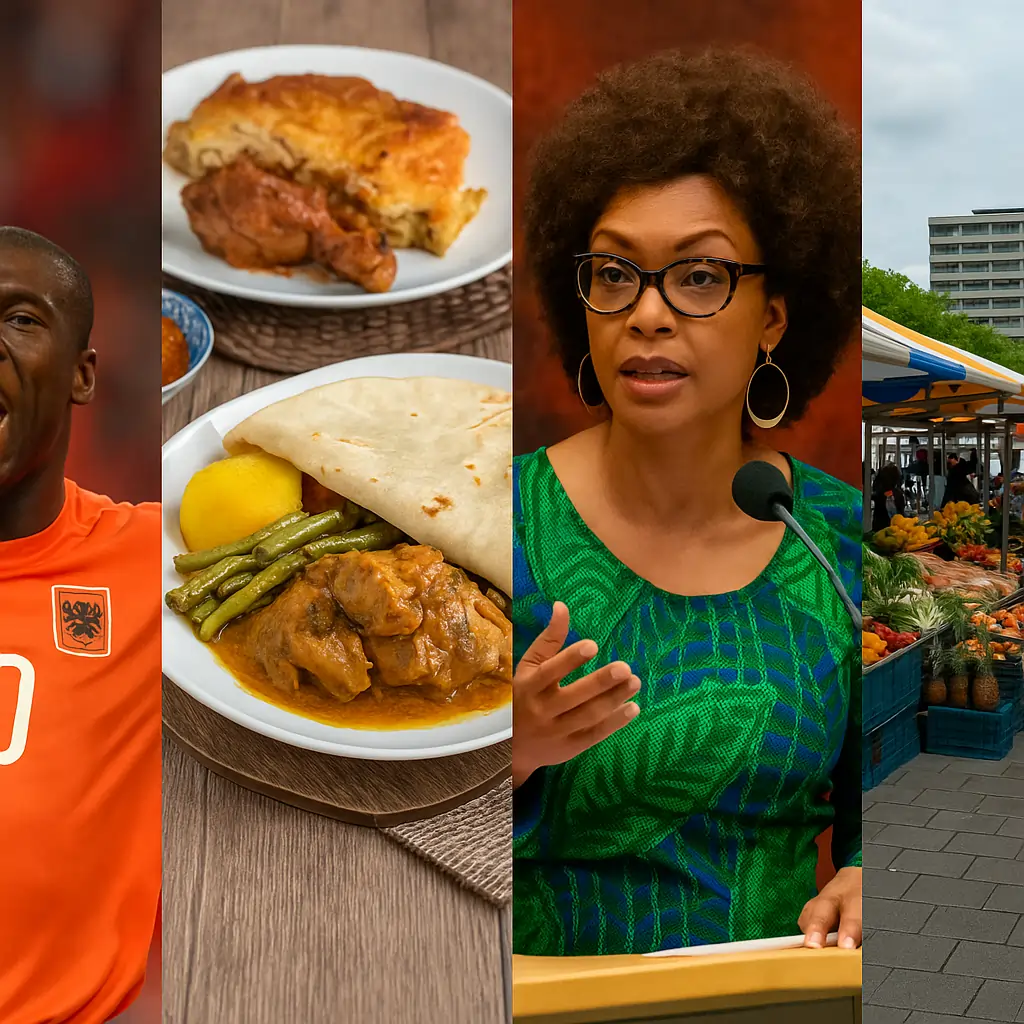
- 🎵 Music & Culture: From kaseko and kawina to modern Dutch hip-hop, Surinamese rhythms underpin the nation’s creative soundscape.
- 🍛 Cuisine: Dishes like roti, pom, and saoto soup are beloved staples in Amsterdam’s food culture, especially in Zuidoost and De Pijp.
- ⚽ Sports: Surinamese-Dutch footballers, including Clarence Seedorf, Ruud Gullit, Frank Rijkaard, Edgar Davids, and Patrick Kluivert, transformed international football and globalised Dutch talent.
- 🗳️ Politics & Activism: Figures like Sylvana Simons (founder of the BIJ1 party) champion racial equality, representation, and anti-racism in Dutch politics.
- 💼 Entrepreneurship: According to CBS economic data, Surinamese-Dutch entrepreneurs form a vibrant small-business sector, particularly in Amsterdam-Zuidoost and Almere.
Their influence extends far beyond community life; it’s embedded in Amsterdam’s multicultural DNA.
7. Challenges Ahead: Race, Representation, and Recognition
Despite their achievements, many Surinamese-Dutch continue to face discrimination in employment and underrepresentation in leadership.
New generations are leading efforts to confront racism and decolonise education.
Projects like The Black Archives in Amsterdam document Afro-Dutch and Surinamese histories previously erased from textbooks, empowering people to tell their own stories.
Such initiatives are not just about memory, but about justice, ensuring that the legacies of colonialism and migration are fully acknowledged in public discourse and policy.
8. Looking Forward: Building a Shared Future
The Surinamese journey from forced labour in colonial fields to full participation in Dutch democracy is one of resilience and renewal.
As Amsterdam continues to reconcile its past with its present, the Surinamese story offers both a mirror and a map: a mirror reflecting the city’s colonial heritage, and a map toward a more inclusive future.
Recognising this intertwined history is not an act of guilt; it’s an act of understanding.
From colony to capital, the Surinamese have not only reshaped Amsterdam; they’ve helped redefine what it means to belong in the Netherlands.
Quick Facts
- Population: ~350,000 Surinamese-Dutch (CBS 2025)
- Major cities: Amsterdam, Rotterdam, Almere, The Hague
- Languages: Dutch, Sranantongo, English
- Religions: Christianity, Hinduism, Islam, Indigenous beliefs
- Cultural hub: Amsterdam-Zuidoost (Bijlmermeer)
Modern Amsterdam: Connection, Culture, and Canals
Modern Amsterdam is as much about connection as it is about reflection. After exploring the city’s Surinamese heritage and history, why not see how its inclusive energy thrives today?
Enjoy the atmosphere where cultures mix, conversations flow, and history feels alive.
Start with our Secret Canal Bars in Amsterdam and taste the city’s most hidden summer spots along the canals.