Table of Contents
Who Was Rembrandt van Rijn?
Rembrandt van Rijn was a Dutch painter and printmaker of the seventeenth century whose work reshaped European art through realism, emotional depth and technical control of light.
He is regarded as a central figure of the Dutch Golden Age and remains one of the most studied artists in history.
When and Where Was Rembrandt Born?
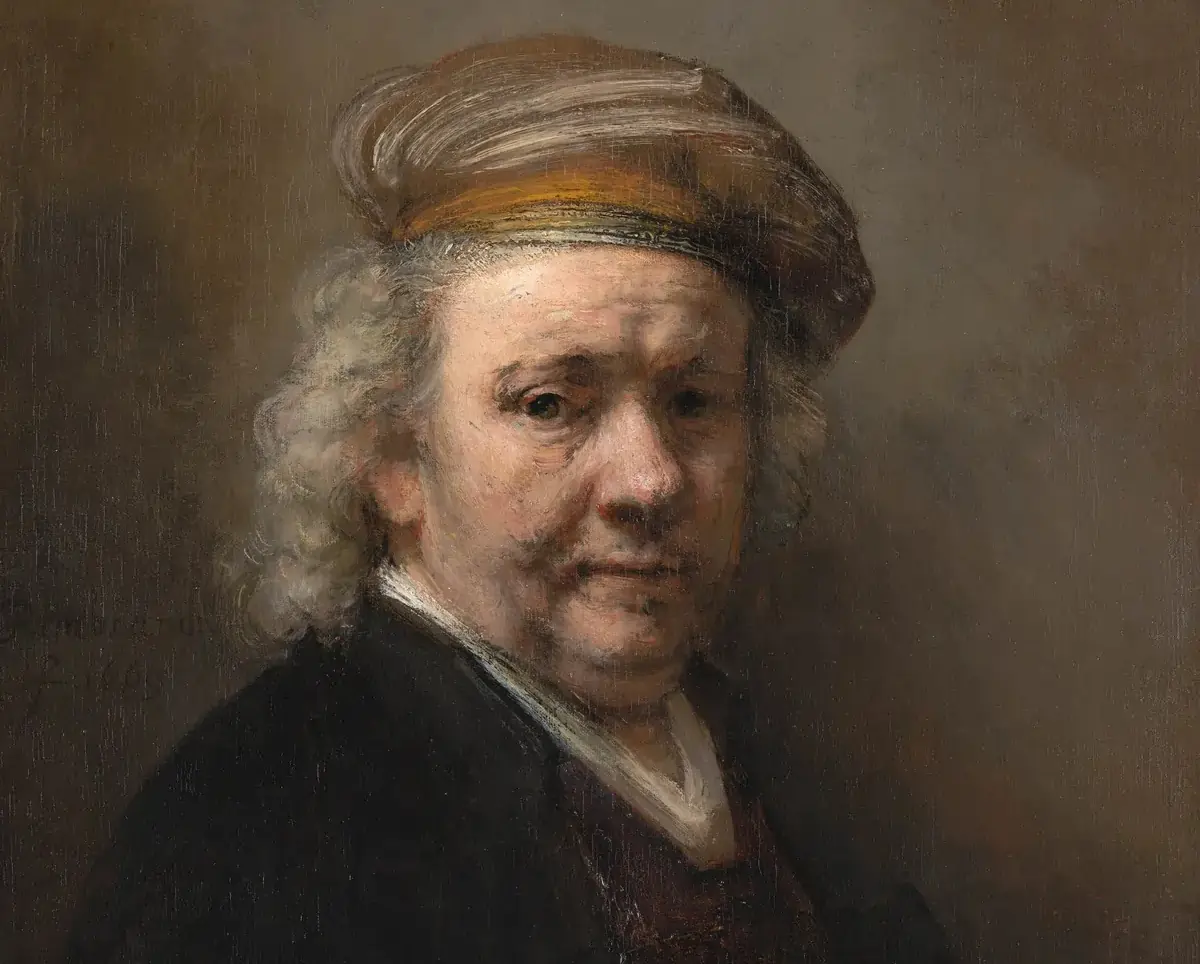
Rembrandt was born on 15 July 1606 in the city of Leiden, which at the time was an important academic and cultural centre in the Dutch Republic.
His family background was stable enough to allow early schooling before he chose art as his profession.
How Did Rembrandt Receive His Early Training?
Rembrandt began his artistic education as an apprentice to Jacob van Swanenburgh in Leiden, where he learned foundational painting techniques and narrative composition.
He later spent a short but influential period in Amsterdam studying under Pieter Lastman, who introduced him to dramatic historical and biblical storytelling.
When Did Rembrandt Start Working Independently?
By his late teens, Rembrandt was already working as an independent artist and producing commissioned portraits from his Leiden studio.
His early success allowed him to attract students and build a professional reputation well before moving to Amsterdam.
Why Did Rembrandt Move to Amsterdam?
Rembrandt relocated to Amsterdam to access wealthier patrons, civic commissions and greater artistic visibility.
The move proved decisive, as Amsterdam was the commercial heart of the Dutch Republic and offered consistent demand for portrait painters.
What Made Rembrandt’s Painting Style Distinctive?
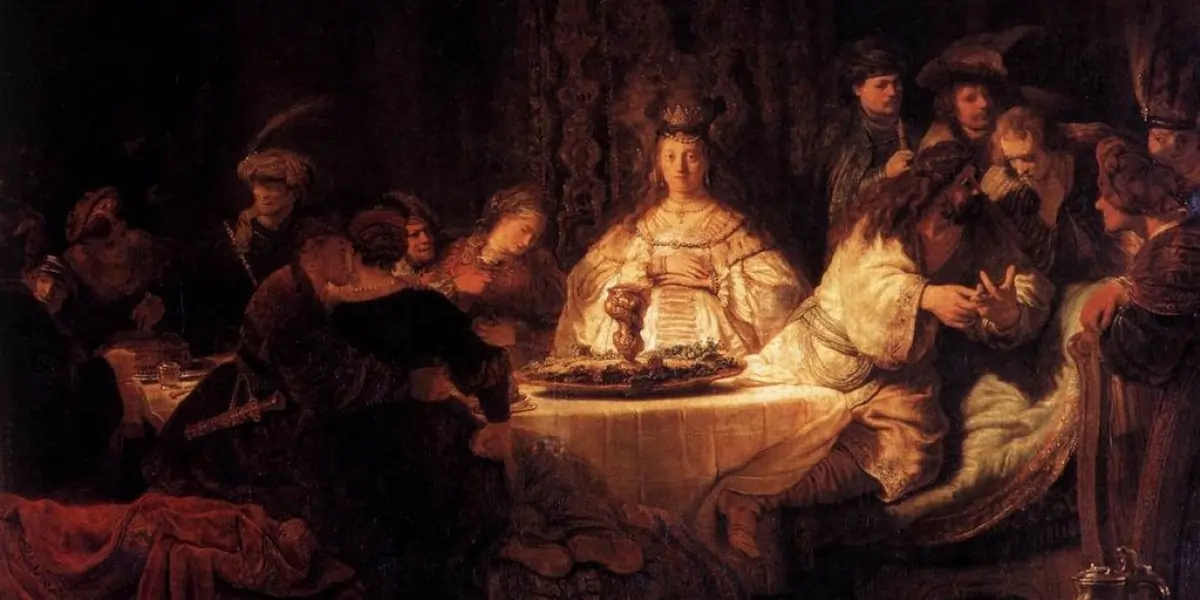
Rembrandt became known for his advanced use of light and shadow, textured brushwork and refusal to idealise his subjects.
Rather than polished perfection, his paintings emphasised age, emotion and psychological presence, which set him apart from many contemporaries.
Which Subjects Did Rembrandt Paint Most Frequently?
Rembrandt painted portraits, group scenes, biblical narratives, historical events and a large number of self-portraits.
His self-portraits form one of the most extensive visual records of an artist’s life, documenting his appearance from youth to old age.
Who Were Rembrandt’s Students and Followers?
Rembrandt trained several artists who later achieved independent success, including Carel Fabritius, Govert Flinck and Ferdinand Bol.
Through his teaching, his stylistic influence spread across the Dutch Republic and beyond.
What Was Rembrandt’s Personal Life Like?
Rembrandt married Saskia van Uylenburgh in 1634, and the couple suffered the loss of multiple children before their son Titus survived infancy.
After Saskia’s death in 1642, Rembrandt formed a long relationship with Hendrickje Stoffels, with whom he had a daughter named Cornelia.
Where Did Rembrandt Live in Amsterdam?
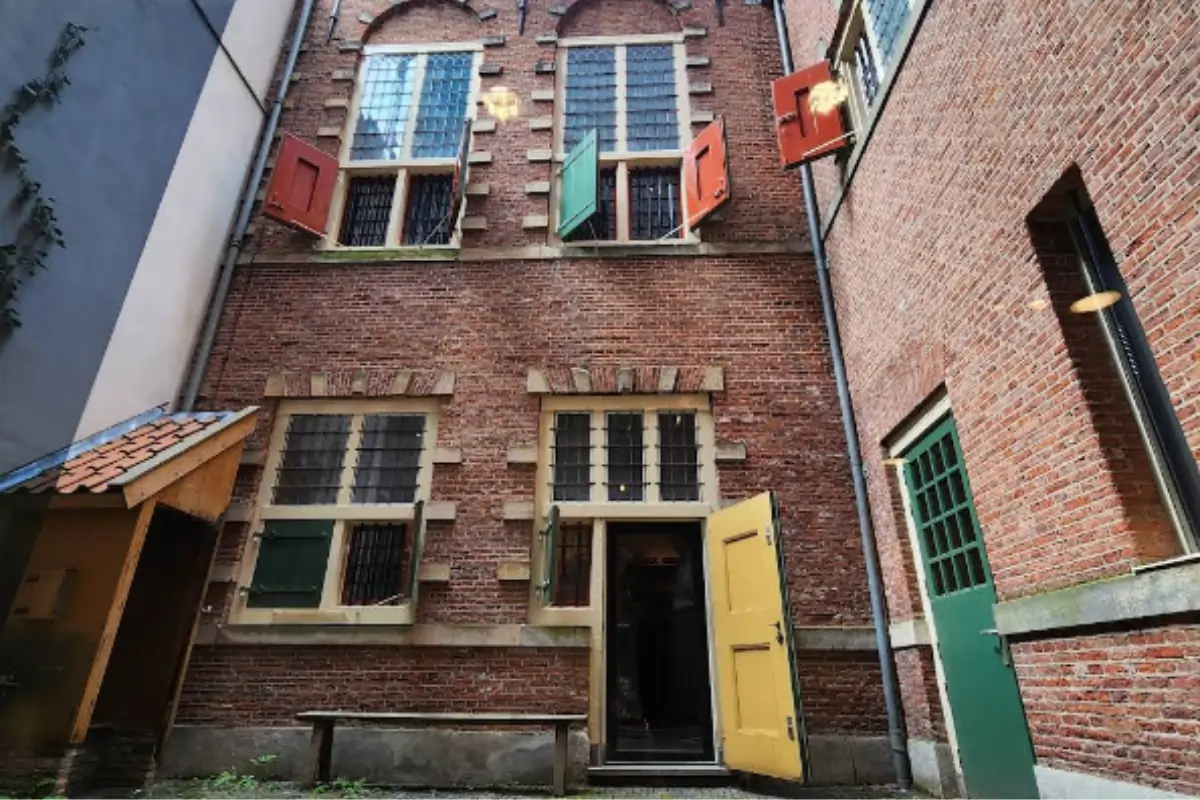
Rembrandt initially lived near the city centre before purchasing a large house on Jodenbreestraat in 1639.
This house later became known as the Rembrandt House and provides insight into his domestic and professional life.
Why Did Rembrandt Experience Financial Problems?
Despite high earnings earlier in his career, Rembrandt spent heavily on property, art collecting and daily expenses.
These financial pressures led to insolvency in the 1650s and forced the sale of his home and possessions.
How Did Rembrandt’s Life End?
Rembrandt died in Amsterdam in 1669 after years of reduced income and social standing.
He was buried in a rented grave, reflecting financial hardship rather than artistic failure.
What Is De Nachtwacht?
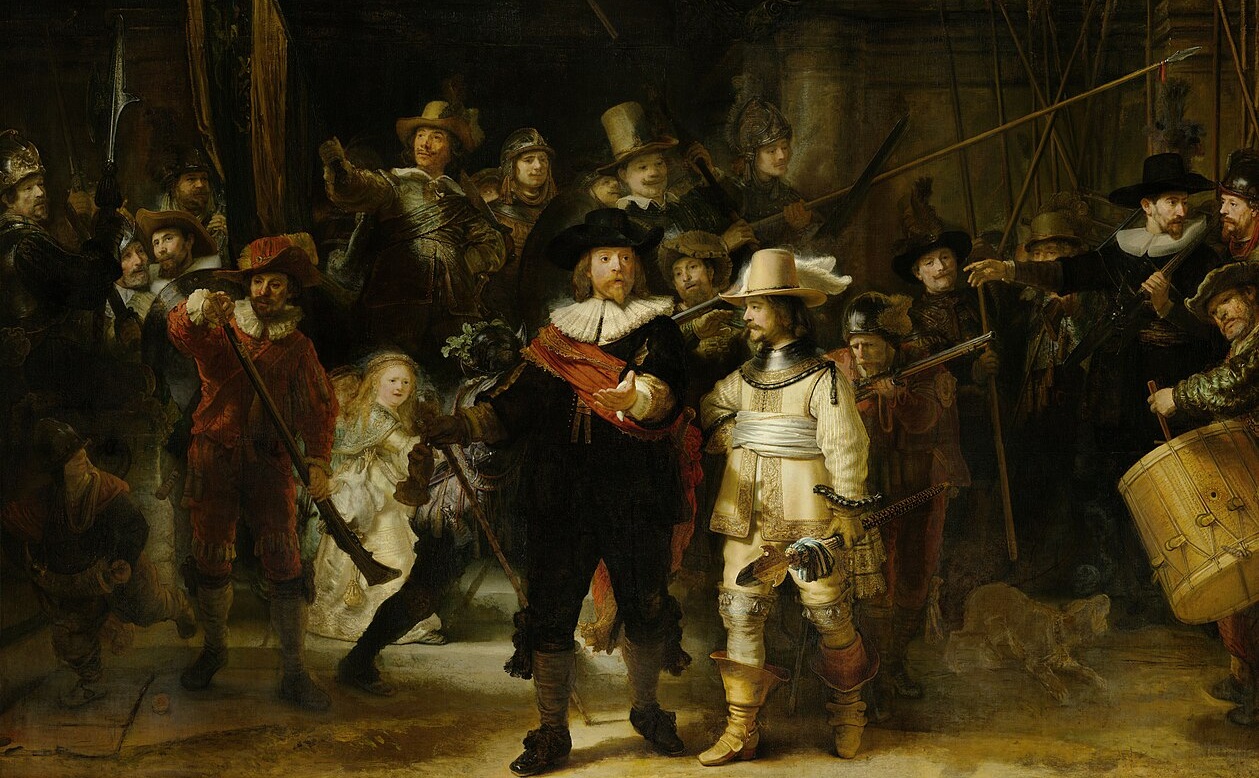
De Nachtwacht is Rembrandt’s most famous painting and depicts a civic militia group in a highly dynamic and unconventional arrangement.
Completed in 1642, the painting broke with static group portrait traditions by introducing movement, depth and dramatic lighting.
Where Is De Nachtwacht Displayed Today?
De Nachtwacht is owned by the City of Amsterdam and has been displayed at the Rijksmuseum since the late nineteenth century.
It occupies a dedicated space and remains one of the museum’s most visited works.
Why Is Rembrandt Still Important Today?
Rembrandt’s work remains relevant because of its honesty, emotional realism and technical experimentation.
His influence extends across painting, printmaking and art education, shaping how artists portray humanity rather than idealised form.
FAQ’s
Q. How Many Paintings Did Rembrandt Create?
Art historians generally attribute around three hundred paintings to Rembrandt, although exact numbers remain debated.
Q. How many self-portraits did Rembrandt make?
Rembrandt created more than eighty self-portraits across paintings, drawings and prints.
Q. Was Rembrandt Famous During His Lifetime?
Rembrandt achieved significant fame and commercial success during his middle years, particularly in Amsterdam.
Q. Did Rembrandt Only Paint Religious Scenes?
Rembrandt painted religious subjects alongside portraits, landscapes, genre scenes and studies of everyday life.
Q. Can Visitors See Rembrandt’s Home Today?
Rembrandt’s former house on Jodenbreestraat is open to visitors as a museum that recreates his living and working environment.
Q. Which Museums Hold the Most Rembrandt Works?
Major collections of Rembrandt’s work are held in Amsterdam, The Hague and several international museums.
How Does Rembrandt’s Influence Connect to Vincent van Gogh?
Rembrandt’s focus on emotional honesty and expressive technique influenced later Dutch artists, including Vincent van Gogh, who also rejected idealised form in favour of personal expression.
While the two artists worked centuries apart, both used paint to explore inner experience rather than surface beauty, making them natural points of comparison within Dutch art history.
Readers interested in how Dutch painting evolved from the seventeenth century to the modern era can continue with a detailed look at Vincent van Gogh and his role in shaping later artistic movements.