Amsterdam’s development spans more than seven centuries of engineering, trade, planning and social change.
From its origins along the Amstel River to the major canal expansions of the 17th century, and the structured modern growth guided by the General Urban Expansion Plan (AUP).
The city evolved through distinct phases. Each stage shaped the appearance and character visitors recognise today.

Table of Contents
What Were Amsterdam’s Earliest Beginnings?
Amsterdam started as a small settlement of fishers and traders located at the mouth of the Amstel River.
The earliest known reference dates to 1275, when local inhabitants received toll exemptions for water transport.
By 1306, city rights were granted, allowing Amsterdam to govern itself and expand its commerce.
Its strategic location near the Zuiderzee and the larger European trade network helped it grow quickly during the late Middle Ages.
Goods such as grain, fish, textiles and timber passed through local markets, supporting both economic and population growth.
How Did the Canal Network Shape Amsterdam’s First Major Expansion?
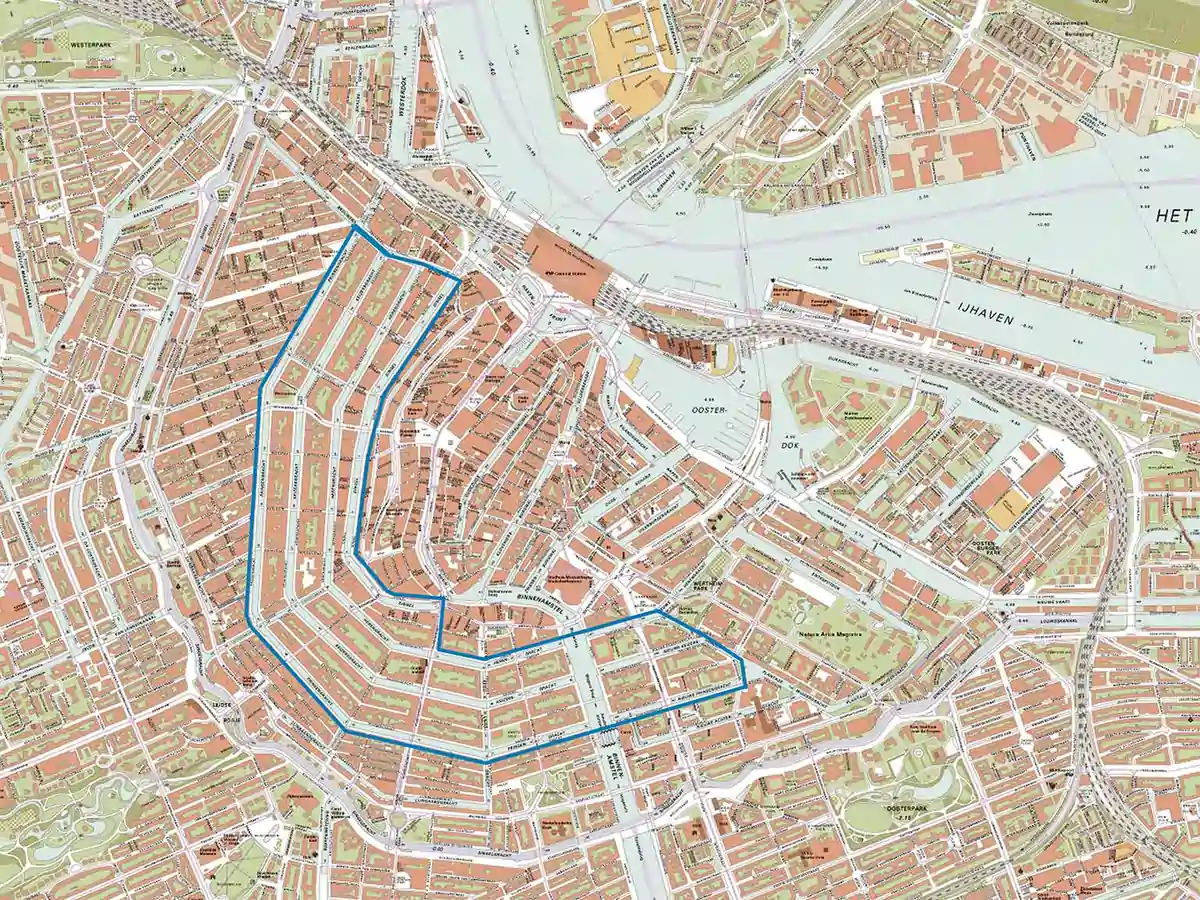
Between the late 16th and mid-17th centuries, Amsterdam underwent one of the most ambitious urban expansions in Europe.
Trade increased dramatically after 1585, and thousands of new residents arrived. The medieval town could no longer contain this growth.
City planners responded by creating the canal ring. New waterways and neighbourhoods such as the Herengracht, Keizersgracht, Prinsengracht and the Jordaan allowed Amsterdam to expand more than five times its original size.
These canals combined transport routes, water management and residential planning in a highly organised layout that became a hallmark of the city.
This stage created the UNESCO-listed historic core present today.
Why Did Amsterdam Need New Urban Solutions in the 19th Century?
By the 1800s, the historic centre was severely overcrowded. Industrialisation intensified housing pressure, and the old defensive walls restricted outward growth.
Once these walls were removed, Amsterdam expanded into areas such as the Pijp and Oud-West.
These neighbourhoods provided wider streets, more public spaces and modern sanitation.
Even with these improvements, the housing shortage persisted into the early 20th century, signalling that the city needed a long-term, structured plan.
What Led to the Creation of the General Urban Expansion Plan (AUP)?
In 1928, the city formed a dedicated urban development team to research future housing, transport requirements, population trends and utilities.
Their studies laid the foundation for a large expansion model.
In 1935, the General Urban Expansion Plan (AUP) was officially approved, and in 1939, it received national confirmation.
The AUP introduced a clear structure for the city’s future, with separate zones for living, working, recreation and transport.
This concept drew from modernist planning principles and represented a major shift away from the dense fabric of older neighbourhoods.
How Did the AUP Organise Amsterdam’s Planned Growth?
The AUP proposed expanding Amsterdam through a system of long urban extensions separated by green spaces.
These extensions resembled the shape of fingers stretching outward from the central city.
Their purpose was to improve air circulation, provide outdoor areas and separate residential and industrial functions.
The Amsterdamse Bos became the largest green area within this system.
Housing blocks in the AUP were arranged to maximise sunlight and improve everyday living conditions.
Industry was placed near strategic transport routes, while recreational zones were positioned between residential and working districts.
Although the plan focused on structure rather than architectural detail, it set the framework for several decades of later development.
How Did Amsterdam Expand After the Second World War?
Following the war, Amsterdam faced a critical housing shortage.
Construction began rapidly, following the AUP guidelines.
The earliest major developments were the western garden neighbourhoods.
These included:
- Slotermeer
- Geuzenveld
- Slotervaart
- Overtoomse Veld
- Osdorp
Built between the early 1950s and early 1960s, these districts featured broad green zones, walkways, water channels and sports facilities.
Slotermeer included courtyard-like arrangements. Geuzenveld placed medium-height buildings at its centre with lower housing around them.
The Sloterplas lake became a defining feature for the wider western district.
How Did Amsterdam Grow in the South and South-East?
Buitenveldert was developed between 1958 and 1966, providing homes with more space and better amenities.
Planners expected the population to rise significantly by the year 2000, and even though the final number was lower than predicted, residents increasingly preferred larger dwellings.
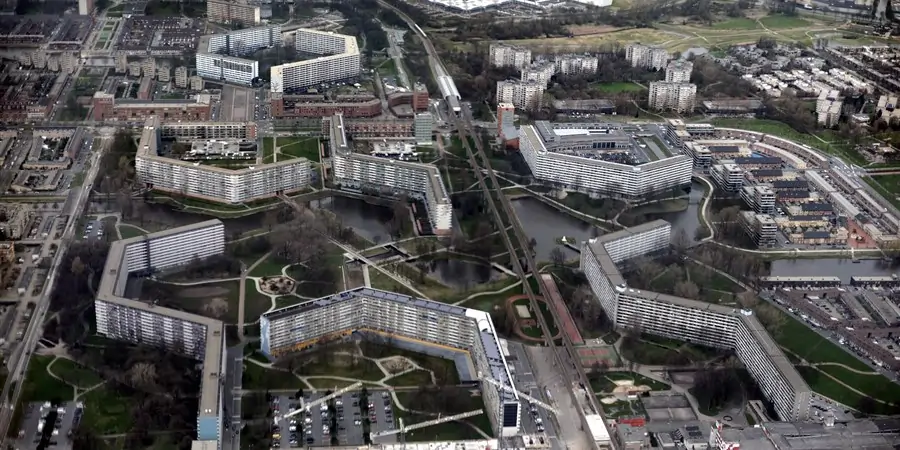
By the mid-1960s, further expansion became necessary. This led to the creation of the south-eastern district, including the Bijlmermeer.
Construction began in 1965 after land was annexed from Weesperkarspel. The area was served by two metro lines connecting it with the city centre.
How Did Amsterdam-Noord Develop Under the AUP?
A northern structure plan was completed in 1958, but early progress was limited because the IJ created a natural barrier.
Residents relied on ferries, which slowed development.
The opening of the Coentunnel in 1966 and the IJtunnel in 1968 changed the situation.
Improved access allowed the construction of new northern neighbourhoods, such as:
- Nieuwendam-Noord
- Buikslotermeer-Noord
- Banne Buiksloot
These additions integrated the northern district more closely with the city.
How Did Planning Preferences Change After the 1970s?
By the 1970s, many residents wanted compact mixed-use environments rather than widely spaced layouts.
This shift encouraged infill projects and more diverse building types.
Living, working and recreation gradually moved closer together.
Throughout the 1990s and 2000s, Amsterdam carried out extensive renewal across several post-war districts.
This involved:
- upgrading ageing housing
- replacing blocks where necessary
- improving public squares and facilities
- increasing transport connections
- offering a broader mix of rental and owner-occupied homes
These efforts did not follow one single plan but were delivered through a sequence of municipal programmes.
The goal was to improve comfort, sustainability and accessibility while making better use of available land.
What Is the Long-Term Influence of the AUP on Amsterdam?
The AUP remains one of Amsterdam’s most influential planning documents.
Its concepts guided the city’s shape for decades and still influence modern development.
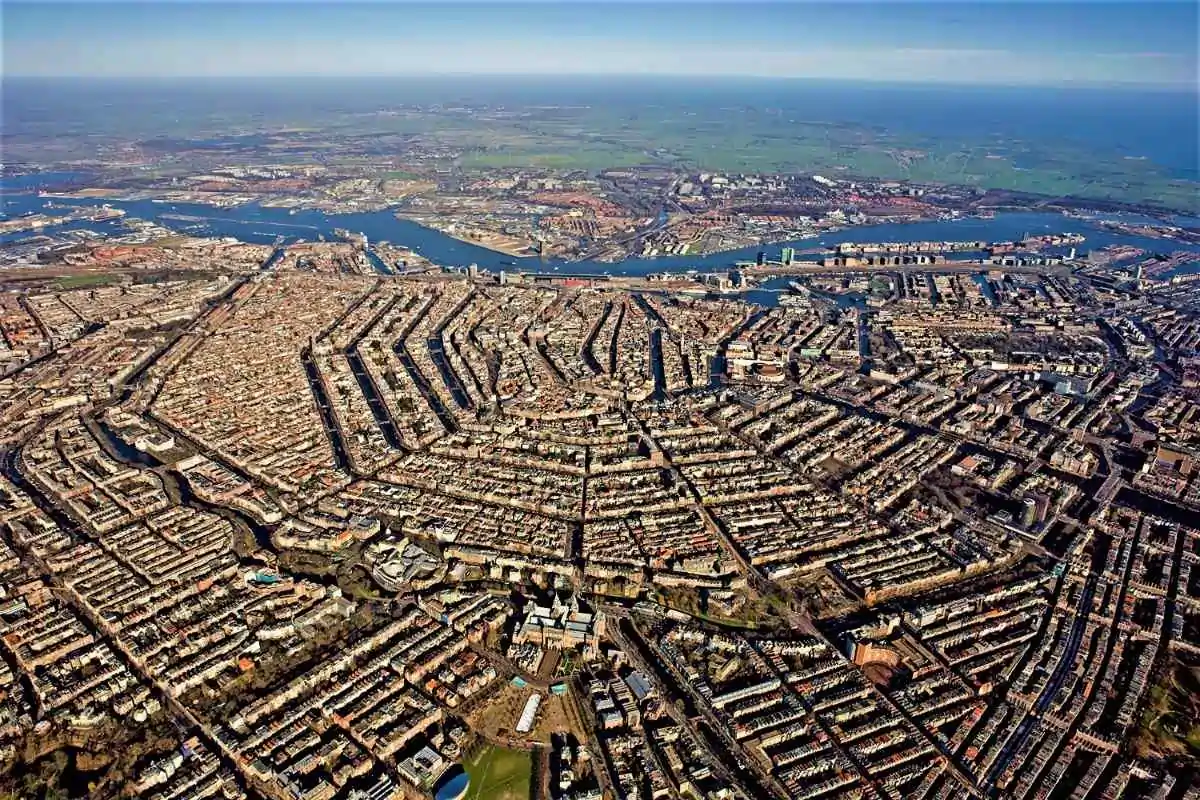
The contrast between the compact canal district and the spacious post-war suburbs highlights how urban design adapted to new needs.
The AUP is recognised as window number 38 on the Canon of Amsterdam, reflecting its historical importance.
Want to Learn How Amsterdam Prepared for Modern Urban Planning?
Amsterdam’s early 20th-century development played an important role in shaping the city’s later growth.
One of the most influential examples is Plan South (1917), designed to introduce organised streets, high-quality housing and improved public space long before the AUP was created.
To explore how this earlier plan helped set the stage for modern expansion, visit our detailed guide:
Plan Zuid Amsterdam