What role did shipyards play in the development of Amsterdam-Noord?
Shipyards turned Amsterdam-Noord from a peripheral area into one of the city’s main industrial employment centres during the late nineteenth and twentieth centuries.
After the opening of the North Sea Canal in 1876, large seagoing vessels could reach Amsterdam directly, making the northern bank of the IJ suitable for heavy shipbuilding.
From an editorial planning perspective, this explains why much of Amsterdam-Noord developed later than districts south of the IJ.
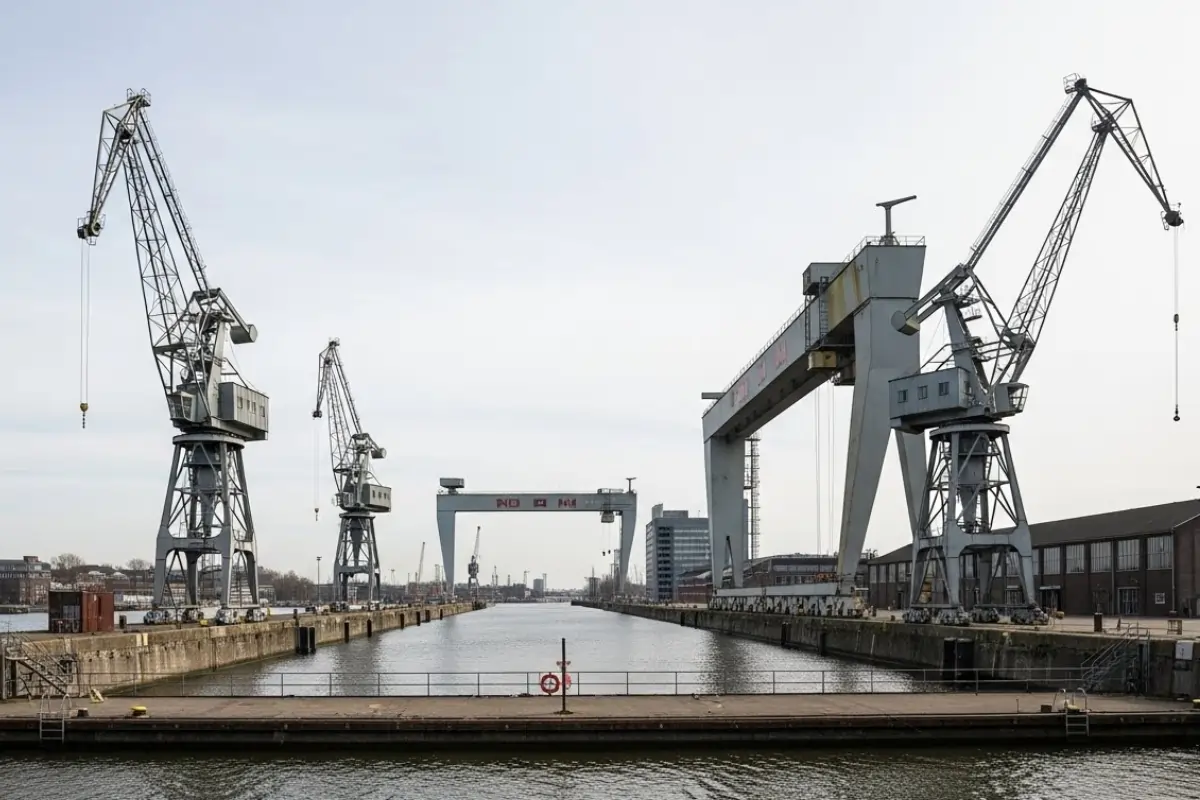
Table of Contents
Why did shipbuilding concentrate north of the IJ?
Shipbuilding concentrated north of the IJ because space, water depth, and canal access were better suited to large industrial facilities.
The area behind Amsterdam Centraal Station offered wide riverbanks that could accommodate dry docks, cranes, and slipways without interfering with historic city streets.
This shift became visible only after the railway station was completed in the late nineteenth century.
Which companies established the first major shipyards in Amsterdam-Noord?
The first major company was the Amsterdam Droogdok Maatschappij (ADM), which established operations near Meeuwenlaan in 1877.
Its iron dry dock was designed for steamships that could now reach the city via the North Sea Canal.
This marked the start of industrial ship construction on the northern waterfront.
How did the NSM and NDSM shipyards emerge?
The Nederlandsche Scheepsbouw Maatschappij (NSM) began operations in the 1920s near Cornelis Douwesweg, close to the yards of the Nederlandsche Dok Maatschappij (NDM).
After the Second World War, these companies merged to form the Nederlandse Dok en Scheepsbouw Maatschappij (NDSM).
By the mid-twentieth century, this complex was the largest shipyard operation in the Netherlands.
Why was the passenger ship Oranje historically significant?
The passenger ship Oranje represented the technical peak of Amsterdam shipbuilding before the Second World War.
Commissioned by the Stoomvaart Maatschappij Nederland, the vessel was launched in 1938 and built to serve routes between the Netherlands and the former Dutch East Indies.
Thousands attended the launch ceremony, which was conducted by Queen Wilhelmina.
How did shipyards affect housing and employment in Amsterdam-Noord?
Shipyards created sustained employment that led to large-scale housing development in the northern district.
Neighbourhoods such as Vogeldorp, the Van der Pek area, and the Bloemenbuurt were built primarily to house dockworkers and their families.
During the interwar period, Amsterdam-Noord gained economic parity with older city districts for the first time.
How did workers travel between Amsterdam-Noord and the city centre?
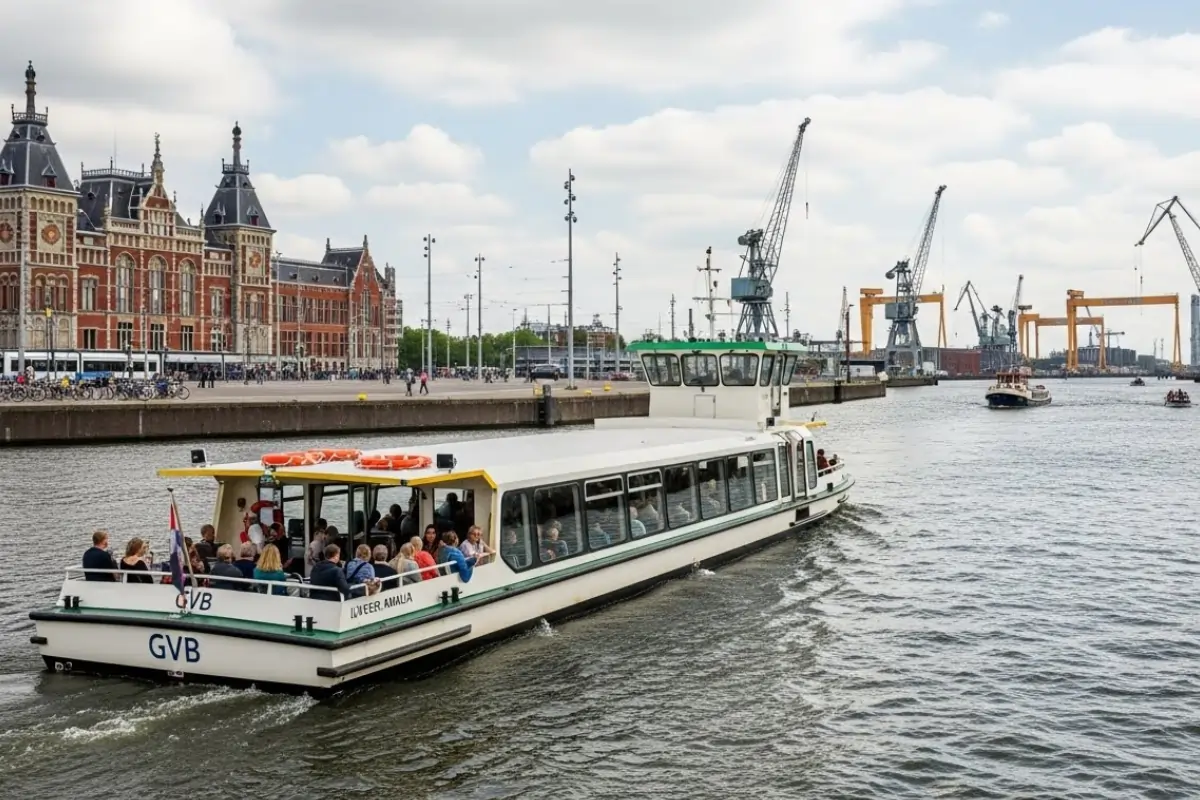
For decades, ferries were the only practical connection between Amsterdam-Noord and the rest of the city.
Road bridges near the city centre were rejected because they would obstruct shipping traffic on the IJ.
The first major fixed connections were the eastern bridge, opened in 1957, followed by the Coentunnel and IJ tunnels, completed between 1966 and 1968.
Why did shipbuilding decline in Amsterdam?
Shipbuilding declined due to global competition, rising costs, and the economic impact of the 1970s oil crisis.
Asian shipyards increasingly dominated the market, making large-scale production in Amsterdam financially unsustainable.
The last mammoth tanker departed from Amsterdam’s dockyards in 1974, although limited ship construction continued until the late 1970s as remaining projects were completed.
When did the Amsterdam shipyards close?
The NDSM shipyard ceased operations in 1978 despite public protests.
Other major yards followed, with the ADM closing in 1985.
Within a few years, thousands of workers in Amsterdam-Noord lost their jobs.
How did the former shipyards find new uses?
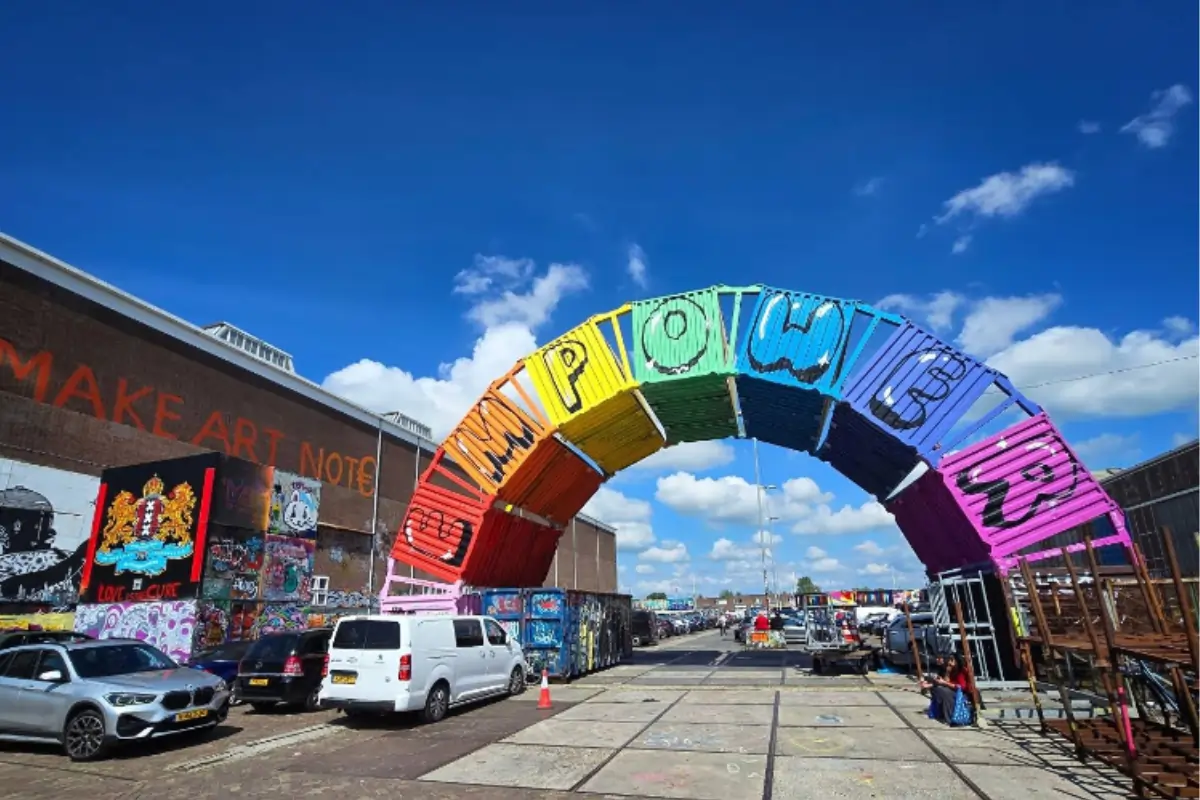
Former shipyard sites were gradually reused after artists and cultural organisations occupied vacant industrial spaces.
Over time, these areas developed into venues for performances, exhibitions, and creative businesses.
Based on commonly updated venue guidance, this reuse began informally in the late 1980s and expanded during the 1990s.
Why is the history of the shipyards officially recognised?
The development and closure of the Amsterdam shipyards are recorded as Window 40 in the Canon of Amsterdam.
This designation recognises the shipyards’ lasting impact on employment, urban growth, and the structure of Amsterdam-Noord.
Summary for Visitors Interested in Industrial History
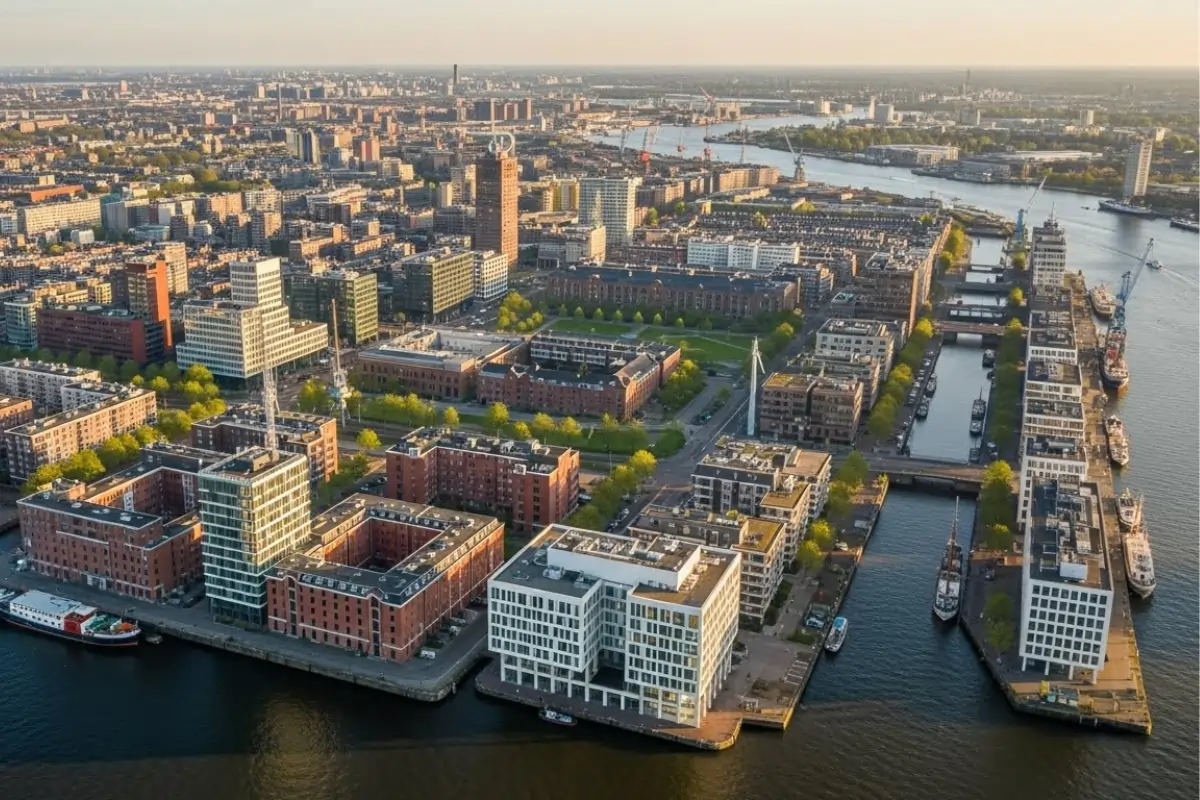
Amsterdam-Noord’s shipyards explain why the district developed later than the historic city centre and why its layout differs from older neighbourhoods.
For visitors, this history provides context for understanding today’s waterfront spaces and the preserved industrial structures visible across the IJ.
Where can visitors learn more about shipyard locations in Amsterdam today?
Visitors seeking current shipyard locations and their relation to modern Amsterdam can find additional context in a separate location-focused guide, Shipyard in Amsterdam.
That guide explains where former shipyard areas are situated today, how they are accessed, and how they function within the city’s present layout.
This distinction clarifies the distinction between historical shipbuilding sites and their current urban uses.