Table of Contents
What Defines Amsterdam’s Old City Centre Today?
Amsterdam’s Old City Centre covers the medieval core of the capital.
It formed around the Dam, the mouth of the Amstel and the earliest canals that once served as defensive waterways.
Inside this compact district, you find the city’s oldest streets, markets, churches and towers.
Many routes still follow their 13th-century shape, which explains their irregular bends and narrow passages.
The area includes Dam Square, the Oude Kerk, Nieuwmarkt, Zeedijk, the Mint Tower, the Waag, the Beurs van Berlage, the earliest harbour edges and several historic courtyards.
Anyone walking here moves through the city’s earliest recorded development.
Where Exactly Is the Old City Centre Located?
The Old City Centre sits within the area bordered by:
- Nieuwendijk and Kalverstraat
- Oudezijds Voorburgwal and Oudezijds Achterburgwal
- Nieuwmarkt and the Waag
- Dam Square and nearby medieval intersections
- The former harbour line at Prins Hendrikkade
This part of Amsterdam predates the structured canal expansions of the 17th century.
Why Did This Area Become the Core of the City?
The first settlement grew after a dam was placed across the Amstel.
Homes, market stalls and chapels gradually formed around it. As the population increased, walls, gates and towers were added for defence.
These original structures guided the early street layout that still survives.
The district now forms part of the protected zone connected to the UNESCO-listed canal area.
What Are the Main Sights Inside the Old City Centre?
Below is a detailed guide to the most important landmarks and streets within this historic district.
What Should You Know About Dam Square?
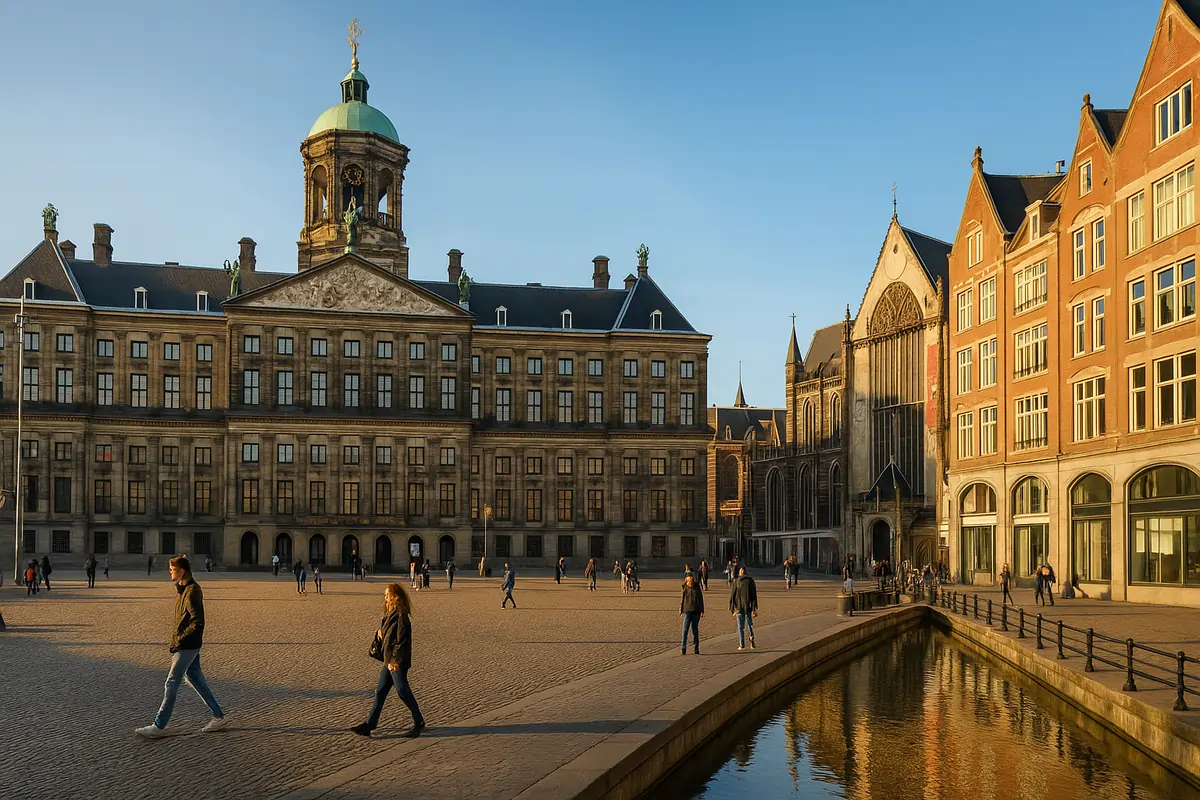
Dam Square stands at the centre of Amsterdam’s early development. Notable buildings and features include:
Royal Palace
Originally built as the city hall, later adapted into a royal residence. Its marble halls and historic chambers can be visited outside official functions.
Nieuwe Kerk
Located beside the palace. It hosts exhibitions, cultural events and national ceremonies.
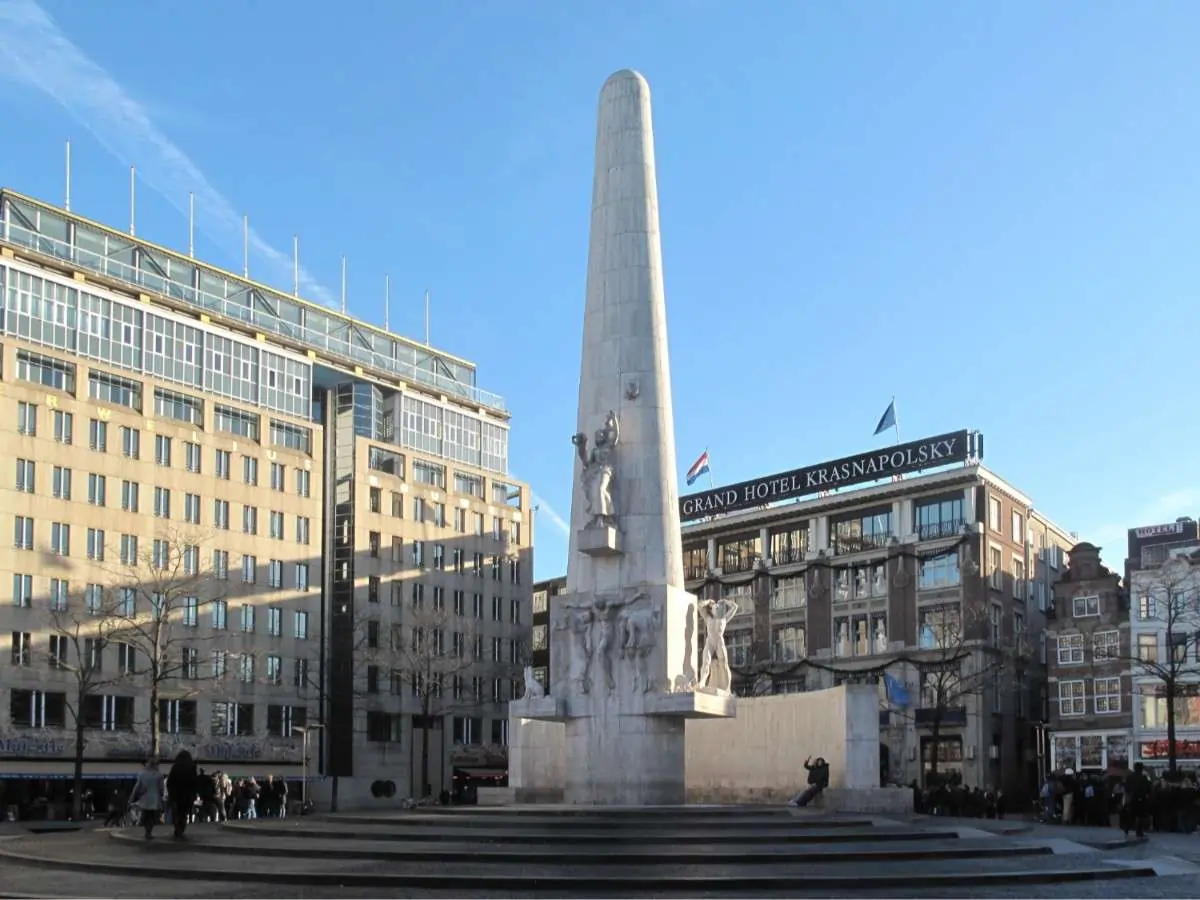
National Monument
A memorial for those who lost their lives during the Second World War. The main remembrance gathering takes place here each 4 May.
Beurs van Berlage
A major early 20th-century structure that hosts concerts, conferences and exhibitions. It is an important cultural venue often overlooked in shorter guides.
Damrak and Rokin
Two central streets run through the square. Damrak leads toward Amsterdam Centraal along a filled-in harbour channel. Rokin heads south toward the Spui.
How Does the Red Light District Fit into the Old City?
The district known as De Wallen covers the area around Oudezijds Voorburgwal and Oudezijds Achterburgwal. Many visitors expect one central street, but it is a network of:
- Medieval alleys
- Canalside houses
- Historic bridges
- Small chapels and notable façades
Tourist activity is high, yet the district still contains several buildings of real architectural interest.
Why Is the Oude Kerk a Key Landmark?
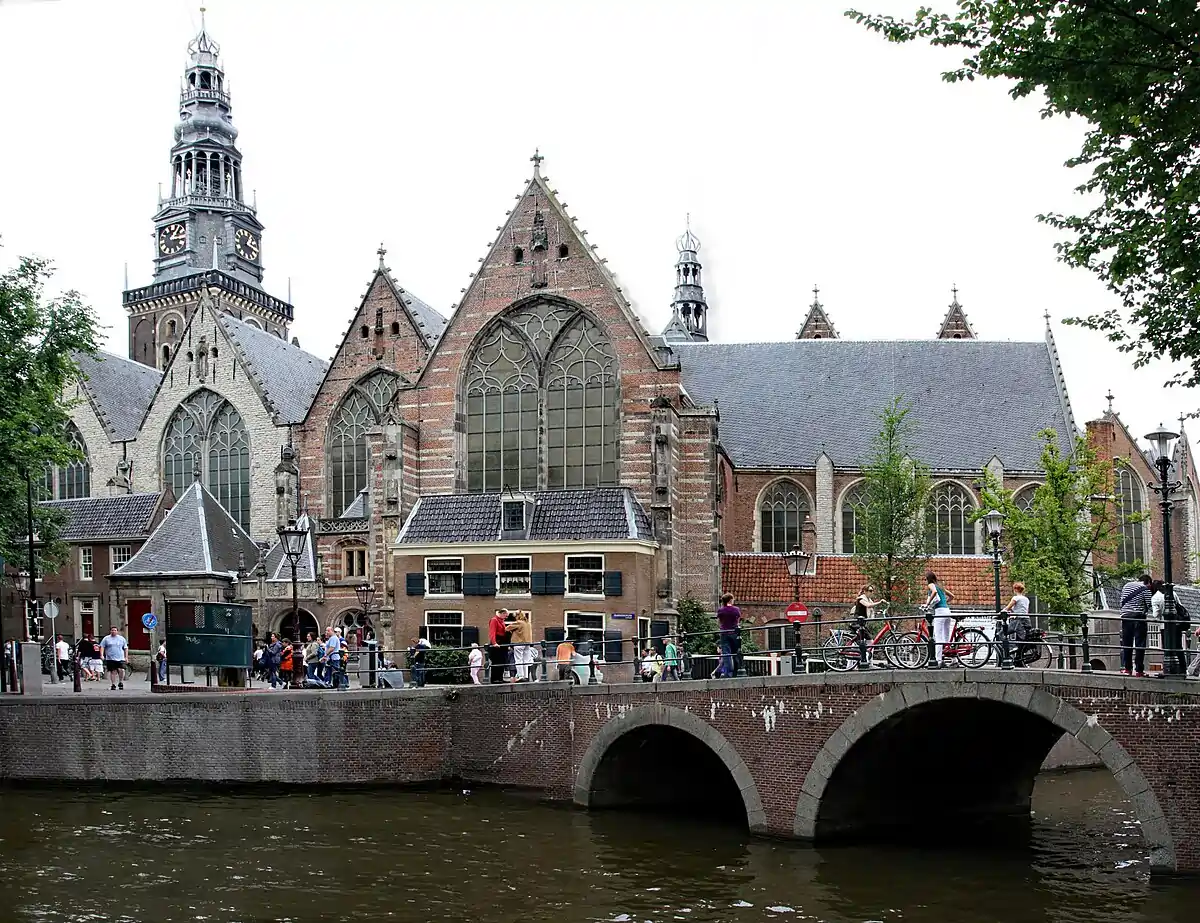
The Oude Kerk is the oldest building in Amsterdam. It dates to the early 13th century and stands on Oudekerksplein. Key details include:
- A large stone interior with stained glass
- Regular exhibitions and music events
- Burials of prominent local residents
- The signing of Rembrandt and Saskia’s marriage banns (ondertrouw) on 10 June 1634, before their wedding took place later that month in Sint Annaparochie in Friesland
The Oude Kerk remains one of the clearest links to the city’s early past.
What Is Important About Saint Nicholas Basilica?
Opposite Amsterdam Centraal stands Saint Nicholas Basilica, built in the late 19th century. Its significance includes:
- A location on the former harbour edge
- A central role in Catholic life within the city
- An ornate interior
- Regular choral performances
It marks the northern boundary of the Old City Centre.
Why Does the Waag Matter?
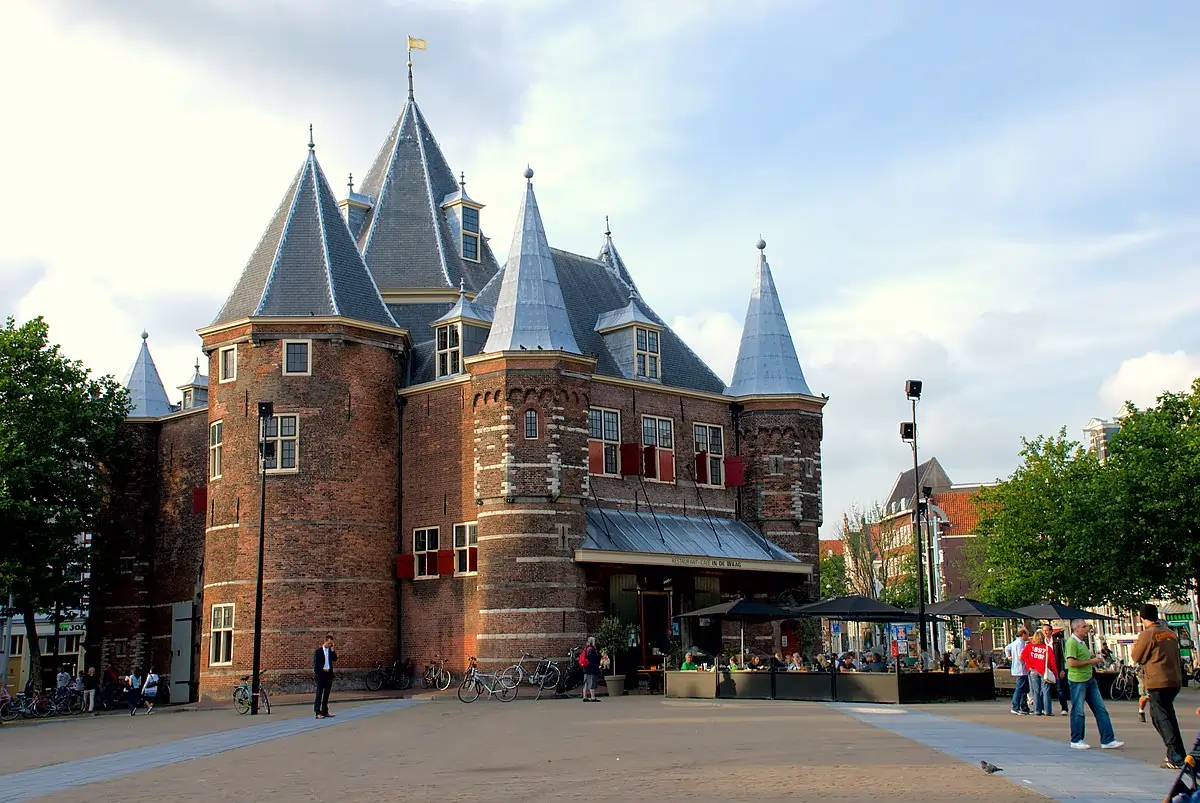
The Waag stands on Nieuwmarkt and began as the Saint Antonius Gate, part of the medieval fortifications.
It later served as the city’s weighing house. Today, it houses a high-end restaurant.
Nieuwmarkt is also known for:
- Market traditions going back centuries
- Visible fragments of the old city wall
- Direct access to Zeedijk
What Makes Zeedijk and Nieuwendijk Historically Important?
Zeedijk
One of the oldest streets in Amsterdam. It began as a protective dike and now contains shops, cafés and access to several early alleyways.
It is also the centre of Amsterdam’s Chinatown, located near Nieuwmarkt.
Nieuwendijk
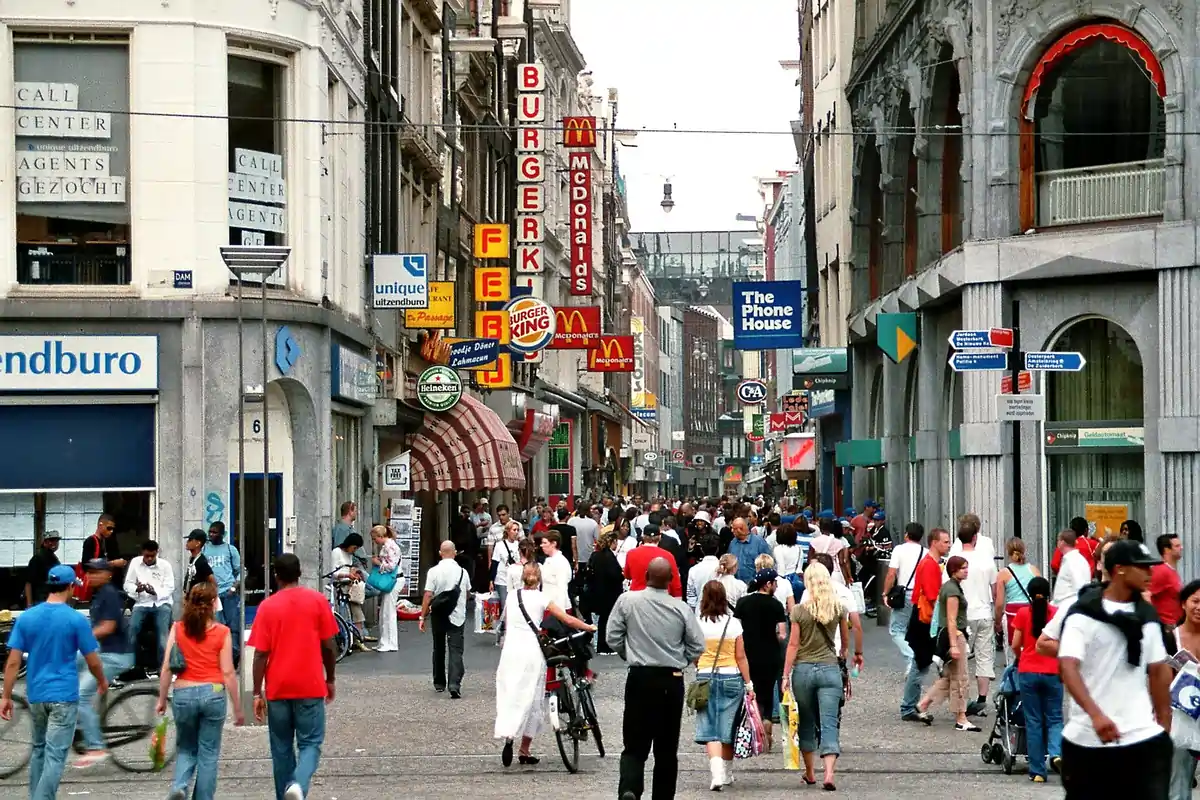
A street with origins in medieval trading routes. It linked Dam Square with the harbour and remains a major shopping street.
These routes show the city’s early growth before planned canal construction began.
What Is the Story Behind the Mint Tower?
The Mint Tower (Munttoren) originated as the Regulars Gate, one of the city’s medieval entrances. Important features include:
- Reconstruction after a fire in 1651
- An attached building used for minting currency in the 17th century
- A carillon with 38 bells
- Live performances every Saturday from 14:00 to 15:00
The tower stands at the southern entrance to the Old City, close to the Flower Market.
Which Squares Belong to the Oldest Part of Amsterdam?
Several important squares help define the Old City:
Spui
A lively square with book markets, cafés and access to the Amsterdam Museum complex. Even during renovation, the area reflects the city’s cultural identity.
Nieuwmarkt
A long-established trading square framed by cafés and the Waag.
Oudekerksplein
The square around the Oude Kerk is central to early religious life.
Begijnhof
A secluded courtyard established in the 14th century. It contains the Houten Huis at Begijnhof 34, a rare wooden-front house dated to around 1420–1425, with some later modifications.
The courtyard also contains two historic churches.
Which Historic Towers and Gates Still Exist?
Only a few defensive structures from the medieval period remain:
Schreierstoren
A harbour-side tower that once formed part of the city walls.
Munttoren
The former southern gate.
Waag
The most prominent surviving gate structure.
Other gates were removed as the city expanded.
What Are the Old Harbour Edges and Why Do They Matter?
The northern boundary of the Old City follows the former harbour line. Key points include:
- Prins Hendrikkade
- The area near Schreierstoren
- The route toward Saint Nicholas Basilica
- The beginning of Zeedijk
These locations reveal Amsterdam’s early relationship with maritime trade.
Which Streets Preserve the Medieval Layout?
Travellers interested in the city’s earliest form should explore:
- Warmoesstraat
- Zeedijk
- Oudezijds Voorburgwal
- Oudezijds Achterburgwal
- St. Olofspoort
- Enge Kerksteeg
- Nes
- Kalverstraat and Nieuwendijk
Their narrow curves and irregular layouts reflect organic growth before urban planning emerged.
Where Can You See the First Canal Ring?
The earliest canal ring, created before the major 17th-century expansions, includes:
- Oudezijds Voorburgwal
- Oudezijds Achterburgwal
- Singel
- Kloveniersburgwal
These waterways began as moats and later developed into canals lined with homes and shops.
How Can You Explore the Old City Efficiently?
A practical walking route is:
- Amsterdam Centraal
- Saint Nicholas Basilica
- Schreierstoren
- Zeedijk
- Nieuwmarkt and the Waag
- Oudezijds Voorburgwal and Achterburgwal
- Oude Kerk
- Dam Square
- Beurs van Berlage
- Rokin
- Mint Tower
- Flower Market
- Begijnhof
- Spui
This route covers the major landmarks without doubling back.
Which Hidden Spots Are Easy to Miss?
- Small chapels near the Oude Kerk
- Narrow alleys off Warmoesstraat
- Quiet courtyards near Spui
- Decorative house gables along the canals
- The remaining wall fragments near Nieuwmarkt
These locations offer strong historical interest but are often overlooked.
What Makes the Old City Centre Unique?
The Old City Centre contains:
- Medieval streets
- Early religious sites
- Defensive structures
- Historic market locations
- Harbour links
- Cultural buildings
- Quiet courtyards
It forms the foundation from which Amsterdam later expanded, and it remains the district most connected to the city’s earliest growth.
Where Can You Learn About Amsterdam’s Historic Windmills?
Visitors who want to explore early engineering in the wider city can continue with a look at Windmills In & Around Amsterdam.
These structures played a major role in managing water levels, producing grain and supporting local industry.
Several historic mills still stand today, each with its own background and architectural features.