Table of Contents
Why do the 1928 Summer Olympics still matter for Amsterdam?
The 1928 Summer Olympics helped shape the modern Olympic identity and placed Amsterdam on the world stage.
The event influenced international sport, expanded opportunities for women, and introduced traditions that remain central to the Games today.
What made the 1928 Games different from previous Olympics?
Held from late July to mid-August, the Games included 46 nations and nearly three thousand athletes.
Several key features emerged here. The Olympic flame stayed lit for the entire event.
The Parade of Nations followed the structure used today, with Greece first and the host nation last.
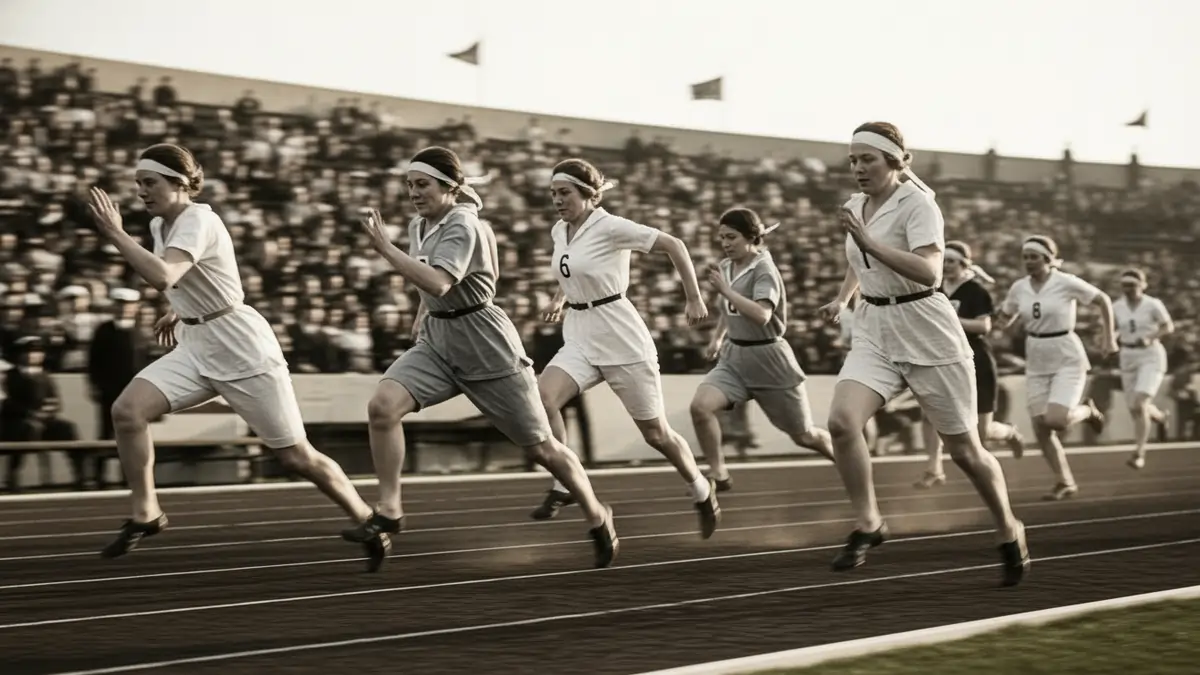
Women took part in track and field and in gymnastics, marking an important moment in Olympic history.
How did female athletes shape the 1928 Olympics?
Women competed in athletic events that had never before been part of the Summer Olympics.
This inclusion demonstrated that women could participate at elite levels, and it paved the way for broader representation in later competitions.
The achievements and new records set in Amsterdam helped inspire further growth in women’s sport.
Which athletes stood out during the 1928 Games, and what did they achieve?
Several athletes produced performances that became part of Olympic history.
- Paavo Nurmi of Finland won one gold medal and two silver medals. Although this was less dominant than his earlier Olympic results, it added to an exceptional career.
- Johnny Weissmuller of the United States won the gold medal in the 100 metre freestyle and also won gold as part of the 4 × 200 metre freestyle relay team.
- Lina Radke of Germany won the first women’s Olympic 800 metre title.
- Bep van Klaveren of the Netherlands won gold in featherweight boxing and became a celebrated national figure.
- The Netherlands women’s gymnastics team won gold in the team event, highlighting the host nation’s strong performance.
How did the Olympic Stadium shape the Games, and what is the Marathon Tower?
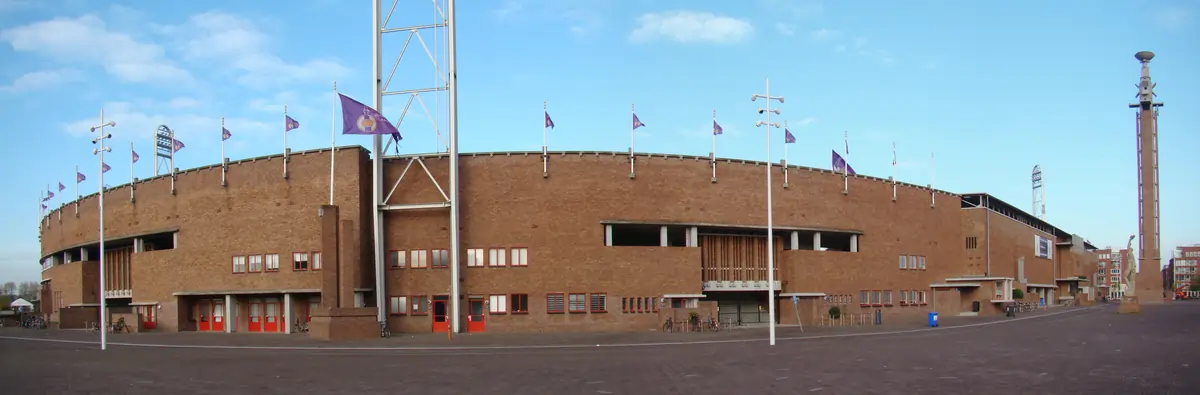
The Olympisch Stadion served as the central venue for ceremonies and competition.
Designed by Jan Wils, it received recognition in the Olympic art and architecture competition.
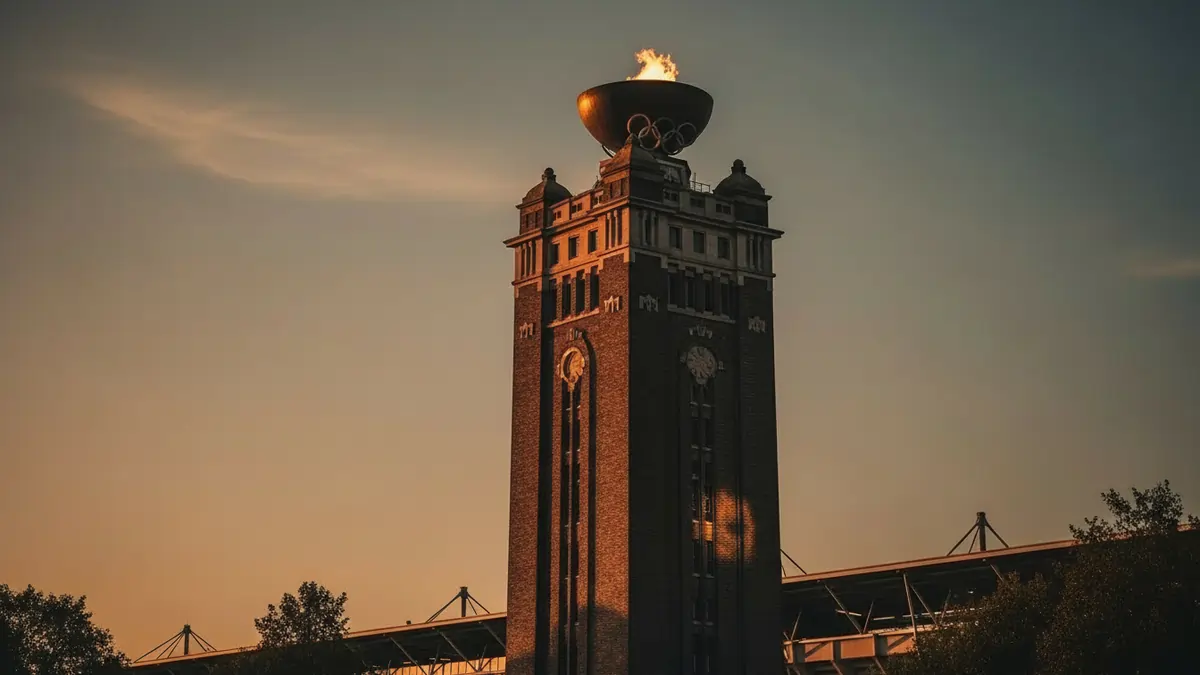
One of its most recognisable features is the Marathon Tower, which stands about 40 to 42 metres high.
The tower held the Olympic flame bowl during the Games and remains a distinctive part of the stadium structure.
What was the Netherlands’ overall performance in the 1928 Games?
The Netherlands secured medals across several sports. These included gymnastics, equestrian events, swimming, boxing and other disciplines.
This spread of achievements shows that the host nation performed consistently in a wide range of competitions.
What legacy did Amsterdam 1928 leave for the Olympic movement?
The 1928 Games helped establish significant Olympic traditions.
The flame ceremony, the revised Parade of Nations order and the more structured competition schedule became part of the standard Olympic format.
The inclusion of women in new sports contributed to important changes in how the Games represented athletes from around the world.
Amsterdam 1928 showed how a host city could influence the future of the Olympic movement.
Why does Amsterdam continue to highlight the 1928 Olympics?
The Olympisch Stadion and its Marathon Tower remain visible reminders of the event.
The Games are noted in the Canon of Amsterdam because they represent a moment of cultural and athletic progress for the city.
They strengthened Amsterdam’s global reputation and left a legacy that continues to be recognised in both sport and local history.
FAQ
Q. How many countries took part in the 1928 Olympics?
Forty-six nations participated, sending nearly three thousand athletes.
Q. What was the most significant innovation introduced at the 1928 Olympics?
The Olympic flame remained lit for the full duration of the event for the first time.
Q. Did women compete in the Olympics before 1928?
Women had taken part in some earlier sports, but 1928 marked their first appearance in track and field and in gymnastics at the Summer Olympics.
Q. What is the Marathon Tower?
The Marathon Tower is the tall tower of the Olympisch Stadion in Amsterdam. It is about 40 to 42 metres high and originally held the Olympic flame bowl.
Q. How did Paavo Nurmi perform in 1928?
Paavo Nurmi won three medals: one gold and two silver. This added to his long Olympic career, although it was less dominant than his earlier performances.
Q. Which swimmer became famous at the 1928 Olympics?
Johnny Weissmuller won gold in the 100 metre freestyle and in the 4 × 200 metre freestyle relay.
Q. How did the Netherlands perform as the host nation?
The Netherlands won medals in several sports, including gymnastics, equestrian competitions, boxing and swimming.
Q. Why is Amsterdam 1928 considered important today?
The Games introduced traditions, expanded opportunities for women, showcased significant athletic achievements and strengthened the international profile of Amsterdam.
How does Amsterdam’s sports culture continue today?
Amsterdam’s sporting history did not end with the 1928 Olympics.
The city remains closely connected with athletic achievement through FC Ajax, one of Europe’s most recognised football clubs.
Ajax has shaped national and international football with its training philosophy, talented players and long list of achievements.
To learn more about the club’s history and influence, visit our detailed guide to FC Ajax.