The North Sea Canal is one of the most influential infrastructure projects in Dutch history.
It provides Amsterdam with direct access to the North Sea and serves as a major route for international shipping.
Understanding how this canal was created explains how Amsterdam moved from economic uncertainty to renewed commercial strength.
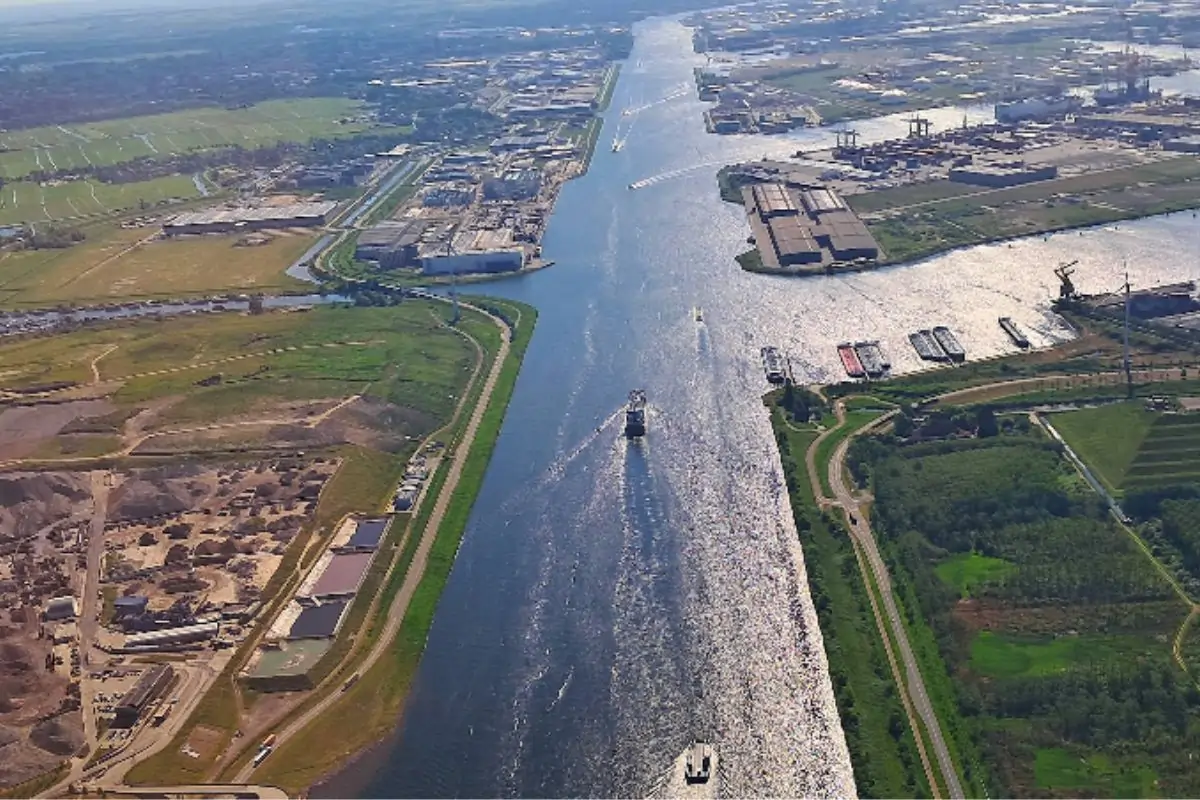
Table of Contents
Why did Amsterdam need the North Sea Canal in the nineteenth century?
By the mid-1800s, Amsterdam faced a period of serious decline:
• The harbour struggled to attract vessels.
• Trade volumes fell, and merchants feared losing routes permanently.
• The city lacked funds to repair bridges, quays and warehouses.
• Towns along the IJsselmeer were shrinking, creating fears that Amsterdam could face the same fate.
Reaching the city required a slow route around the northern tip of Holland.
Larger ships often avoided Amsterdam altogether. Without a direct sea connection, the city risked losing its position in international commerce.
Who proposed the canal, and how did the approval process unfold?
Ideas for a new sea connection had circulated for decades.
By the 1850s, pressure grew from shipping companies, port officials and several city leaders. The main obstacle was funding.
The national government had recently financed Rotterdam’s connection to the sea and refused to invest in a second major project.
Amsterdam therefore had to rely on local investors, merchants and its own municipal budget.
After years of debate, a consortium formed and parliament approved the required legislation for construction.
What made the engineering plan so ambitious?
The chosen route required cutting a passage through the dunes near IJmuiden and excavating a long straight channel toward Amsterdam.
This design allowed for faster access from the North Sea but demanded significant technical skill.
Key entities involved included:
- Sir John Hawkshaw, the English engineer, was willing to take responsibility for the excavation
- Survey teams from Rijkswaterstaat
- Dutch and British contractors
- Harbour engineers who later redesigned the lock systems
Excavation began on 8 March 1865. The dunes were the most demanding stage, requiring long hours of heavy labour.

How did workers live during construction?
Labourers often stayed close to the work site with very limited shelter.
Some slept in pits covered with branches, clay and peat. Access to clean water and medical care was minimal.
Despite these conditions, their work made it possible to complete the canal within roughly ten years.
When did the canal open, and what changed immediately?
The canal opened in 1876 during a major national celebration. Its impact was immediate:
• Ship arrivals increased.
• New warehouses appeared in the Eastern Docklands.
• Harbour activity expanded.
• Merchants gained renewed confidence in Amsterdam’s trading future.
In the same year, the Athenaeum Illustre was granted university status, strengthening the city’s academic profile during a time of economic recovery.
Why was the canal considered too small from the start?
Soon after the inauguration, several problems emerged:
• The locks were too narrow for larger ships.
• Sediment reduced the depth of the channel.
• The width caused congestion during busy periods.
The initial contractor had already gone bankrupt. By 1883, the national government took control of the project.
And began a long series of improvements, including deepening, widening and lock replacements.
These upgrades eventually produced the modern IJmuiden Sea Lock.

How did the canal influence the construction of Amsterdam Central Station?
The canal encouraged the idea of placing a major railway station on the waterfront.
Engineers created three artificial islands to support Amsterdam Central Station.
This location allowed direct movement of goods between ships and rail wagons.
The station opened in 1889 and permanently changed the city’s waterfront, replacing the open harbour vista with a transport hub that shaped modern Amsterdam.
How large is the canal today, and how is it used?
Current general figures:
- Length: about 21 kilometres
- Width: roughly 270 meters in key sections
- Annual traffic: more than 100,000 vessels, based on widely cited public maritime sources
The canal serves several key functions:
- Route for cargo and cruise vessels
- Transport corridor for bulk commodities, containers and energy products
- Link to inland trade routes through the Amsterdam–Rhine Canal
- Water-level regulation between the IJ basin and the North Sea
- Access to industrial zones along the North Sea Canal Area
The IJmuiden Sea Lock is now one of the largest locks in the world and enables very large ships to reach Amsterdam safely.
What role does the North Sea Canal play in tourism and cultural events?
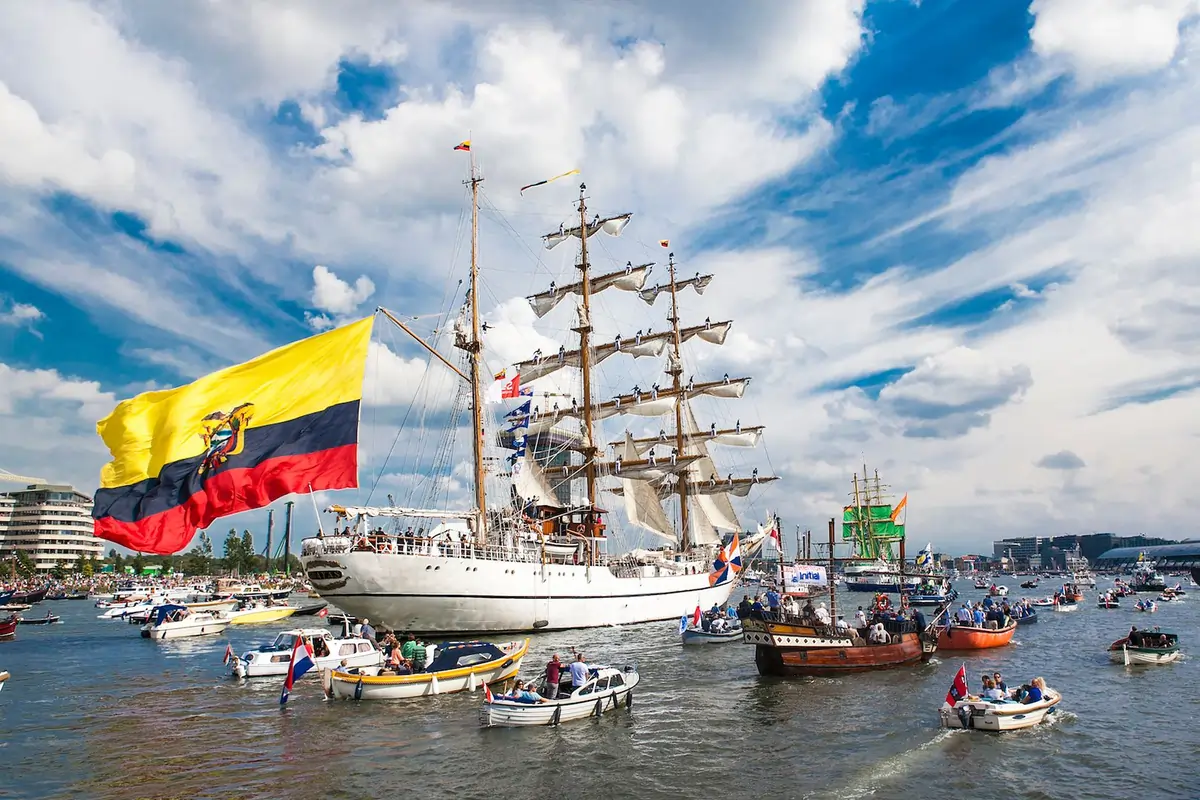
The most celebrated event connected to the canal is SAIL Amsterdam, held every five years.
During SAIL IN, tall ships travel along the canal toward the city, drawing thousands of spectators.
The waterway also supports heritage tours, documentary features, cycling routes along its banks and other recreational activities.
How does the canal appear in the Canon of Amsterdam?
The North Sea Canal is included as window number 28 in the Canon of Amsterdam, representing its importance as a turning point in the city’s development.
Why is the canal still essential today?
The canal remains the core access route for the Port of Amsterdam. It supports:
Energy terminals
Container and bulk shipping
Cruise routes
Industrial distribution networks
Water-level management for the entire region
Its function continues to influence economic planning, environmental strategy and long-term infrastructure development.
FAQs
Q. When did construction begin?
Construction began on 8 March 1865.
Q. Why was the dune route selected?
It provided the most direct and efficient sea entrance, even though excavation through the dunes was extremely demanding.
Q. How long did construction take?
The main canal took roughly ten years to complete, with the official opening in 1876.
Q. Why did Amsterdam fund most of the construction?
The national government had recently financed Rotterdam’s route to the sea. It refused to cover another major maritime project, so Amsterdam had to take responsibility.
Q. What is the purpose of the canal today?
It provides a direct maritime link to the Port of Amsterdam, supports industrial transport and regulates water levels between the IJ and the North Sea.
Q. How often does SAIL Amsterdam take place?
SAIL Amsterdam takes place every five years. The canal hosts the arrival parade known as SAIL IN.
Q. What makes the IJmuiden Sea Lock important?
It is one of the largest sea locks in the world and allows very large ships to access the canal safely.
Q. Why was Amsterdam Central Station built on artificial islands?
The location allowed fast transfers between sea cargo and rail transport, integrating two major transport systems.
Q. How wide is the canal?
Key sections are about 270 meters wide, although the width varies.
Q. How many ships use the canal each year?
More than 100,000 vessels travel through the canal annually, based on frequently cited public maritime sources.
How do Amsterdam’s canals relate to the North Sea Canal story?
The North Sea Canal is only one part of Amsterdam’s extensive water system.
If you want to explore how the city’s historic canals shaped trade, daily life and urban design, visit our full guide to Amsterdam Canals.
It explains how these waterways developed and why they remain central to the identity of Amsterdam.