Table of Contents
What Is the Eastern Docklands in Amsterdam?
The Eastern Docklands, known in Dutch as Oostelijk Havengebied, is a redeveloped waterfront district in eastern Amsterdam that combines former harbour infrastructure with contemporary residential and cultural spaces.
The area consists of artificial islands, wide quays, and water-focused urban planning that replaced shipping activity after the late twentieth century.
Where Are the Eastern Docklands Located?
The Eastern Docklands are located east of Amsterdam Central Station along the IJ waterfront and the Nieuwe Vaart canal.
They include Java Island, KNSM Island, Borneo Island, Sporenburg, and Riet Landen, all forming part of Amsterdam-Oost.
Why Were the Eastern Docklands Redeveloped?
The Eastern Docklands were redeveloped because inner-city port operations became outdated as shipping moved to larger western harbours.
The decision to convert the docklands into housing areas was formally made in 1975, with planning phases developing through the late 1970s and 1980s, followed by large-scale residential construction from the late 1980s through the 2000s.
What Makes the Eastern Docklands Architecturally Important?
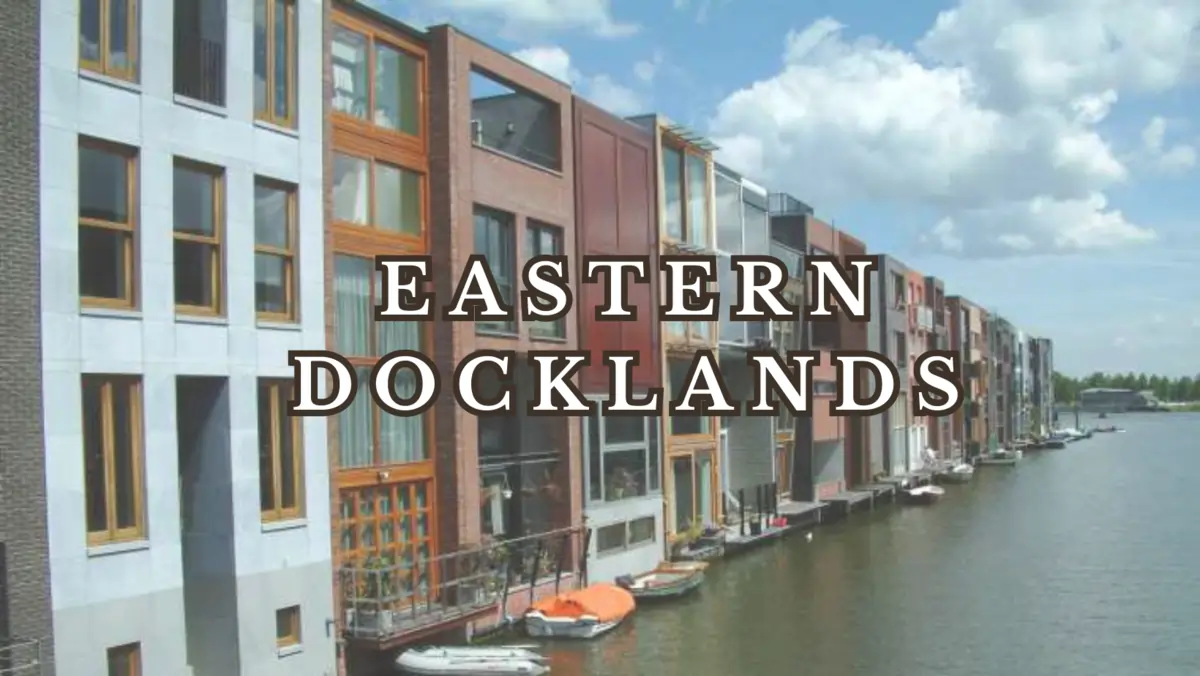
The Eastern Docklands are architecturally important for their high-density housing, experimental residential design, and close integration of water, bridges, and public space.
I notice a clear emphasis on architectural diversity, with different design concepts applied across neighbouring islands.

What Is Java Island Known For?
Java Island is known for its canal-based housing blocks, pedestrian bridges, and compact residential layout.
It is often cited as an example of dense urban living with strong public access to water.
What Defines KNSM Island Today?
KNSM Island is defined by large residential blocks, wide waterfront quays, and its former role as headquarters of the Royal Dutch Steamboat Company.
Today, the island functions as a residential and cultural area with galleries, studios, and long waterside walkways.
Why Are Borneo and Sporenburg Architecturally Distinct?
Borneo and Sporenburg are architecturally distinct because they prioritise low-rise, high-density housing instead of tall apartment buildings.
This approach created family-oriented streets while maintaining efficient land use.
What Is the Python Bridge and Why Is It Important?
The Python Bridge is a pedestrian bridge connecting Borneo Island and Sporenburg, recognised for its curved form and bright red appearance.
It has become one of the most recognisable architectural features in the district.

Which Museums and Cultural Venues Are Nearby?
The Eastern Docklands are located close to major cultural venues, including the National Maritime Museum, Muziekgebouw aan ’t IJ, BIMHUIS, and the NEMO Science Museum.
These institutions link the area’s maritime past with contemporary science and music.
What Dining and Social Options Exist in the Eastern Docklands?
The Eastern Docklands offer neighbourhood cafés, waterside restaurants, and small dining venues that primarily serve local residents.
I find the area quieter than central Amsterdam, with fewer tourist-focused establishments.
How Do You Get to the Eastern Docklands?
The Eastern Docklands are accessible by tram, bus, bicycle, and on foot from Amsterdam Central Station.
Tram lines provide direct connections to Java Island and KNSM Island, making access straightforward.
When Is the Best Time to Visit the Eastern Docklands?
The best time to visit the Eastern Docklands is on weekdays or early mornings when public spaces are less busy.
Spring and summer offer the most comfortable conditions for waterfront walks and outdoor exploration.
Are Boat Tours Available in the Eastern Docklands?
Several guided boat tours operate through the Eastern Docklands, focusing on harbour history and modern urban development.
Smaller guided tours often provide more detailed local insight than general sightseeing routes..

How Has the Eastern Docklands Changed Over Time?
The Eastern Docklands evolved from an international trade zone into a residential and cultural district through a multi-decade process.
This transition reflects long-term planning that balanced housing demand with preservation of the harbour structure.
What Is Planned for the Future of the Eastern Docklands?
Future plans for the Eastern Docklands focus on sustainability, energy-efficient housing, and climate-adaptive water management.
Public space improvements and environmental upgrades remain key priorities.
What Are the Key Stops to Remember in the Eastern Docklands?
The most important stops include Java Island, KNSM Island, Borneo and Sporenburg, the Python Bridge, and the IJ waterfront promenades.
Together, these locations explain the district’s development and current character.
Why Visit the Eastern Docklands Instead of Central Amsterdam?
The Eastern Docklands offer contemporary architecture, open space, and a residential atmosphere that contrasts with Amsterdam’s historic centre.
For visitors interested in modern city planning, the district provides a clearer picture of present-day Amsterdam.
FAQ’s
Q. Is the Eastern Docklands worth visiting?
Yes, the Eastern Docklands are worth visiting for modern architecture, waterfront walks, and a quieter alternative to the city centre.
Q. How long should you spend in the Eastern Docklands?
Most visitors spend between two and four hours exploring the Eastern Docklands on foot or by bicycle.
Q. Is the Eastern Docklands suitable for families?
Yes, the Eastern Docklands are suitable for families due to low traffic streets, wide pavements, and residential-focused design.
Q. Can you visit the Eastern Docklands for free?
Yes, the Eastern Docklands are free to explore, with public access to quays, bridges, and waterfront promenades.
Q. Are the Eastern Docklands safe to visit?
The Eastern Docklands are generally considered safe, with a calm residential atmosphere and low levels of tourist congestion.
Want More Details on Java Island?
If you enjoyed learning about the Eastern Docklands, you might find it useful to explore a dedicated guide to Java Island, one of the most distinctive parts of the district.
Java Island combines innovative contemporary architecture with residential character and waterfront views.
For a deeper look at what to see, where to walk, and how to plan your visit to Java Island, check out a specialised overview that focuses just on this neighbourhood.