Table of Contents
Introduction
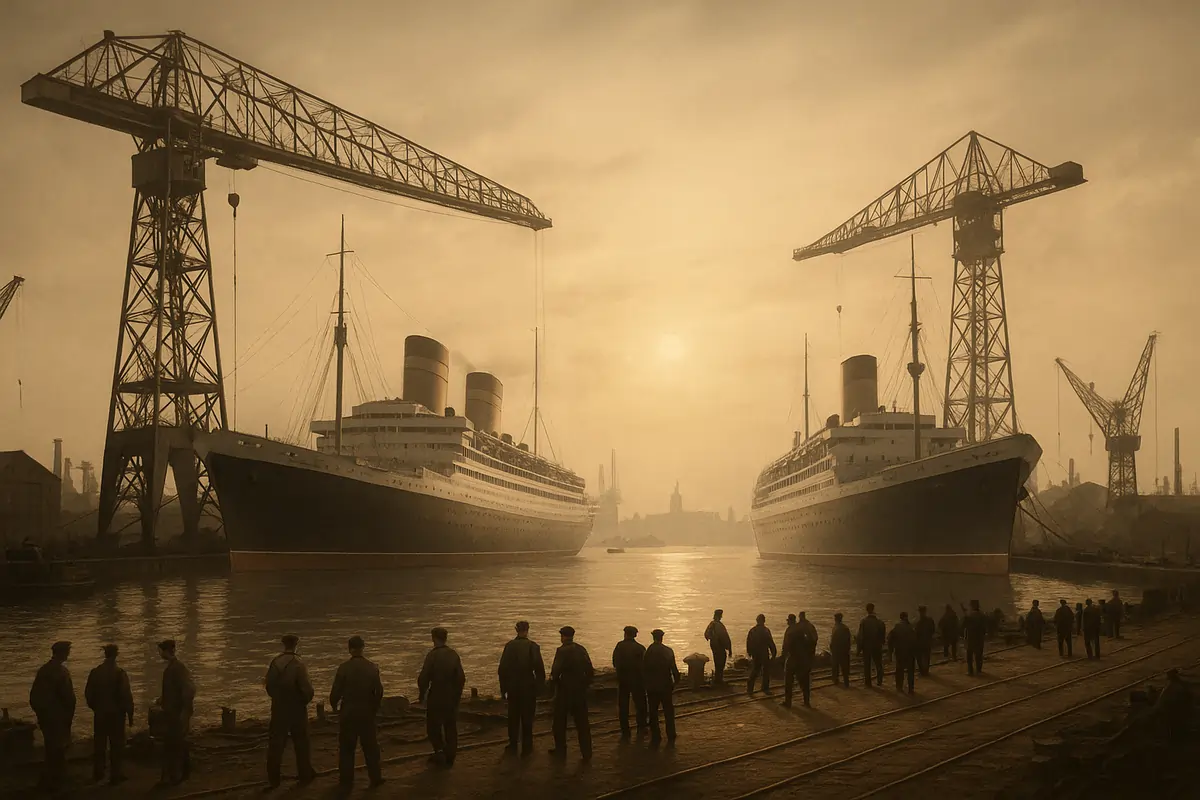
In the late 1930s, two Dutch ocean liners became floating symbols of national pride and engineering mastery: the SS Nieuw Amsterdam and the MS Oranje.
These ships were more than maritime marvels; they reflected the ambitions of a nation at its industrial peak and the global reach of Amsterdam’s shipyards.
Their stories chart the arc of a century: luxury voyages, wartime duty, post-war migration, and finally, rebirth as heritage icons.
Together, they embody the transformation of Amsterdam-Noord, where Dutch shipbuilding thrived and later evolved into today’s cultural waterfront.
1. Birth of a Dutch Flagship: SS Nieuw Amsterdam (1938)
Design and Ambition
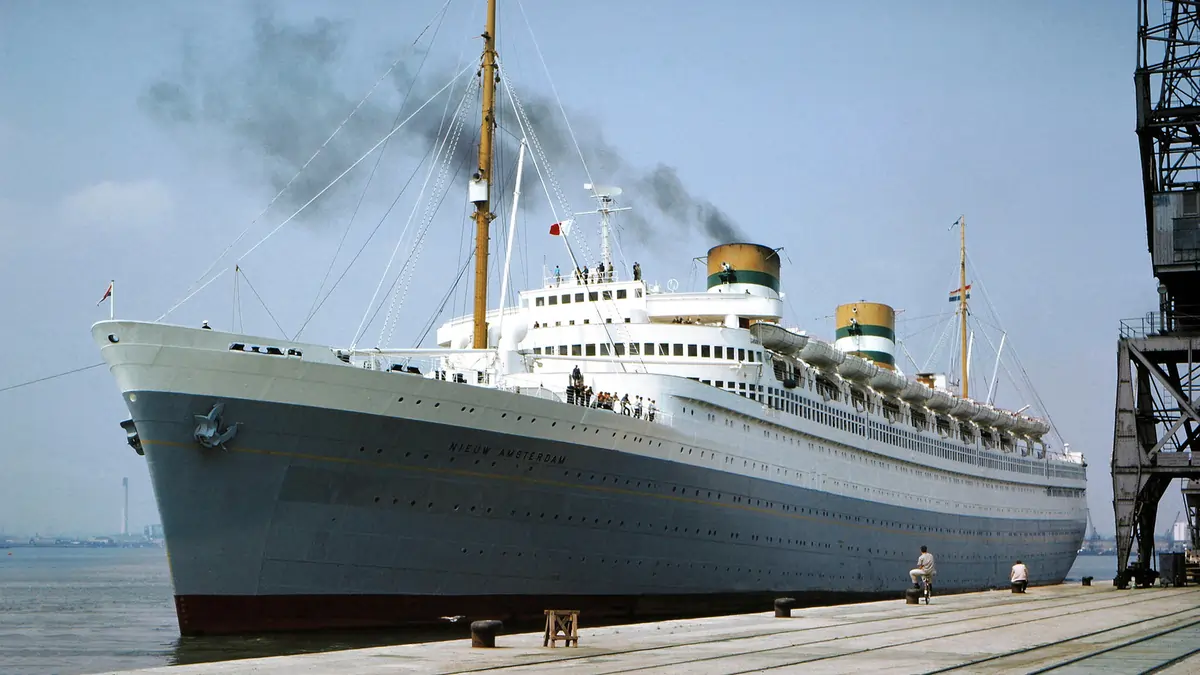
Built by the Rotterdamsche Droogdok Maatschappij for the Holland America Line (NASM), the SS Nieuw Amsterdam was laid down in 1936 and launched in 1937, with completion in April 1938.
At her debut, she was the largest ship ever built in the Netherlands and the pride of the Dutch merchant fleet.
Dubbed “the ship of tomorrow,” she embodied the streamlined glamour of the Art Deco age, aluminium finishes, geometric elegance, and pastel interiors conceived by Dutch modernist designers.
Every stateroom in First Class had a private bath, a rarity then, and her air-conditioning plant was one of the largest afloat.
Technical Highlights
- Length: 231 m
- Beam: 26.9 m
- Speed: 21.5 knots on trial
- Power: Eight steam turbines, twin screws
- Capacity: 1,220 passengers (556 First, 455 Second, 209 Third)
Maiden Voyage and Wartime Service
Her maiden voyage began on 10 May 1938 from Rotterdam to Hoboken, via Boulogne and Southampton. She was hailed internationally as a triumph of Dutch design.
After the German invasion of the Netherlands (1940), the Nieuw Amsterdam was requisitioned by Allied forces and converted into a troopship.
Over the course of World War II, she carried precisely 378,361 troops (IISG / Rich Ashell archives), logging over half a million nautical miles in convoy service.
Following a 1947-48 refit, she returned to luxury service, though the age of ocean liners was waning. By 1973, her last voyage concluded a 35-year career that had mirrored an era’s rise and decline.
2. The Industrial Heart: Amsterdam-Noord and the Shipyards
While Rotterdam hosted the construction of Nieuw Amsterdam, Amsterdam-Noord powered the broader Dutch shipbuilding boom.
The North Sea Canal (1876) opened direct sea access to the city, transforming the northern banks of the IJ from marsh and gallows field into a centre of heavy industry.
Here, companies like the Nederlandsche Scheepsbouw Maatschappij (NSM) and the Nederlandsche Dok Maatschappij (NDM) built vessels that symbolised Dutch global reach.
Their eventual merger formed the NDSM, whose wharves would later give rise to both the Oranje and an entire working-class community.
Neighbourhoods like Vogeldorp, Bloemenbuurt, and Van der Pekbuurt housed thousands of dockworkers and their families.
The hum of cranes, engines, and steelwork became the heartbeat of Amsterdam-Noord until, decades later, global competition and oil crises silenced it.
3. MS Oranje (1938): From Passenger Liner to Hospital Ship
Launch and Specifications
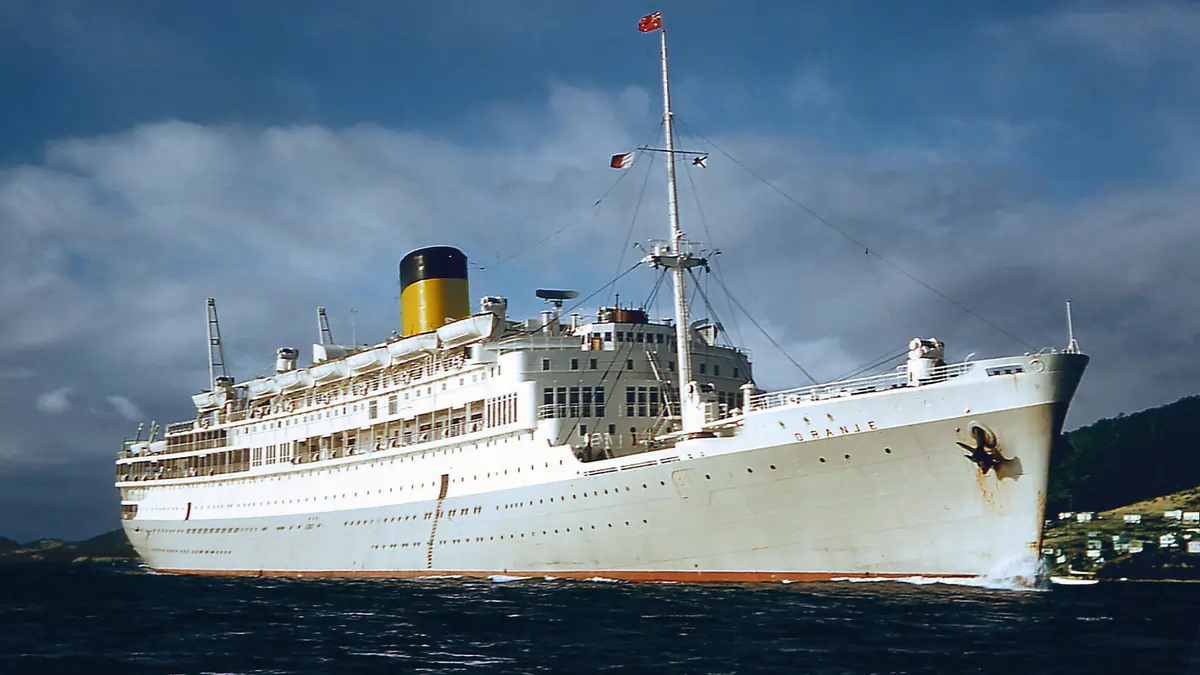
Commissioned by the Stoomvaart Maatschappij Nederland (Netherland Line) and constructed at the Nederlandsche Scheepsbouw Maatschappij (NSM) in Amsterdam-Noord.
The MS Oranje was launched on 8 September 1938 by Queen Wilhelmina.
She was designed for the Amsterdam–Batavia (Jakarta) route, symbolising the Netherlands’ maritime link with its East Indies colony.
- Length: 200 m
- Speed: 21 knots
- Passenger capacity: 740 people (283 First Class, 283 Second, 92 Third, 82 Fourth source: Lodewijk Petram)
- Crew: ~500
World War II: Hospital Duty
When war erupted, the Oranje found refuge in Sydney and was refitted as a hospital ship under Allied control, though she continued to sail under the Dutch flag.
Between 1941 and 1945, she carried over 32,000 sick and wounded patients, both soldiers and civilians (Amsterdam Museum / Rijksmuseum).
Her immaculate safety record and speed made her one of the most celebrated hospital ships of the war, earning her the affectionate title “Angel of the Sea.”
Post-War Repatriation and Migration
After the war, the Oranje resumed service for the Netherland Line, aiding in the massive repatriation of Dutch citizens and colonial subjects as Indonesia gained independence.
Thousands of migrants began new lives aboard her decks, a living link between colonial past and post-colonial future.
In 1964, she was sold to the Italian Flotta Lauro Line, renamed Angelina Lauro, and converted to a cruise ship.
A devastating fire in 1979 ended her service, and she was scrapped soon after, but her legend endured.
4. Twin Titans: A Comparative Legacy
| Attribute | SS Nieuw Amsterdam | MS Oranje |
|---|---|---|
| Line | Holland America Line (NASM) | Netherland Line (SMN) |
| Route | North Atlantic | Netherlands – East Indies |
| Launch Year | 1937 (entered service 1938) | 1938 |
| Wartime Role | Allied troopship | Allied hospital ship |
| Troops / Patients | 378,361 troops transported | 32,000 patients treated |
| Fate | Scrapped 1974 | Burned 1979 (scrapped 1980) |
Both liners represent the peak of Dutch maritime design before jet travel and containerisation changed global transport forever.
Together, they frame an epoch from empire to migration, from steel industry to cultural memory.
5. Rebirth: Amsterdam-Noord Today
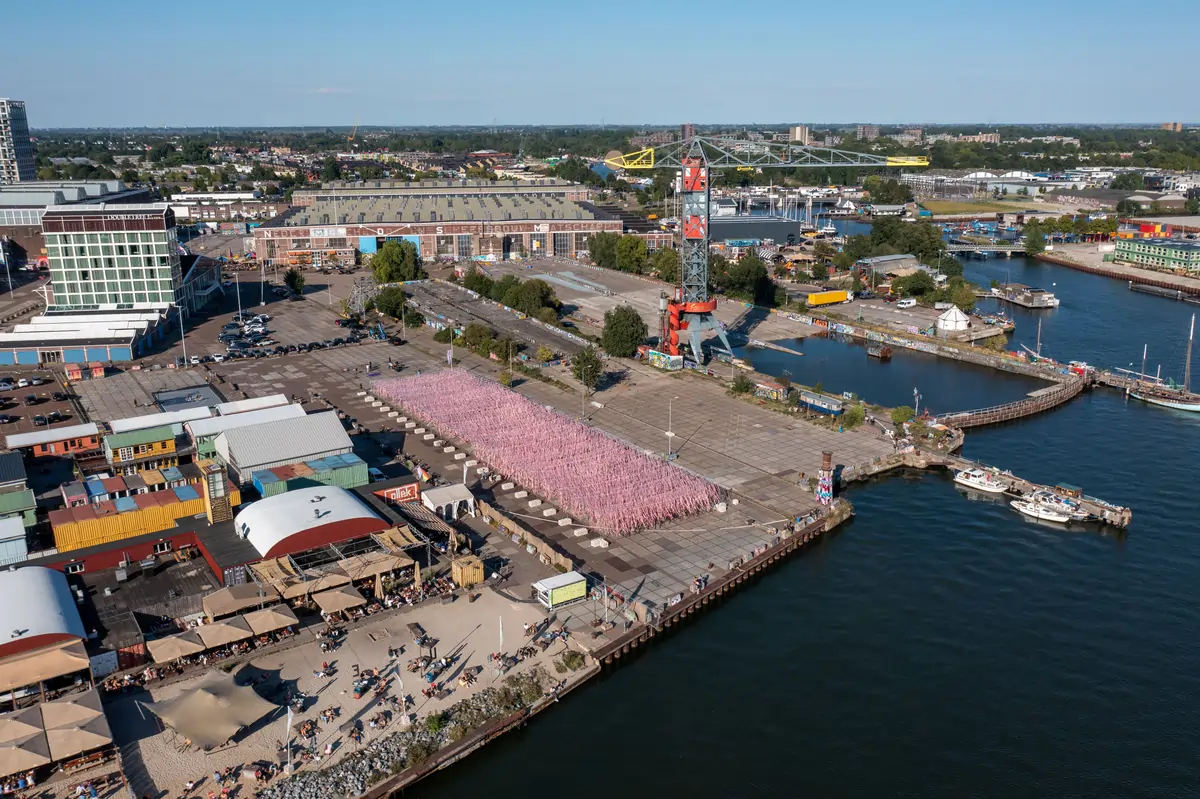
When shipbuilding collapsed in the 1970s, the massive NDSM yards stood silent. Yet within decades, artists, creatives, and cultural entrepreneurs reclaimed these industrial ruins.
Today, NDSM Wharf thrives as a hub for art, music, tech, and creative industries. Former slipways now host festivals and start-ups; cranes house hotels; warehouses are canvases for graffiti.
This rebirth mirrors Amsterdam’s resilience, transforming from an engine of industry into a crucible of creativity.
6. Why Their Stories Remain Evergreen
- Cultural Heritage: The Oranje and Nieuw Amsterdam are preserved in national archives and exhibited at Het Scheepvaartmuseum, where artefacts and oral histories connect visitors with the era of Dutch liners.
- Urban Regeneration: The shipyards that built them now sustain a new economy, media, design, and entertainment, continuing Amsterdam-Noord’s role as a generator of progress.
- Historical Continuity: Their lifecycles reflect broader societal shifts: colonial routes giving way to migration; industry giving way to innovation.
These ships, though long gone, are embedded in Amsterdam’s DNA, steel turned to story, machinery turned to memory.
Conclusion
The SS Nieuw Amsterdam and MS Oranje were not merely ships; they were national statements, each born of artistry, ambition, and necessity.
They linked continents, carried soldiers and migrants, and anchored Amsterdam’s industrial power.
Their afterlives in museums, literature, and the rejuvenated NDSM Wharf remind us that maritime history is not a relic but a living current.
Across the IJ, the cranes may stand still, but the spirit of Dutch innovation sails on.
The Dutch East India Company: how commerce and empire shaped the Netherlands
The story of these 1930s liners is part of a much longer Dutch seafaring tradition, one that stretches back to the 17th-century Dutch East India Company.
The VOC not only created the trade routes and colonial connections that later liners would serve, it also helped establish the maritime infrastructure, shipbuilding expertise and mercantile capital that made large-scale ship production possible in ports like Amsterdam and Rotterdam.