Johan Cruyff, born Hendrik Johannes Cruijff on 25 April 1947 in Amsterdam’s Linnaeusstraat, became one of the most influential footballers in history.
His playing style, ideas and leadership shaped Ajax, Barcelona and the Netherlands, leaving an impact that continues to guide modern football.
Table of Contents
Early Life and Family Background
Cruyff grew up near Ajax’s former stadium De Meer, where he developed an early connection to the sport.
After his father passed away in 1959, the family moved to Betondorp, a modest neighbourhood in Amsterdam that played a central role in his childhood.
In 1968, he married Danny Coster, the daughter of businessman Cor Coster.
They went on to have three children, Chantal, Susila and Jordi. Jordi later became a professional player and manager.
Why the Name Appears in Several Spellings
The Dutch spelling of Cruijff uses the ij letter pair, which many non-Dutch speakers find difficult.
For this reason, the international version of Cruyff became widely adopted.
Cruyff’s Rise Through the Ajax Youth System
Cruyff joined Ajax in 1957 at the age of ten. At seventeen, he made his senior debut and immediately stood out for his technique, intelligence and sense of space.
Although listed as a left forward, he refused to stay fixed in one area.
He moved freely, directed play and influenced the match’s flow at will.
His ability to accelerate quickly, change direction and control the ball with precision made him one of the most exciting talents of his era.
Cruyff’s Major Honours with Ajax
Cruyff won eight Eredivisie titles with Ajax across two spells:
- 1965–66
- 1966–67
- 1967–68
- 1969–70
- 1971–72
- 1972–73
- 1981–82
- 1982–83
He also won:
- Three consecutive European Cups (1971, 1972, 1973)
- KNVB Cups during multiple seasons
- Intercontinental Cup appearances with the club
His iconic number 14 jersey became so closely associated with him that Ajax later retired the number.

Why Cruyff Left Ajax for Barcelona
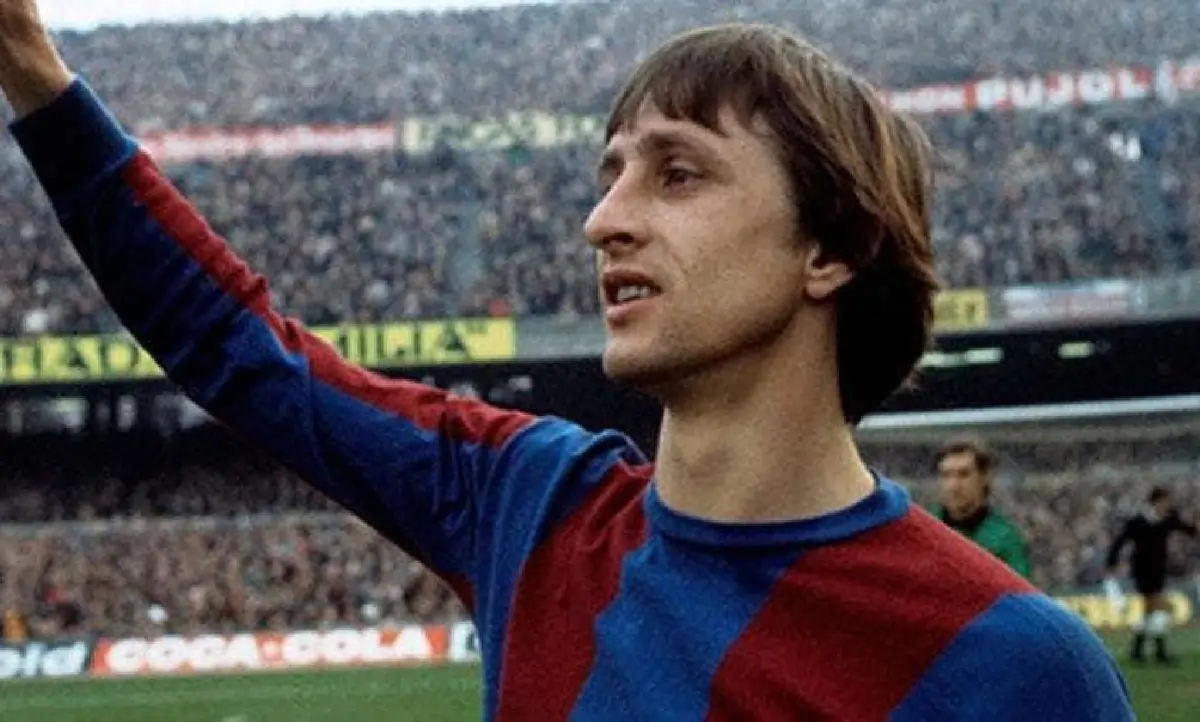
In 1973, FC Barcelona paid a record fee to sign Cruyff, surprising Dutch supporters who were not used to major transfers at the time.
At Barcelona, he reunited with coach Rinus Michels, who helped refine the tactical ideas later known as Total Football.
Cruyff’s arrival uplifted Barcelona both on and off the pitch.
Catalonia, living under restrictions during the Franco era, viewed him as a symbol of confidence and identity.
In the 1973–74 season, he led Barcelona to their first league title in 14 years.
The 5–0 win over Real Madrid in Madrid stands as a defining moment in his career.
He remained with Barcelona for six seasons.
Cruyff’s Move to the United States
After facing business losses due to poor advice, Cruyff resumed playing and joined the Los Angeles Aztecs, later moving to the Washington Diplomats.
Between 1979 and 1980, he became one of the standout players in the North American league and was twice named its best performer.

The Return to Ajax and the Controversial Transfer to Feyenoord
Cruyff returned to Ajax in 1981, guiding the club to back-to-back league and cup doubles.
Despite this, Ajax chose not to extend his contract, citing age and injury concerns.
Determined to prove a point, Cruyff signed with Feyenoord, Ajax’s fiercest rival.
The move shocked Dutch football, but Cruyff delivered again: Feyenoord won both the Eredivisie and the KNVB Cup in the 1983–84 season, and he was named Dutch Footballer of the Year.
Cruyff’s Achievements with the Netherlands National Team
Cruyff played 48 matches for the Netherlands and scored 33 goals, serving as captain in 34 of those appearances.
He was the standout performer in the 1974 World Cup, where the Netherlands reached the final and showcased an attacking style that drew international admiration.
Cruyff was named the best player of the tournament.
He did not compete in the 1978 World Cup, a decision misunderstood for years.
It was later revealed that a kidnapping threat involving his family led him to remain at home.
Cruyff as a Manager
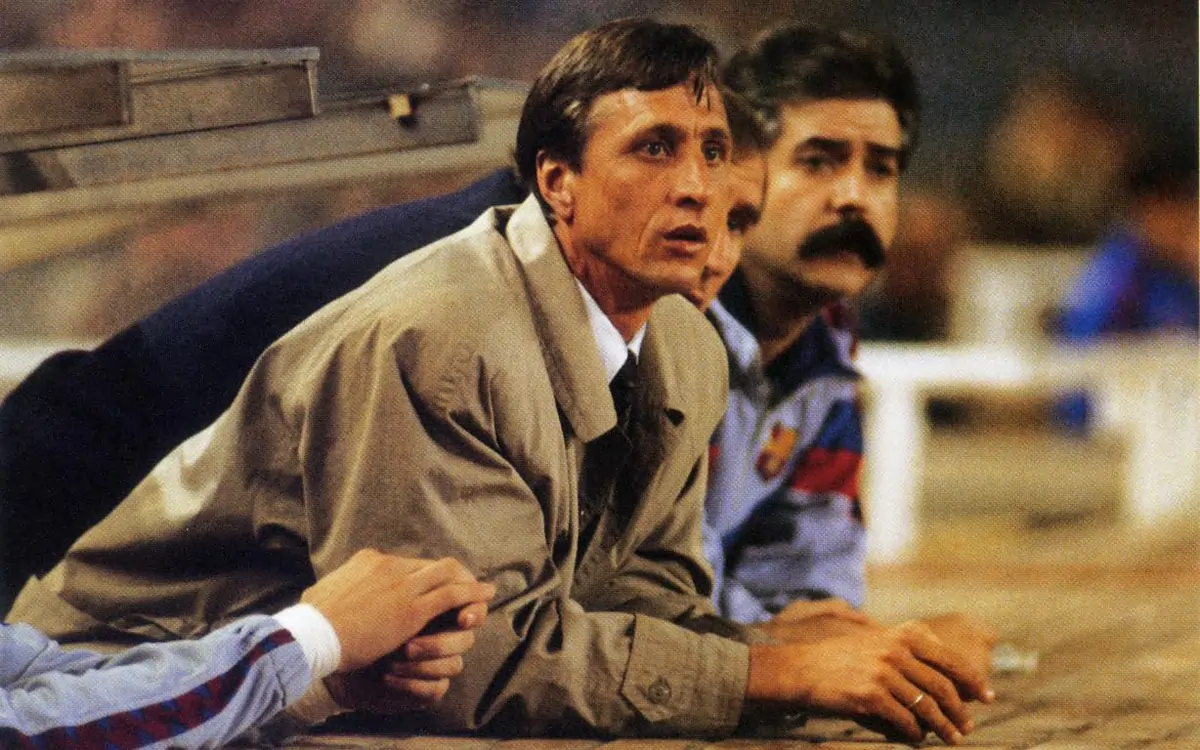
Cruyff later managed Ajax and Barcelona, influencing football more deeply than many coaches of his generation.
His work at Barcelona helped establish the club’s identity for decades, shaping training methods, youth development and tactical discipline.
He also coached the Catalonia representative team, winning both matches he oversaw.
Contributions Beyond Coaching
Cruyff explored several business ventures, appeared as a football pundit and wrote opinion columns.
He served as an advisor to Ajax and Barcelona at different times.
He founded the Johan Cruyff Foundation, which supports children through sport.
One of its major projects is the creation of Cruyff Courts, safe outdoor spaces designed for football, basketball and community activity.
Johan Cruyff’s Passing
Johan Cruyff died on 24 March 2016 in Barcelona at the age of 68 following a battle with lung cancer.
His death prompted tributes from around the world, reflecting his influence on European football, coaching philosophy and youth development.
Lasting Legacy
Across his playing and coaching career, Cruyff earned 64 official honours.
His ideas shaped modern tactics, possession-based systems and academy structures across Europe.
After suffering a heart attack earlier in life, he quit smoking and later participated in an anti-smoking campaign.
His willingness to use his experience to help others became another defining part of his legacy.
Frequently Asked Questions (FAQ)
Q. Why is Johan Cruyff regarded as one of the most important figures in football?
Cruyff combined elite individual talent with a deep understanding of team structure. His influence shaped tactics, player development and the philosophy behind possession-based football.
Q. How many Eredivisie titles did Cruyff win with Ajax?
He won eight Eredivisie titles, corrected from earlier incorrect claims that listed only six.
Q. How many European Cups did Cruyff win with Ajax?
He won three consecutive European Cups from 1971 to 1973.
Q. Why didn’t Cruyff play in the 1978 World Cup?
He stayed home because of a serious kidnapping threat involving his family.
Q. What did Cruyff achieve as Barcelona’s manager?
He laid the groundwork for the club’s modern football identity, shaping its youth development and style of play for generations.
Q. What does the Johan Cruyff Foundation do?
The foundation builds Cruyff Courts and funds projects that give children safe spaces to play and develop through sport.
Want to Learn More About Ajax’s History?
If you would like to explore Ajax’s origins, achievements and influence on Dutch football, visit our complete guide to the Ajax club.
It covers the early years, major victories and the role Ajax played in shaping legends such as Johan Cruyff.