Jordaan is often praised as one of Amsterdam’s most charming neighbourhoods, but its appeal goes far beyond postcard views.
This part of the city grew during the seventeenth century as a working area filled with craftspeople, traders and families living in small houses along narrow canals.
Over time, it developed into a cultural centre with cafés, inner courtyards, small museums, markets and a rich musical tradition.
Visitors often walk through the area without learning how it evolved.
This guide explains the history, offers a detailed walking route, and highlights the overlooked corners.
Provides practical tips that help visitors appreciate the neighbourhood in a deeper way.
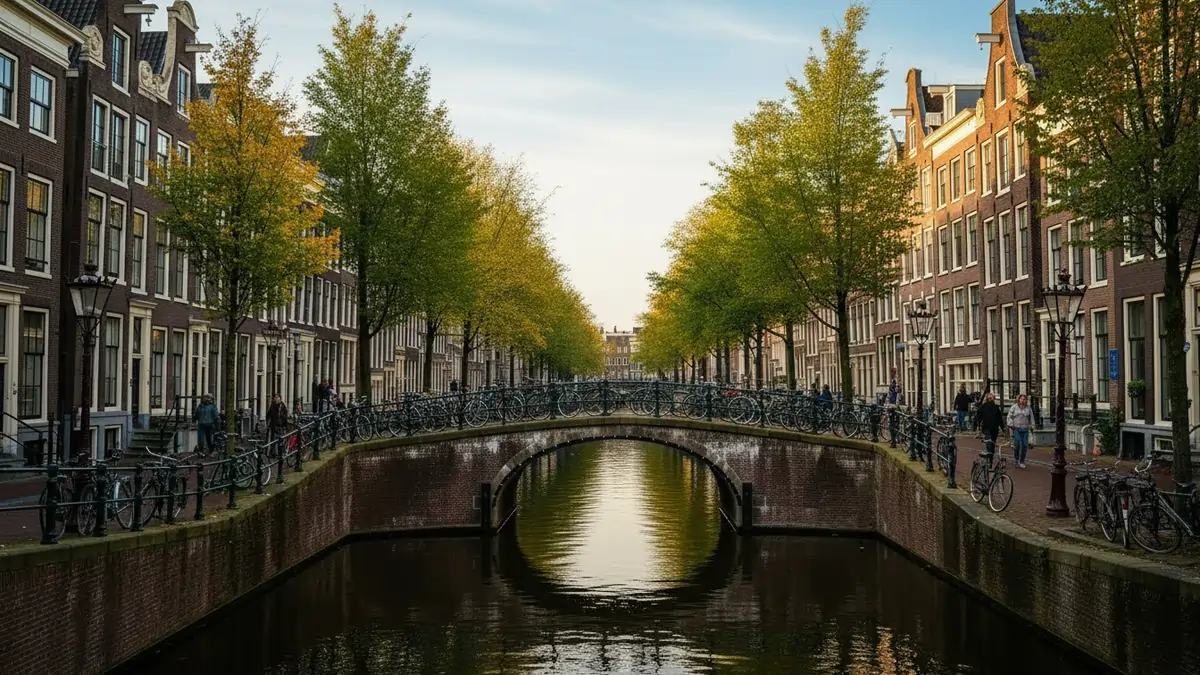
Table of Contents
Where Is Jordaan and How Is It Laid Out?
Jordaan sits on the west side of Amsterdam’s historic canal belt.
Its structure reflects canals, filled waterways that became streets and narrow lanes from seventeenth-century planning.
The commonly accepted borders are:
- Prinsengracht to the east
- Leidsegracht to the south
- Brouwersgracht to the north
- Lijnbaansgracht to the west
Rozengracht does not form an outer boundary but instead functions as a significant central thoroughfare running through the district.
Several well-known streets, such as Lindengracht, Elandsgracht and Palmgracht, began as canals before being filled during the nineteenth century when the city adjusted its infrastructure.
This mixture of old water routes and narrow lanes creates a compact area ideal for walking.
Why Does Jordaan Have a Strong Cultural Identity?
Jordaan’s character comes from its social and historical background.
Several influences shaped the neighbourhood as it appears today.
Working communities
The seventeenth-century Jordaan attracted labourers, families and craftspeople who lived and worked in close quarters.
This produced tightly packed lanes, small houses and a strong sense of local identity.
Musical tradition
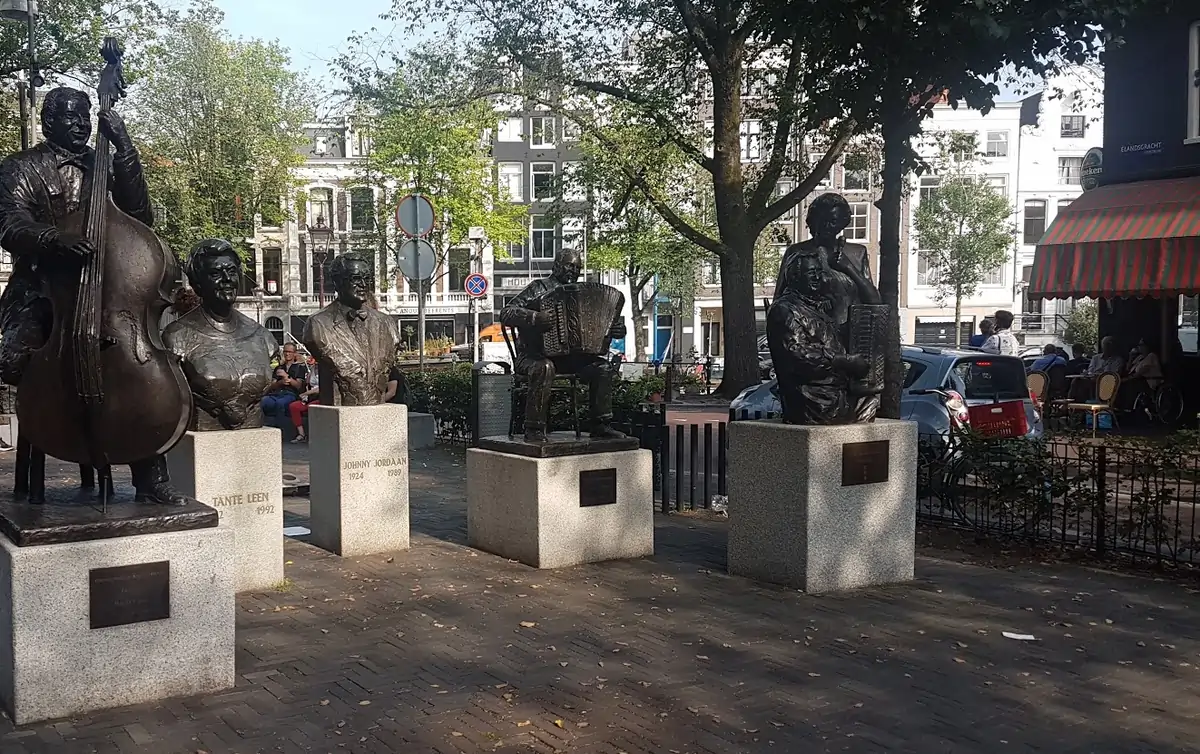
The neighbourhood became closely associated with Dutch folk singers such as Johnny Jordaan and Tante Leen.
Their music expressed humour, emotion and the everyday experiences of local residents.
Their legacy is preserved in a small square dedicated to them.
Courtyards and community care
Hofjes, or enclosed courtyards, were funded by wealthy families to provide housing for older women.
Many survive and offer peaceful spaces behind ordinary street doors.
Markets and local life
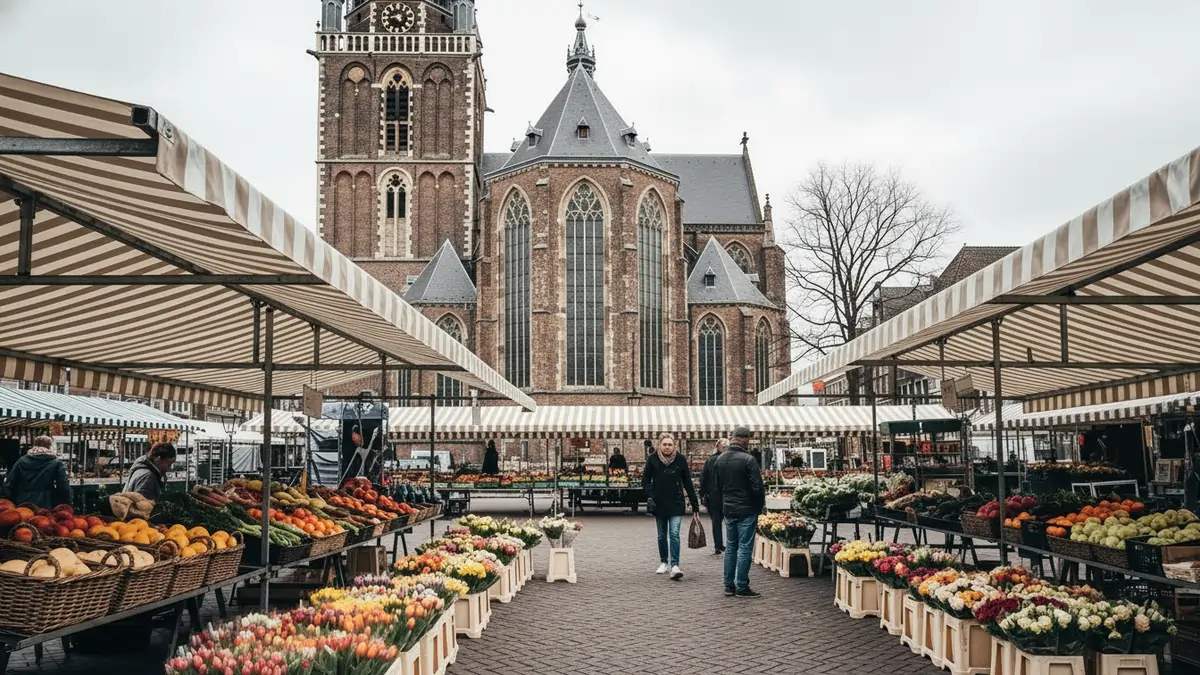
Noordermarkt and Lindengracht continue to host lively weekly markets featuring food, antiques and handcrafted items.
These markets maintain a strong community presence.
How Should You Plan a Walking Tour Through Jordaan?
A walking route allows visitors to see both the well-known areas and the quieter corners that show the neighbourhood’s deeper character.
This route takes two to three hours at a comfortable pace.
Where Should the Walking Tour Begin?
Start at the Westerkerk and the Anne Frank House
Westerkerk is one of Amsterdam’s most recognisable churches, with a tall tower visible throughout the central district.
Nearby stands the Anne Frank House, which offers essential insight into twentieth-century history.
Begin at Westermarkt. Look along Prinsengracht to observe how the canal frames the neighbourhood.
Then walk north toward Brouwersgracht.
Why Is Brouwersgracht a Favourite for Visitors?
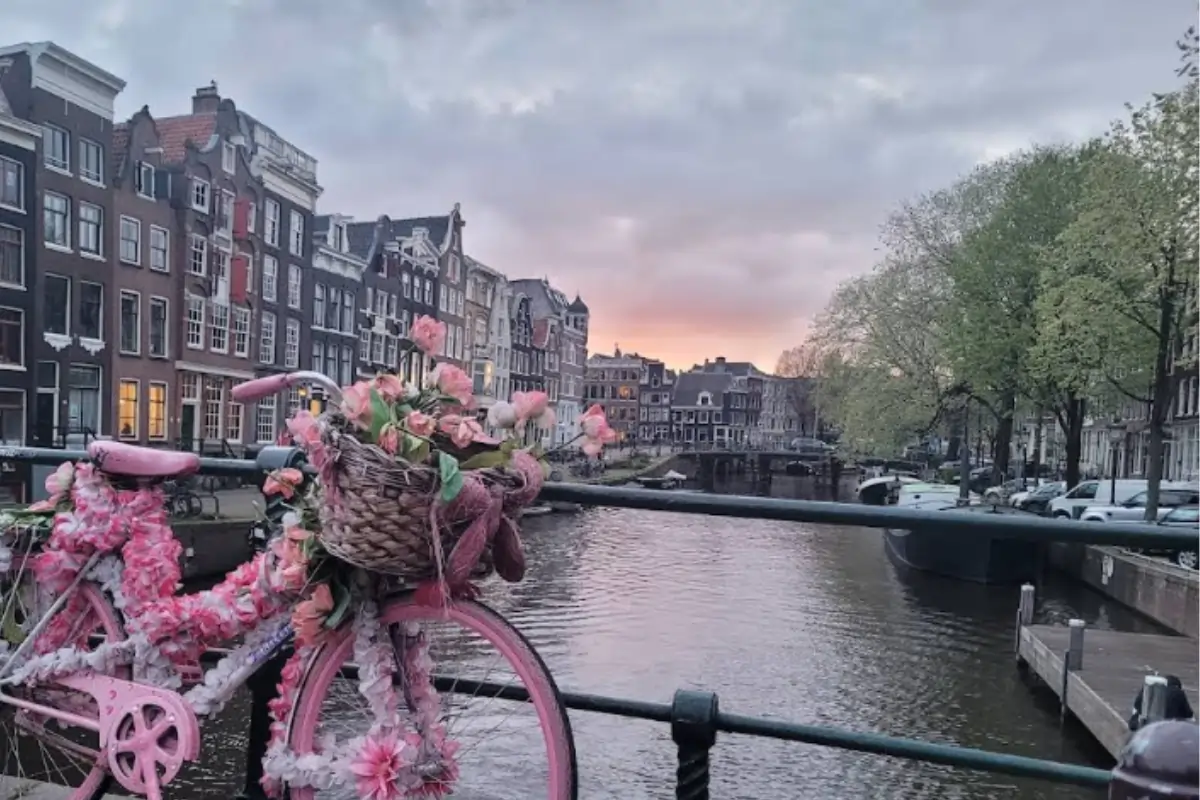
Brouwersgracht forms the correct northern border of Jordaan and is often described as one of Amsterdam’s most beautiful canals.
Its former warehouses now serve as residential buildings with classic shutters and large windows.
Walk slowly along the canal to appreciate the bridges, reflections and architectural details.
This stretch consistently appears among the most photographed locations in the city.
Which Hidden Courtyards Are Worth Visiting?
Jordaan contains several hofjes that open during daytime hours.
These green courtyards show a quieter side of neighbourhood life.
Look for:
- Courtyards near Palmgracht
- Enclosed gardens between Lijnbaansgracht and nearby lanes
- Historic foundations built to provide housing for older women
Visitors should enter respectfully and remain quiet within these residential spaces.
What Can You Find Along Palmgracht and the Northern Lanes?
Palmgracht was once a canal but was filled during the nineteenth century.
It now offers a calm residential environment.
Nearby lies a small section known locally as The Triangle, located between Lijnbaansgracht and Palmgracht.
This area contains a wooden house, old warehouses and a small courtyard.
Its limited entry points help preserve its classic atmosphere.
Where Should You Walk Next?
Continue toward Noordermarkt and the Noorderkerk
Noordermarkt becomes especially lively on Saturdays with produce, bread, cheese, flowers, antiques and crafts. Mondays feature a secondhand market.
The Noorderkerk stands at the corner of the square. Built in the seventeenth century, the church features a cross-shaped design and a simple stone structure.
After visiting the square, walk along Lindengracht. This was once a canal and now hosts a popular Saturday market lined with cafés.
Where Does the Walking Route End?
Finish at Elandsgracht and Johnny Jordaanplein
Elandsgracht stands on the former route of another canal.
The street leads to Johnny Jordaanplein, a small square featuring sculptures honouring local musicians who shaped the neighbourhood’s cultural voice.
This point ties together the area’s history, music and daily rhythms.
What Practical Tips Help Visitors Enjoy Jordaan?
- Best time to walk: Early morning or late afternoon provides quieter streets. Saturday morning is ideal for market visits.
- Footwear: Many lanes have cobblestones. Comfortable shoes help prevent fatigue.
- Respect for residents: Hofjes and narrow lanes are residential. Avoid loud conversations and keep pathways clear.
- Photography: Softer light during early morning or evening offers excellent canal views.
- Booking: Reserve Anne Frank House tickets well in advance.
FAQ
Q. How long does a full walk of Jordaan take?
Two to three hours is typical, depending on how much time you spend in markets, cafés or courtyards.
Q. Is Jordaan suitable for families?
Yes. The area has gentle walking routes and quiet streets. Families should remember that some courtyards require silence.
Q. Can you explore Jordaan without a guide?
Yes. The neighbourhood is simple to navigate and well-suited for self-guided walks.
Q. Are the markets open daily?
No. Noordermarkt operates mainly on Saturdays and Mondays. Lindengracht hosts its main market on Saturdays.
Q. What is the easiest way to reach Jordaan?
Visitors can walk from Central Station in about fifteen minutes. Several bus and tram lines serve the area’s edges. Walking is recommended once inside.
Q. Are hofjes open to the public?
Many allow daytime access, though some remain private. Signs near each entrance explain opening hours.
Q. Is Jordaan safe in the evening?
Yes. The neighbourhood has cafés, restaurants and steady foot traffic. Standard travel awareness applies as in any city.
Why Is Jordaan Best Explored On Foot?
Jordaan rewards visitors who take time to wander. Its narrow streets, canal views, courtyards, markets and cultural history reveal a neighbourhood shaped by centuries of change.
Walking allows you to appreciate these details at a natural pace and observe how daily life continues within a historic setting.
This area remains one of Amsterdam’s most distinctive places. A thoughtful walk helps visitors understand why it continues to hold such a strong place in the city’s identity.
What Should You Explore Next In Jordaan?
Visitors who enjoy discovering the quieter corners of the neighbourhood often want even more suggestions beyond the main walking route.
Jordaan contains several small spaces, historic details and overlooked locations that many travellers never find on their own.
For readers who want to keep exploring, our guide to the hidden gems in Jordaan offers a helpful next step.