Table of Contents
How do Amsterdam coffeeshops work?
Amsterdam’s coffeeshops function as regulated spaces where adults can purchase and consume cannabis under a controlled set of rules.
These venues remain one of the city’s most recognisable features, drawing millions of visitors each year.
Although the national government handles drug policy, Amsterdam shapes the practical experience through local regulations, enforcement priorities and visitor guidelines.
This guide explains how coffeeshops operate today, what visitors should expect, how the system developed and which recent changes affect the scene.
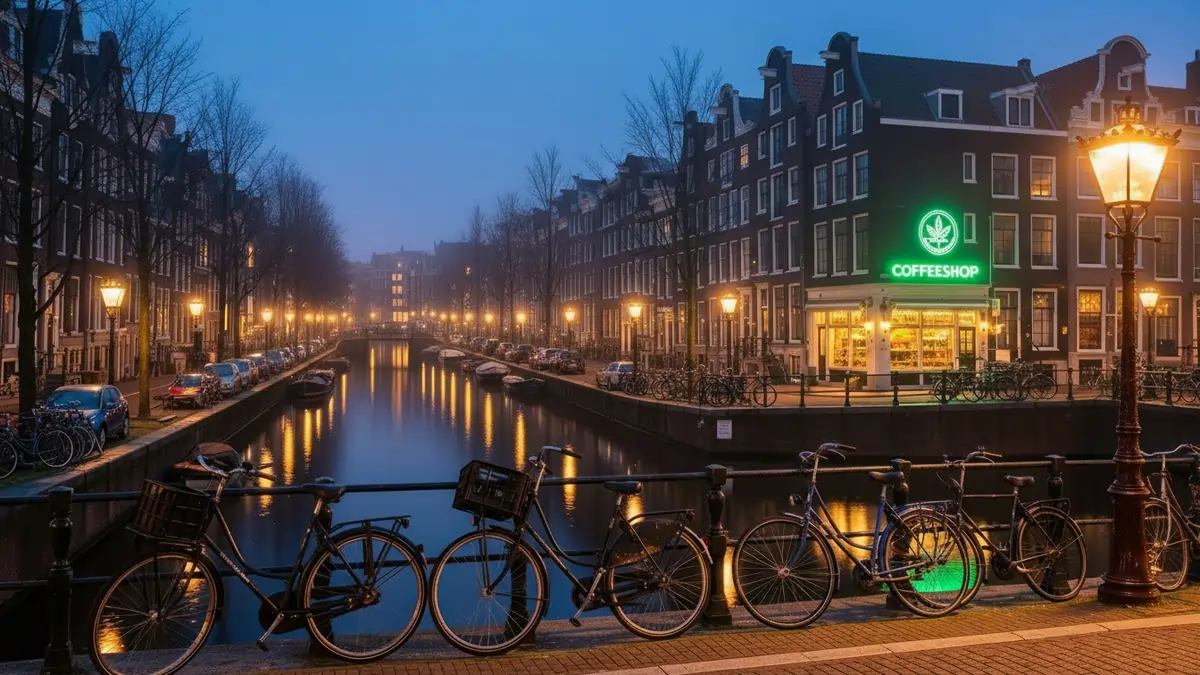
Why are coffeeshops allowed in Amsterdam?
The Dutch approach is based on a national policy that tolerates the small-scale retail sale of cannabis.
Amsterdam supports this model because it reduces illegal street dealing, encourages safer consumption and gives users a controlled environment.
The city has repeatedly opposed proposals that would restrict coffeeshop access to Dutch residents.
Amsterdam’s leaders argue that excluding tourists would increase illegal trade and create more public safety issues, not fewer.
What rules must Amsterdam coffeeshops follow?
Every coffeeshop must obey strict tolerance criteria. Breaches can result in immediate closure.
Key requirements include:
- No alcohol served or consumed on-site
- No hard drugs on the premises
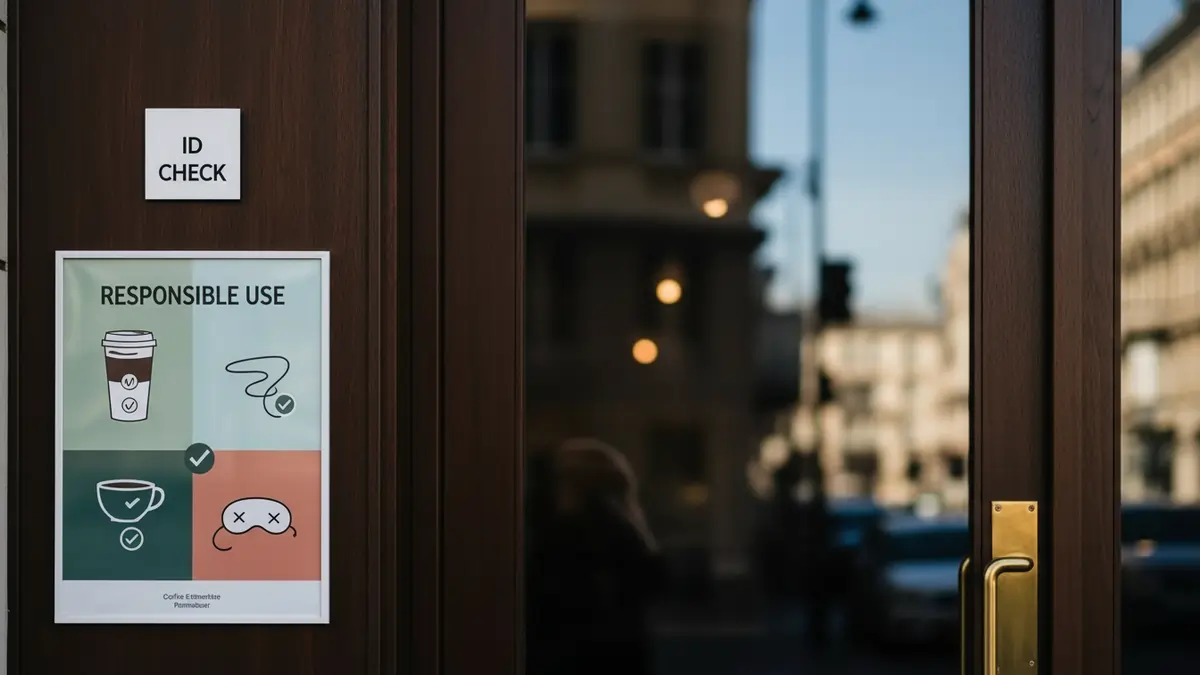
- Minimum age 18 for entry and purchase, with ID checks
- Maximum sale of 5 grams per person per day
- Maximum internal stock of 500 grams
- No advertising of cannabis products
- No disturbances to the surrounding neighbourhoods, entry for minors at any time
These rules shape the calm, controlled setting inside most coffeeshops.
Security staff and ID checks are common. Many shops provide separate smoking areas to meet ventilation standards.
What is the experience inside an Amsterdam coffeeshop?
Visitors generally follow this process:
- Show a valid ID at the door or counter.
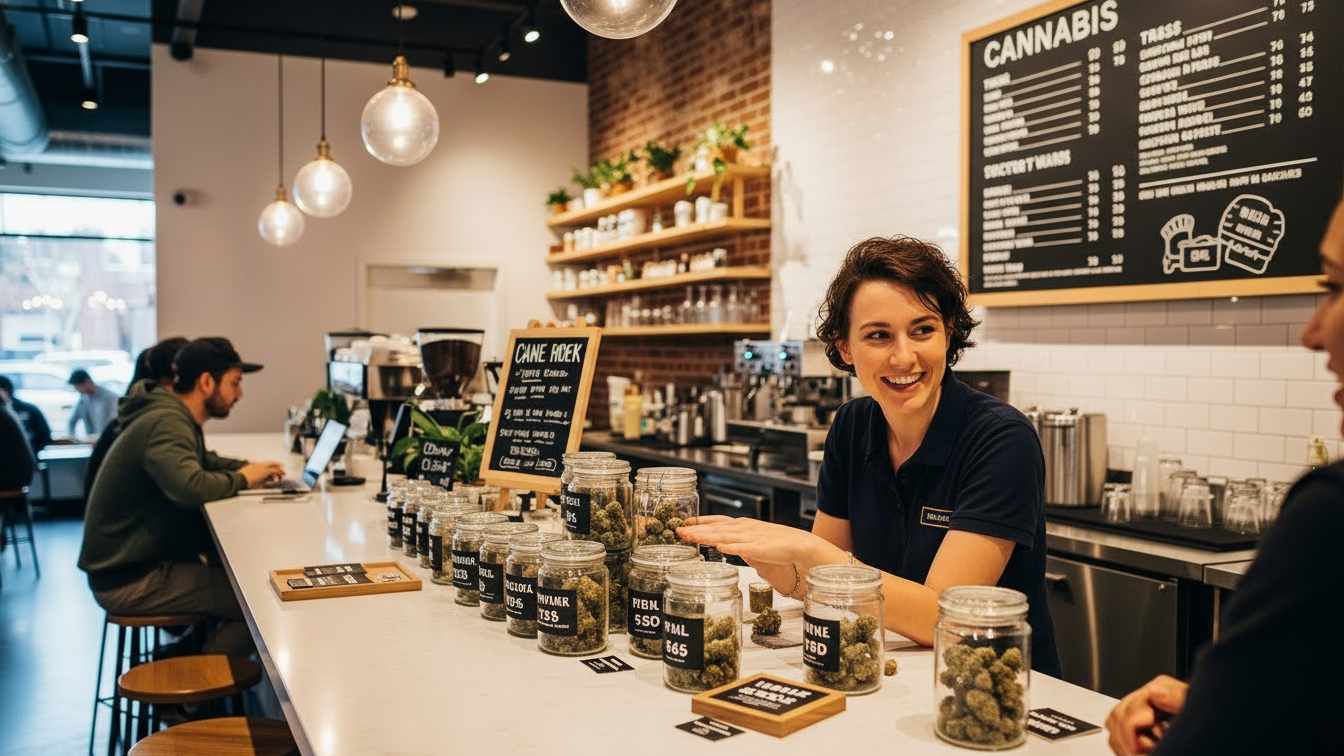
- Review the menu displaying cannabis strains, hash varieties and edibles.
- Ask staff for guidance on strength, flavour and expected effects.
- Purchase small quantities, usually priced by weight.
- Sit in a relaxed area where cannabis can be consumed safely.
- Order soft drinks, tea or coffee if desired.
The setting varies by location. Some are modern and bright, others cosy with low lighting.
Prices depend on quality and popularity. Cash is still useful since not all shops accept cards.
How many coffee shops remain in Amsterdam?
The number has declined steadily. From more than 300 in the 1990s, the total today is near 165.
Closures have resulted from zoning changes, school-proximity rules and stricter enforcement.
Even with fewer locations, Amsterdam remains the primary cannabis hub of the Netherlands.
What recent policy changes affect visitors?
Public smoking rules
Cannabis smoking is prohibited in selected outdoor areas, especially parts of the old centre.
Fines apply where signs indicate restrictions.
Tourist access
Visitors from abroad are still allowed in Amsterdam coffeeshops.
The city does not enforce a residents-only rule.
The legal supply chain experiment
This point required correction:
- Amsterdam is not part of the national regulated cannabis supply experiment.
- The city applied to join, but Parliament rejected the application in 2024.
- The pilot began in 2025 in ten other municipalities, such as Breda, Tilburg, Arnhem and Maastricht.
- Amsterdam’s coffeeshops therefore continue to operate under the traditional model, where retail sale is tolerated but wholesale supply remains unregulated.
This is important for accuracy. Amsterdam supports the idea of a regulated supply chain but was excluded from the pilot phase.
How did Amsterdam’s coffeeshop culture begin?
The Netherlands’ first true coffeeshop was Sarasani in Utrecht, founded in 1968.
It operated as an informal youth space that permitted cannabis sales long before national rules were shaped.
Amsterdam’s coffeeshop scene began in 1972 with Mellow Yellow, widely recognised as the city’s first.
It paved the way for a rapid expansion throughout the 1970s, 1980s and 1990s.
Many iconic shops emerged during this time, contributing to the city’s international reputation.
Today, the system is more regulated, but coffeeshops remain an important part of Amsterdam’s culture and tourism economy.
Which coffeeshops are considered the best in Amsterdam?
Here are five consistently respected options, chosen for product quality, staff knowledge, safety and visitor experience:
1. Boerejongens
Professional service, high standards and clear product information. Popular with both locals and informed travellers.
2. Grey Area
Small, friendly and known for premium strains. Long-standing favourite among experienced users.
3. The Bulldog
Historic and accessible. Ideal for first-time visitors who want a familiar setting with clear guidance.
4. Barney’s Coffeeshop
Award-winning strains, comfortable seating and a well-organised menu.
5. Green House Coffeeshop
Known for prize-winning genetics and a relaxed environment that appeals to a wide range of visitors.
Summary
| Coffeeshop | Atmosphere | Price Range | Seating | Strain Quality | Best For |
|---|---|---|---|---|---|
| Boerejongens | Professional, clean | Moderate–High | Structured, bright | Excellent | Careful buyers, beginners seeking guidance |
| Grey Area | Small, friendly | Moderate–High | Limited | Top-tier | Enthusiasts and experienced users |
| The Bulldog | Social, tourist-friendly | Moderate | Many seats | Good | First-time visitors, groups |
| Barney’s | Stylish, welcoming | Moderate–High | Comfortable | Award-winning | Visitors seeking quality and comfort |
| Green House | Relaxed, international | Moderate–High | Warm, cosy | Excellent | Balanced crowd, quality-focused visitors |
FAQ
Q. Can tourists buy cannabis in Amsterdam?
Yes. Visitors can legally enter and purchase cannabis in Amsterdam coffeeshops.
Q. What ID is required?
A passport or national ID is best. You must be 18 or older.
Q. Can cannabis be smoked outdoors?
Only in permitted areas. Some central streets have smoking bans with fines.
Q. Are edibles available?
Yes, although fewer shops carry them compared to cannabis flower and hash.
Q. How strong is the cannabis?
Strength varies widely. Staff can recommend low, moderate or high-strength products.
Q. Can coffeeshops sell alcohol?
No. Alcohol is not allowed inside coffeeshops.
Q. How much can I buy?
Up to 5 grams per person per day.
Q. Are coffeeshops safe?
Licensed coffeeshops follow strict rules. Security, ID checks and controlled environments create a stable setting.
Q. Should beginners choose mild strains?
Yes. Starting with small amounts is recommended.
Looking for more hidden spots in Amsterdam?
If you want to explore another side of the city after visiting a coffeeshop.
Take a look at our guide to lesser-known canal bars in Amsterdam.
These quiet locations along the canals offer a relaxed setting, great views and a chance to enjoy the city away from busy streets.