Table of Contents
What Is Brouwersgracht in Amsterdam?
Brouwersgracht is a historic canal located on the western edge of Amsterdam’s canal belt, separating the Jordaan from the Haarlemmerbuurt.
It is widely regarded as one of the most visually appealing canals in the city due to its seventeenth-century warehouses, traditional canal houses, and calm residential character.
Unlike the more commercial canals closer to Dam Square, Brouwersgracht retains a largely local atmosphere, combining architectural heritage with everyday Amsterdam life.

Where Is Brouwersgracht Located?
Brouwersgracht runs east to west between Singel and Prinsengracht, forming the northern boundary of the Jordaan district.
It connects directly to several smaller canals and sits within walking distance of Amsterdam Central Station, Noordermarkt, and the Anne Frank House.
Its location places it inside the UNESCO-listed canal belt while remaining slightly removed from high-traffic tourist areas.
Why Is Brouwersgracht Historically Important?
Brouwersgracht dates back to the early seventeenth century, during Amsterdam’s Golden Age expansion.
Its name translates to “Brewers’ Canal,” reflecting its planned role within the city’s brewing economy.
Although only a limited number of breweries were physically located on Brouwersgracht itself, the canal was constructed specifically to support beer production through transport, storage, and water access.
Warehouses along the canal were used for grain, hops, and finished goods, making it an important part of Amsterdam’s brewing infrastructure rather than a street dominated by brewery buildings.
By the mid-seventeenth century, Brouwersgracht formed part of a wider logistical network that supported trade and industry across the expanding city.
Why Is Brouwersgracht Considered One of Amsterdam’s Most Beautiful Canals?
Residents often cite Brouwersgracht as one of the city’s most attractive canals due to its consistent architectural rhythm and limited commercial development.
Distinctive visual features include:
- Stone arch bridges with wide sightlines
- Seventeenth-century warehouse façades
- Traditional Dutch stepped and bell gables
- Calm water surfaces that reflect the surrounding buildings
The canal’s visual balance and uniform scale contribute to its strong appeal.

Why Do Photographers Visit Brouwersgracht?
The canal offers uninterrupted views in multiple directions, making it suitable for architectural and streetscape photography.
Early-morning and late-evening light often produces clear reflections and soft contrast across the water.
Because the area experiences less foot traffic than canals closer to Damrak, photographers can work with minimal obstruction.
Is Brouwersgracht Less Crowded Than Other Central Areas?
Yes. Brouwersgracht is noticeably quieter than locations such as Dam Square or the Red Light District.
Activity in the area largely comes from residents, cyclists, and visitors exploring the Jordaan rather than organised tour groups.
This makes the canal suitable for slow walks and short breaks between nearby attractions.
What Makes the Houseboats and Architecture Notable?
Brouwersgracht includes a mix of restored warehouses, canal houses, and traditional houseboats.
Many structures date back more than three centuries and retain original masonry, loading doors, and gable designs.
Unlike decorative canal houses built to display wealth, these buildings were constructed for storage and trade, giving the canal a functional and understated appearance.

Can You Take a Boat Tour Through Brouwersgracht?
Yes. Several small-scale canal cruises include Brouwersgracht as part of their route.
These tours typically operate with fewer passengers and pass through narrower waterways, allowing closer views of buildings and bridges.
Private and semi-private boats are more common here than large sightseeing vessels.
What Are the Best Things to Do Near Brouwersgracht?
Where Can You Find a Historic Café Nearby?
Café Papeneiland, founded in 1642, is located a short walk from Brouwersgracht and is well known for its apple pie and preserved interior.
What Can You Explore in the Jordaan?
Brouwersgracht forms the northern boundary of the Jordaan, an area known for independent shops, galleries, and residential streets.
Exploring on foot provides easy access to side canals and courtyards.
Is Noordermarkt Close to Brouwersgracht?
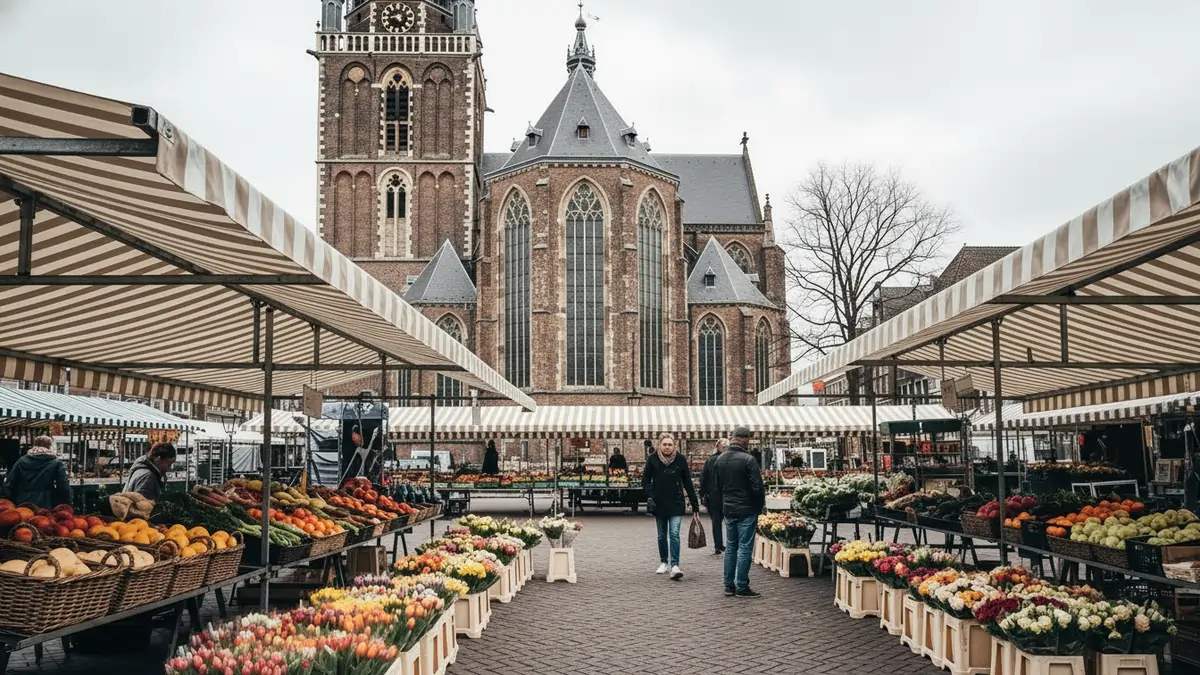
Yes. Noordermarkt is within walking distance and hosts markets offering organic food, antiques, and clothing on Mondays and Saturdays.
Which Restaurants Are Near Brouwersgracht?
Established dining options in the surrounding area include:
- Restaurant De Belhamel
- Black and Blue
- Café Sonneveld
- Luna
These venues range from traditional Dutch menus to contemporary European cuisine.
How Do You Get to Brouwersgracht?
Brouwersgracht can be reached on foot or by bicycle from Amsterdam Central Station in approximately 15 minutes.
Tram stops near Haarlemmerstraat and Westerpark also provide convenient access.
Walking or cycling is the most practical way to experience the canal and nearby streets.
When Is the Best Time to Visit Brouwersgracht?
- Spring (March to May): Flower displays appear along canal edges and residential windows
- Summer (June to August): Extended daylight supports evening walks and boat tours
- Autumn (September to November): Seasonal colour appears in nearby trees and streets
- Winter (December to February): Cold spells may lead to ice forming on smaller canal sections
The canal maintains a similar atmosphere throughout the year with minimal crowd variation.
Why Should Brouwersgracht Be Included in an Amsterdam Itinerary?
Brouwersgracht presents Amsterdam’s trade history, residential character, and canal architecture in a single, cohesive setting.
It offers historical context without the congestion associated with major landmarks.
For visitors seeking a quieter view of the city that still reflects its development and layout, Brouwersgracht provides a strong point of reference.
FAQs
Q. Is Brouwersgracht a good area to stay in Amsterdam?
Yes. The area is central, residential, and well-connected, with access to boutique hotels and serviced apartments.
Q. Which landmarks are close to Brouwersgracht?
The Anne Frank House, Westerkerk, Noordermarkt, and Jordaan streets are all within walking distance.
Q. Do canal cruises include Brouwersgracht?
Many smaller operators include it as part of their western canal routes.
Q. When is the best time of day to visit?
Early morning and late evening offer clear views and lower pedestrian traffic.
Q. Is Brouwersgracht heavily visited by tourists?
No. It remains quieter than most canals in the historic centre, even during peak seasons.
Want to Explore the Jordaan on Foot?
Brouwersgracht forms the northern edge of the Jordaan, making it a natural starting point for exploring one of Amsterdam’s most well-known residential districts.
If you would like to continue beyond the canal, a structured walking route through the Jordaan provides a practical way to see narrow streets, small courtyards, local cafés, and historic churches without backtracking or guesswork.
The Jordaan Walking Guide outlines a clear route, key stopping points, and historical context, allowing you to move from Brouwersgracht deeper into the neighbourhood at a relaxed pace.