Table of Contents
What is the Amstel River, and why is it important to Amsterdam?
The Amstel River is a relatively small waterway in the Netherlands, yet it holds major significance for Amsterdam.
The city grew around a dam built on this river, which led to the formation of the name Amsterdam.
The river begins near Nieuwveen, flows through areas such as Uithoorn, Amstelveen and Ouderkerk aan de Amstel, and ends in Amsterdam, where it connects with the broader canal network.
Throughout history, the Amstel supported trade, transport and settlement.
Today it offers a mix of cultural landmarks, local life, riverside leisure and walking or cycling routes that link city and countryside.
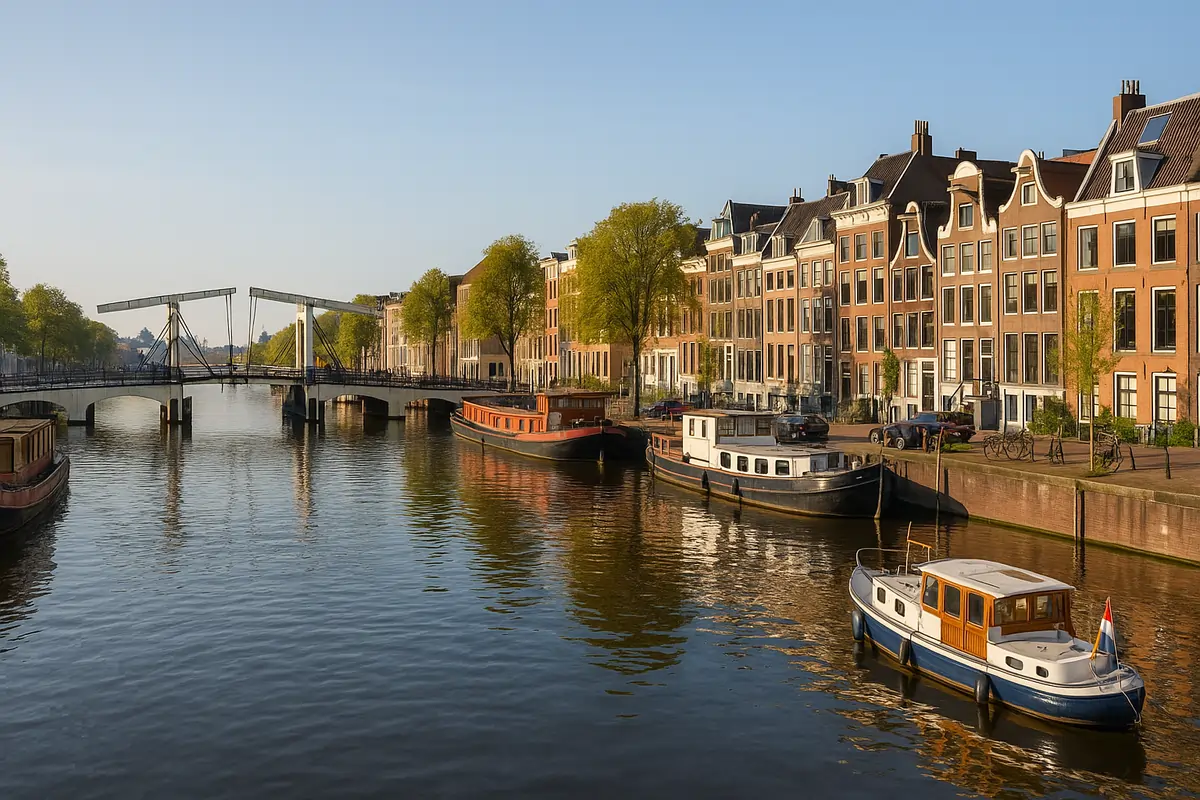
Which notable landmarks stand along the Amstel within Amsterdam?
Several important sights line the Amstel as it moves through the city.
These include the Magere Brug, a traditional white wooden bridge that has become one of the most recognisable spots in Amsterdam.
Nearby stands the Blauwbrug, known for its classic design and decorative details.
The river also passes the H’ART Museum, the Royal Theatre Carré and the historic Amstel Hotel.
Riverside houseboats, heritage buildings and moored vessels contribute to the atmosphere, giving visitors a look at Amsterdam’s long connection with waterways and river trade.
What walking routes can visitors enjoy along the Amstel?
Short routes within the city allow visitors to experience a blend of cultural institutions, scenic bridges and riverside cafés.
One popular option begins near the Jewish Cultural Quarter and ends at Amstel Station.
This stretch provides accessible riverside views and a pleasant way to explore central Amsterdam without needing extensive planning.
Those with more time can take longer walks starting south of the city.
These walks move through green areas, residential neighbourhoods and waterside paths that gradually lead into more open landscapes.

What cycling options are available along the Amstel?
Cycling along the Amstel is one of the best ways to experience the changing scenery between Amsterdam and the surrounding countryside.
The route toward Ouderkerk aan de Amstel is especially well known.
From there, cyclists can continue toward Nes aan de Amstel, Uithoorn and nearby rural areas.
Windmills, open fields, waterways and small historic centres help create a traditional Dutch setting.
Many travellers choose routes that measure around 40 to 50 kilometres, which comfortably fit into a single day.
These longer routes highlight the contrast between the city’s lively streets and the calm rural environment south of Amsterdam.
What cultural events take place on or near the Amstel River?
The Amstel hosts well-known rowing competitions, including Head of the River Amstel.
An annual event that traditionally takes place in March.
The race attracts large numbers of participants and spectators and follows an 8-kilometre course between Ouderkerk aan de Amstel and Amsterdam.
The river also forms a backdrop for seasonal activities, community gatherings and public celebrations.
Its central position and scenic banks make it a natural location for cultural events throughout the year.

How did the Amstel River influence the development of Amsterdam?
The Amstel shaped the city’s early layout and economic direction.
The dam that once controlled the water level marked the location where settlement began.
As Amsterdam expanded, the river continued to serve as a transport channel for goods and people.
Its connection with new canals helped define neighbourhood boundaries, trade locations and defensive structures.
Even today, the Amstel influences movement within the city, tourism flows and historical preservation.
Its cultural and economic role continues to evolve as Amsterdam grows.
When is the best time to explore the Amstel?
The ideal time depends on the activity.
- Walking and photography are best during clear daylight hours when reflections on the water are strongest.
- Cycling is most enjoyable in spring and early summer when fields and vegetation are at their peak.
- Boat tours are especially pleasant in the early morning or evening.
- Visitors who want to experience local traditions should check schedules for rowing events and seasonal festivals.

What practical tips help make an Amstel River visit smoother?
- Plan your route based on the available time. Short urban route or extended rural ride both offer rewarding experiences.
- Weather conditions can change quickly, so prepare for shifts in wind and light rain.
- Public transport provides easy access to various points along the river, especially within the city.
- If cycling, use marked routes and follow all traffic rules.
- Combine different activities such as walking, cycling and boat tours to see more of the river’s character.
Frequently Asked Questions (FAQ)
Q. How long is the Amstel River?
The river is roughly 31 kilometres long, running from its origin near Nieuwveen to its meeting point with Amsterdam’s canals.
Q. Can beginners cycle the Amstel routes?
Yes. The central routes near the city are smooth and manageable for beginners. Longer routes to the countryside require more stamina but remain suitable for most riders.
Q. Is the Amstel suitable for boat tours?
Yes. Many guided and self-operated boats use the river. It is calm, scenic and close to major landmarks, making it a popular choice for both locals and visitors.
Q. Are there villages worth visiting along the river?
Ouderkerk aan de Amstel is the most notable village. It offers historic architecture, riverside paths and respected dining options. Further south, Uithoorn and nearby areas offer traditional countryside views.
Q. Does the Amstel freeze in winter?
It occasionally freezes during colder winters, but conditions vary widely each year. Local authorities determine whether ice conditions are safe for public use.
Q. Are there good restaurants along the Amstel?
Yes. Both the city section and the rural section offer well-known restaurants and cafés, many of which provide riverside seating during warmer months.
Q. Can you swim in the Amstel?
Swimming is possible in designated zones, although water quality varies. Visitors should follow local guidelines and choose approved swimming areas only.
What can you explore after visiting the Amstel?
If you want to continue learning about the city’s waterways, Amsterdam’s canal belt is the next place to look.
It is one of the most recognisable heritage areas in the centre.
Filled with historic bridges, waterfront houses and districts shaped by the growth of trade and urban planning.