Table of Contents
What Makes Dutch Food in Amsterdam Worth Trying?
Amsterdam is known for its canals, museums, and cycling culture, but its food culture deserves equal attention.
Traditional Dutch dishes focus on comfort, practicality, and ingredients shaped by trade, farming, and everyday life.
While Dutch cuisine may not carry the global reputation of Italian or French cooking, it offers distinctive flavours and textures that reflect local habits and history.
From warm snacks served in cafés to simple bread-based breakfasts and hearty evening meals, eating Dutch food adds essential context to a visit.
Whether you have a short stopover or a full day in the city, tasting local dishes helps ground your experience beyond sightseeing alone.
If time is limited, a structured plan such as a 12-hour Amsterdam itinerary makes it easier to combine food stops with major attractions.

What Do Dutch People Typically Eat for Breakfast?
Dutch breakfasts are straightforward and practical, often based on bread, dairy, and lightly sweet toppings.
Hagelslag (Chocolate Sprinkles on Bread)
Hagelslag consists of buttered bread topped with chocolate sprinkles. It is common in Dutch homes and especially popular with children, though adults eat it just as often.
Where to try it: Buy fresh bread from Bakhuys and pick up hagelslag from any Albert Heijn supermarket.

Ontbijtkoek (Spiced Breakfast Cake)
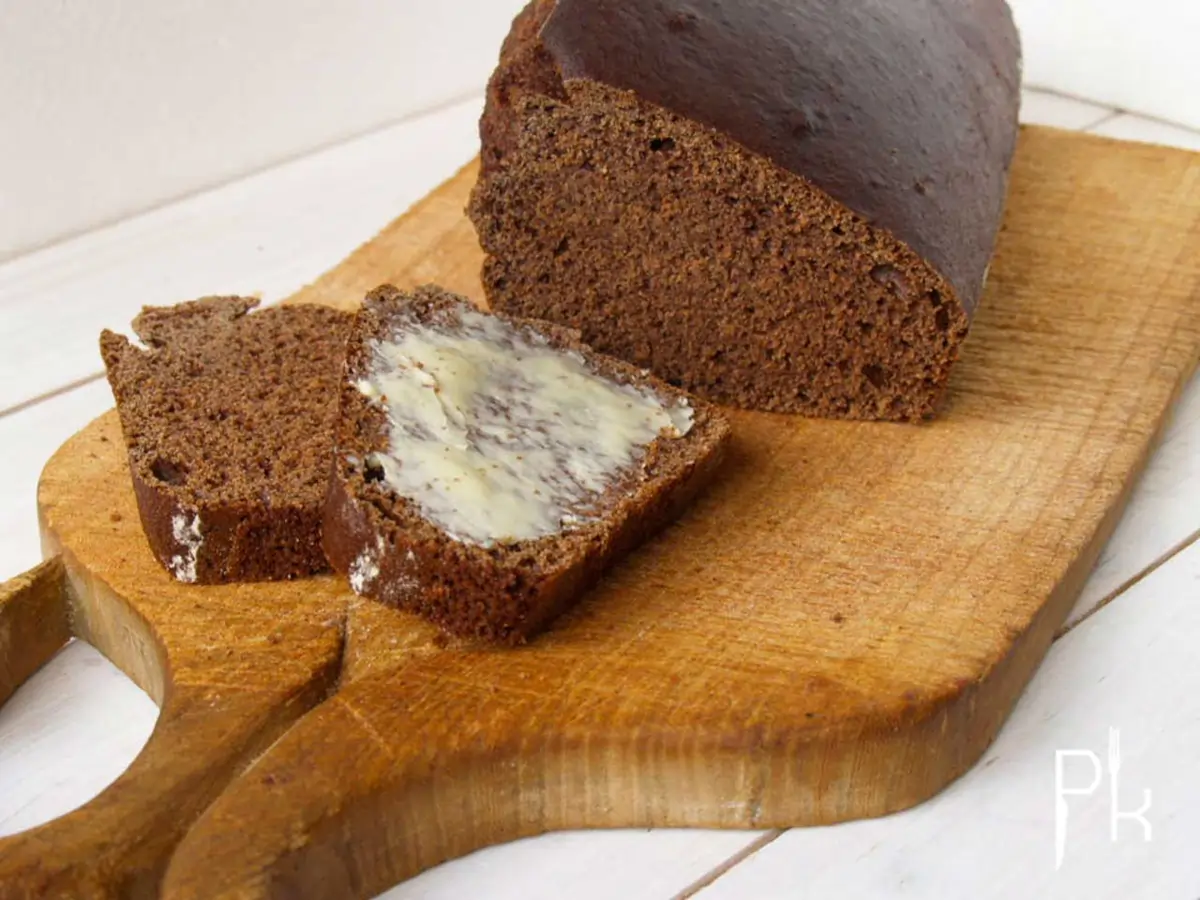
Ontbijtkoek is a soft, lightly sweet, spiced cake made with rye flour and honey or syrup.
While it shares warm spice notes with gingerbread, it has a milder flavour and denser texture that is distinct to Dutch baking. It is commonly eaten with butter and coffee.
Where to try it: De Bakkerswinkel serves traditional ontbijtkoek alongside breakfast and brunch dishes.
Pannenkoeken (Dutch Pancakes)
Dutch pancakes are larger and thinner than American pancakes and can be served with sweet or savoury toppings such as bacon, apples, powdered sugar, or syrup.
Where to try them: The Pancake Bakery near the Anne Frank House is one of the city’s best-known pancake restaurants.

Which Dutch Foods Are Popular for Lunch and Street Eating?
Lunch in the Netherlands is usually light, but Amsterdam’s street food scene is filled with filling snacks and quick meals.
Bitterballen
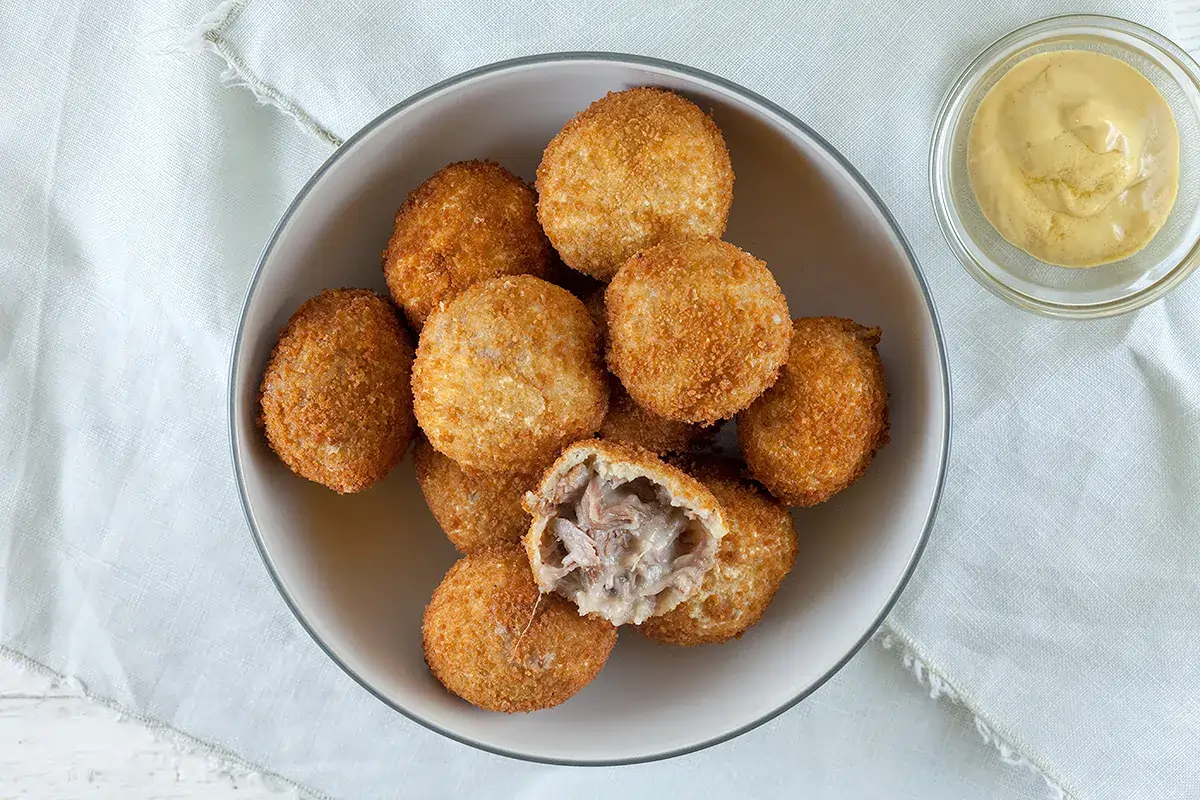
Bitterballen are deep-fried balls filled with a thick meat ragout, traditionally served with mustard. They are most common in cafés and bars.
Where to try them: Café de Tuin is well known for serving high-quality bitterballen.
Broodje Kaas
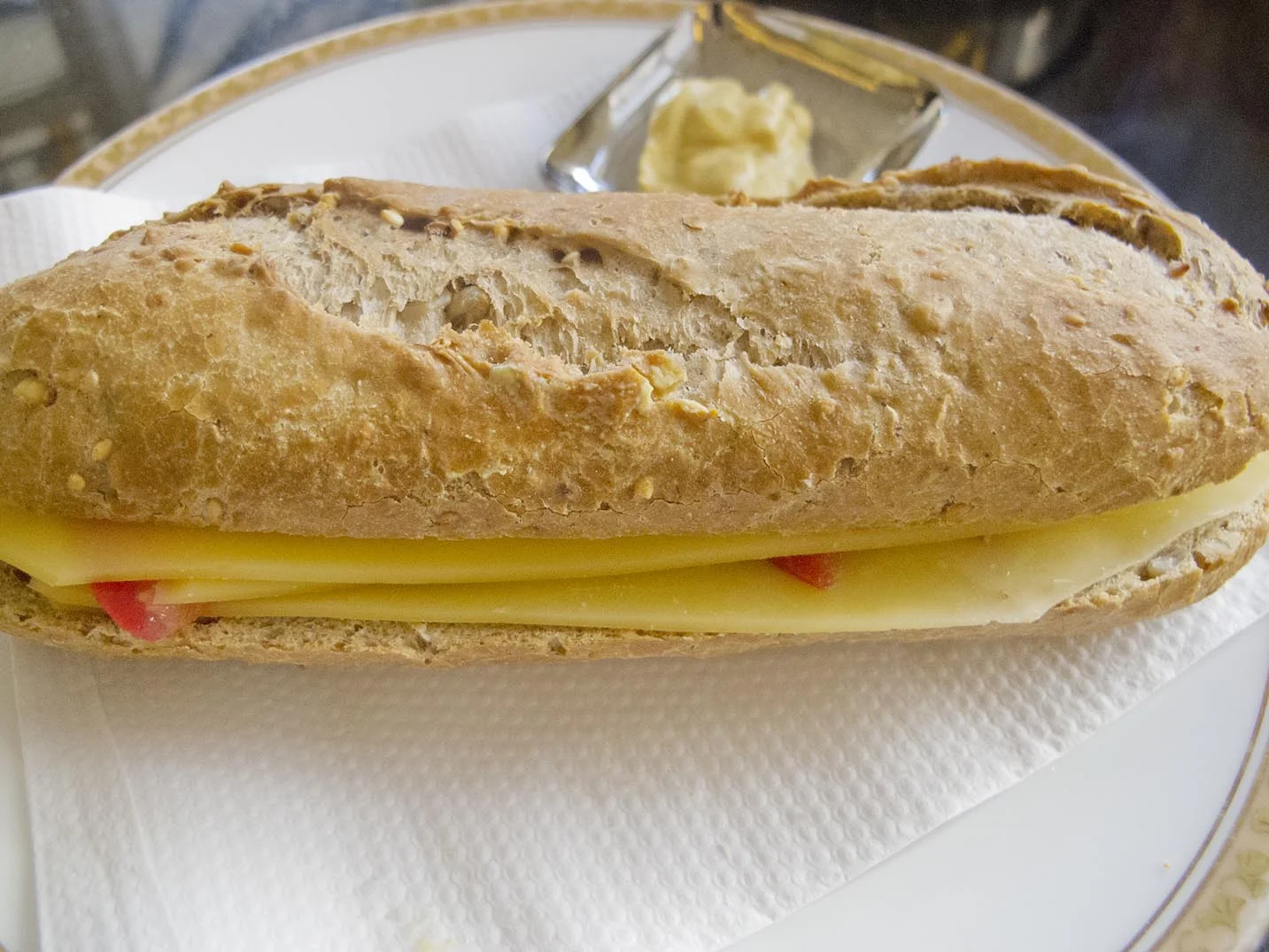
A broodje kaas is a simple sandwich made with fresh bread and Dutch cheese such as Gouda or Edam.
Where to try it: Kaashuis Tromp prepares cheese sandwiches using locally sourced cheeses.
Haring (Raw Herring with Onions and Pickles)
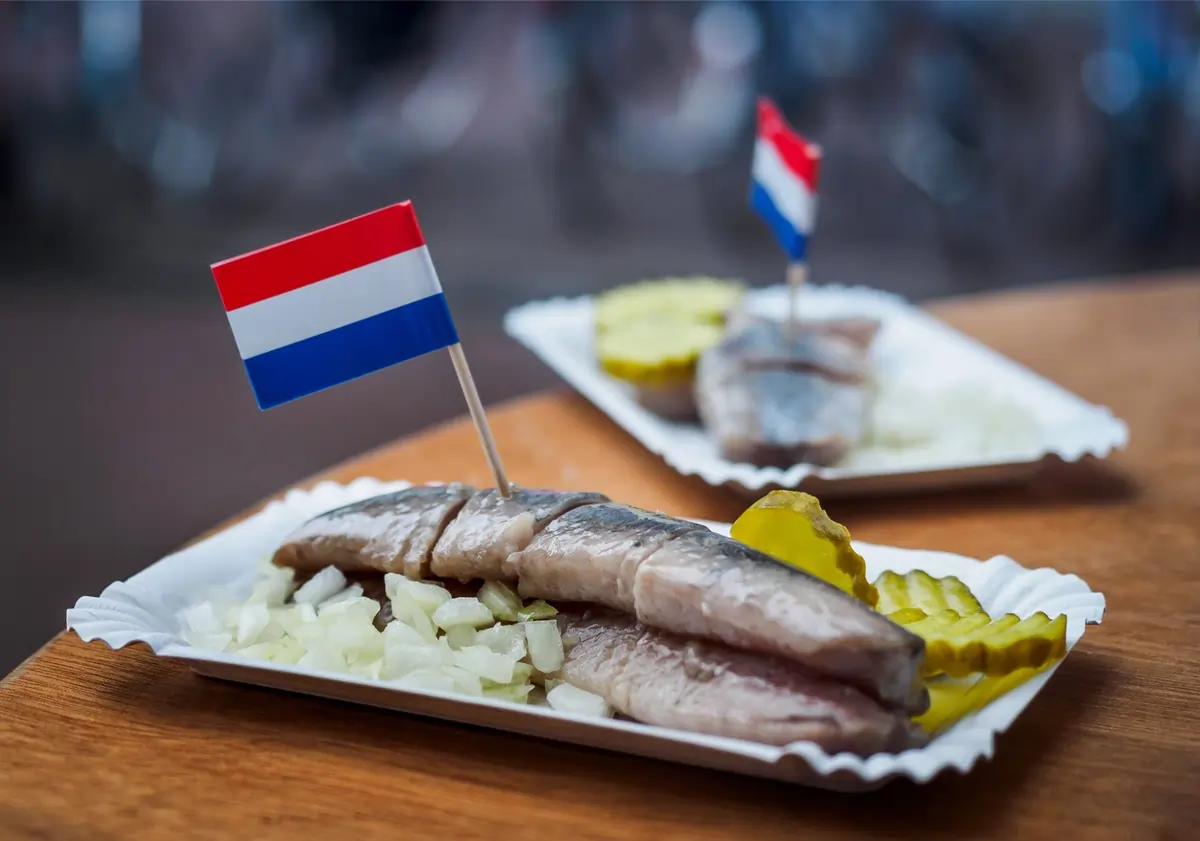
Raw herring is one of the most recognisable Dutch street foods. It is eaten either by hand or served in a small sandwich.
Where to try it: Stubbe’s Haring near Central Station is widely regarded as a reliable option.
Kapsalon
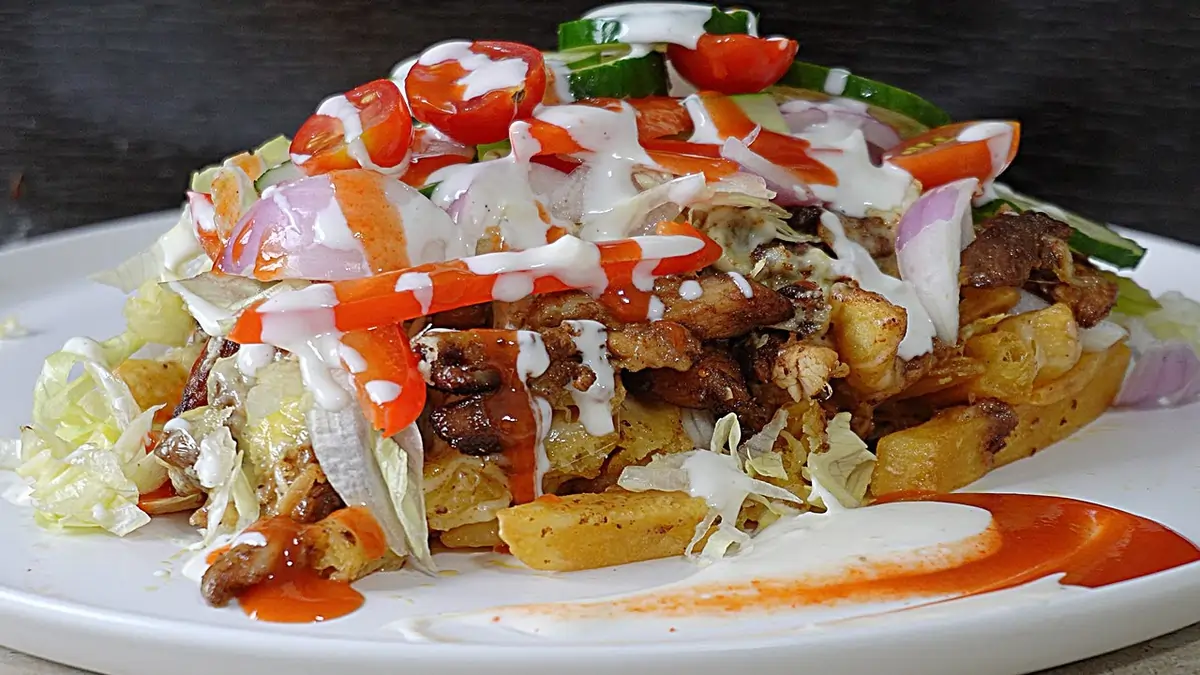
Kapsalon combines fries topped with döner kebab meat, melted cheese, fresh salad, and garlic sauce.
It is a modern dish that originated in Rotterdam but is now common across the country.
Where to try it: Snackbar Van Dobben is a long-established spot for Dutch snack foods.
What Are Traditional Dutch Dinner Dishes?
Dutch evening meals are built around warm, filling combinations designed for colder weather.
Stamppot
Stamppot is made by mashing potatoes with vegetables such as kale, carrots, or sauerkraut and is usually served with smoked sausage.
Where to try it: Moeders focuses on traditional home-style Dutch cooking.

Hutspot
Hutspot is a mash of potatoes, carrots, and onions with a slightly sweet flavour. It has historical associations dating back to the sixteenth century.
Where to try it: The Pantry specialises in classic Dutch dishes served in a small, informal setting.

Erwtensoep (Pea Soup)
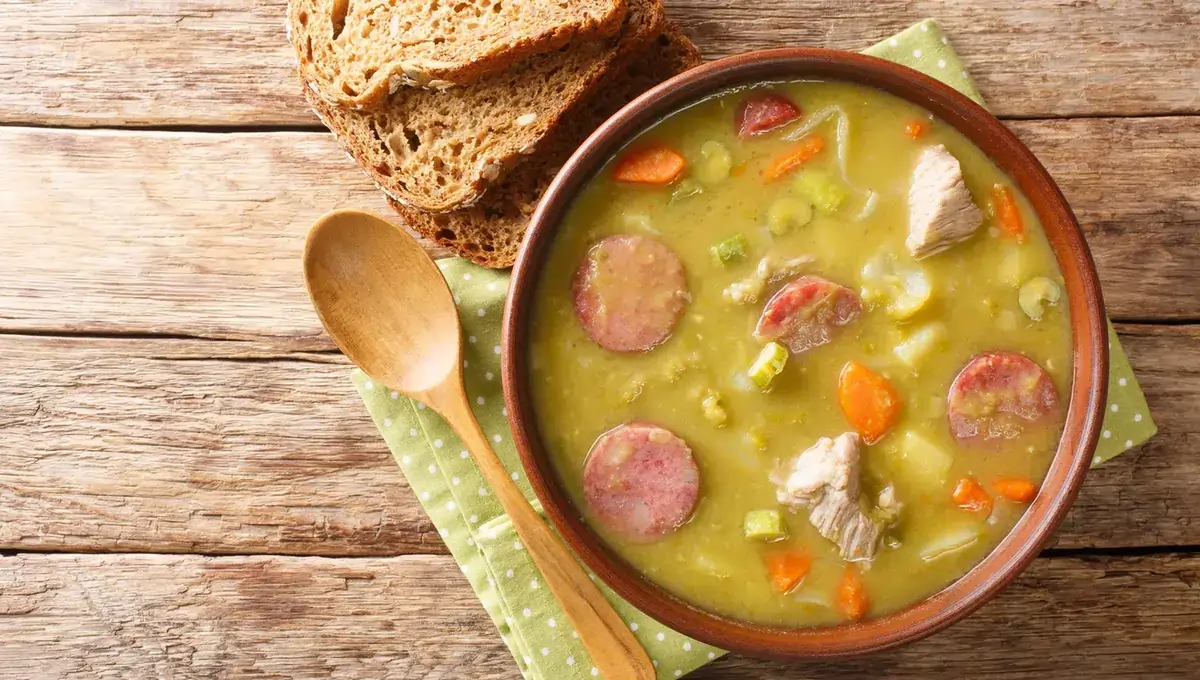
Erwtensoep is a thick soup made with split peas, vegetables, and smoked sausage. It is traditionally eaten during winter.
Where to try it: Hap-Hmm is known for preserving older Dutch recipes.
Kibbeling
Kibbeling consists of battered, deep-fried white fish served with garlic or tartar sauce.
Where to try it: Frens Haringhandel near the Bloemenmarkt serves both herring and kibbeling.

Which Dutch Desserts and Sweet Snacks Should You Try?
Sweet foods play a significant role in Dutch eating habits, particularly in markets and cafés.
Stroopwafels
Stroopwafels are thin waffles filled with warm caramel syrup.
Where to try them: Van Wonderen Stroopwafels prepares fresh versions with optional toppings.

Oliebollen
Oliebollen are deep-fried dough balls dusted with powdered sugar, most common around New Year.
Where to try them: Seasonal stalls at Albert Cuyp Market and winter food stands.
Poffertjes
Poffertjes are small, fluffy pancakes served with butter and powdered sugar.
Where to try them: Poffertjes Albert Cuyp is a popular market stall.
Vlaai
Vlaai is a fruit-filled pie originally from Limburg.
Where to try it: Winkel 43 serves Vlaai alongside its well-known apple pie.
Bossche Bol
A Bossche Bol is a large cream-filled pastry covered in chocolate.
Where to try it: Patisserie Holtkamp is known for classic Dutch pastries.
What Unique Dutch Snacks and Sweets Are Common?
Liquorice (Drop)
Dutch liquorice comes in sweet and salty varieties and is far stronger than most international versions.
Where to try it: Jamin offers a wide range.
Speculaas
Speculaas are spiced cookies traditionally associated with winter holidays.
Where to try them: Lanskroon Bakery produces handmade versions.
Which Dutch Cheeses Are Most Popular?
Cheese is a core part of daily eating in the Netherlands.
Gouda
Gouda ranges from mild to strongly aged and is one of the country’s most exported products.
Where to try it: Henri Willig Cheese & More offers tastings.
Edam
Edam is firmer and milder, often eaten sliced or cubed.
Where to try it: De Kaaskamer van Amsterdam focuses on traditional varieties.
Leidse Kaas
Leidse Kaas is flavoured with cumin seeds.
Where to try it: Amsterdam Cheese Museum includes tastings and background information.
What Traditional Drinks Should You Try in Amsterdam?
Jenever
Jenever is the Dutch precursor to gin, with a malt-forward flavour.
Where to try it: Proeflokaal A. van Wees specialises in traditional spirits.
Koffie Verkeerd
Koffie verkeerd is made with equal parts coffee and hot milk.
Where to try it: Café de Jaren is a popular riverside café.
Chocomel
Chocomel is a rich Dutch hot chocolate, commonly served warm.
Where to try it: Ice Bakery Amsterdam serves it with sweets.
Where Can You Eat Authentic Dutch Food in Amsterdam?
Traditional restaurants
- Moeders
- The Pantry
Street food and markets
- Albert Cuyp Market
- Stubbe’s Haring
Cheese tastings
- Amsterdam Cheese Museum
- Reypenaer Cheese Tasting Room
FAQs
Q. What is the most famous Dutch food in Amsterdam?
Stroopwafels and bitterballen are the most commonly associated foods.
Q. Is Dutch food spicy?
No. Dutch dishes are generally mild, focusing on savoury and sweet flavours.
Q. What is a traditional Dutch dinner?
Common options include stamppot, erwtensoep, and fried fish.
Q. Do Dutch people eat a lot of cheese?
Yes. Cheese is eaten daily at breakfast, lunch, and as a snack.
Dutch food centres on practicality, warmth, and tradition. Sampling these dishes while visiting Amsterdam adds depth to your stay and offers insight into everyday local life.
Where Can You Explore Amsterdam’s Food Culture Beyond the City Centre?
If you want to see how Dutch food fits into everyday Amsterdam life, a visit to De Pijp is a logical next stop.
Located just south of the historic centre, De Pijp is known for its dense mix of local cafés, bakeries, markets, and casual restaurants.
The area is home to Albert Cuyp Market, where many classic Dutch snacks such as stroopwafels, kibbeling, and poffertjes are sold alongside fresh produce and international food stalls.
Unlike more tourist-focused areas, De Pijp offers a closer look at how residents eat on a daily basis, from simple lunches and bakery breakfasts to relaxed evening meals.
It is an ideal district for connecting the traditional dishes covered in this guide with the neighbourhoods where they are most commonly enjoyed.